
Thermal paper guides written for people who specify it.
Practical references on roll dimensions, basis weight and label media — written for buyers, importers and converters who need a repeatable specification rather than a one-off order.
Specification guides.
Each guide answers the questions buyers ask before approving a sample.

Cash Register Paper Jumbo Rolls: The Converter's Guide to Parent Stock for Till Formats
A converting-focused guide to cash register paper jumbo rolls — why converters buy parent stock instead of finished till rolls, how jumbo width, length, core and wound direction map to cash-register slit patterns, what yield and quality checks matter, and how to specify container-scale jumbo programmes.
Read the guide
Thermal Till Rolls: Specifying Receipt Paper for Till Fleets, Wholesalers and Retail Groups
A buyer's guide to thermal till rolls — the sizes UK, Irish and Commonwealth till markets actually run, how GSM and coating class change roll length and receipt life, till-side fit factors like core and diameter, and the wholesale specification checklist for distributors and retail groups buying by the pallet or container.
Read the guide
Queue Ticket Thermal Paper: Specifying Ticket Stock for Banks, Clinics and Service Halls
A buyer's guide to queue ticket thermal paper — how dispatcher printers consume ticket stock in banks, government offices, clinics and telecom service halls, why ticket width, sensitivity and core decide printer uptime, what public-handling compliance demands from the developer system, and the specification checklist for facilities buying by the carton or container.
Read the guide
Lightweight Thermal Paper: When 48 gsm Beats Heavier Grades in Roll Programmes
A procurement guide to lightweight thermal paper — what the 48-55 gsm class actually changes, the meters-per-roll and freight maths that drive landed cost, the stiffness and curl trade-offs converters must trial, and how to specify a lightweight grade so it runs on the destination's machines the first time.
Read the guide
AWB Thermal Labels: Specifying Air Waybill Stock for Airlines, GSAs and Courier Operations
A buyer's guide to AWB thermal labels — how air waybill and cargo tracking stock differs from ordinary shipping labels, the adhesion, durability and scan-reliability specifications air cargo handling demands, compliance and chemistry considerations, and how to structure volume supply with a manufacturer.
Read the guide
Kiosk Thermal Paper: Specifying Rolls for Self-Service Terminals, Parking and Queue Systems
A buyer's guide to kiosk thermal paper — matching roll width and diameter to self-service terminals, specifying sensitivity and top-coating for unattended reliability, fixing developer chemistry for public-facing receipts, and structuring multi-site kiosk supply with a manufacturer.
Read the guide
Lottery Thermal Paper: Ticket Stock Specifications for Gaming Terminals and Retail Lottery Networks
A buyer's guide to lottery thermal paper — why gaming terminals demand heavyweight, stiff ticket stock, the print-density and abrasion requirements behind scannable barcodes and validation codes, the chemistry rules for public-handled tickets, and the roll formats and preprint options operators standardise on.
Read the guide
Thermal Paper Supplier Quality Control: The Verification Programme Buyers Should Run
How procurement teams verify a thermal paper supplier's quality control — the batch documents that must travel with every shipment (COA, SDS), the incoming tests buyers can run in-house, what a mill audit should actually inspect, and how pre-shipment checks and a signed reference standard keep quality from drifting.
Read the guide
Wholesale Thermal Paper Rolls: How Distributors Build a Buying Programme That Holds Margin
A distributor's guide to buying thermal paper rolls at wholesale — how MOQ and container economics actually work, which specification points protect margin, why mixed-format pallets beat single-SKU orders, and how a rolling forecast programme with a mill outperforms spot buying.
Read the guide
Blank Thermal Labels: How to Specify and Buy Die-Cut Stock for Shipping, Retail and Warehouse Programmes
A buyer's guide to blank thermal labels — what the die-cut, liner and adhesive specification actually decides, how direct thermal face structures compare, which dimensional and winding tolerances to check on arrival, and how converters and end users buy blank stock on a manufacturer specification sheet.
Read the guide
Thermal Paper Custom Core Size: Specifying Non-Standard Cores for Machines and Automation
A buyer's guide to custom core sizes in thermal paper — when a non-standard core is worth commissioning, how core ID, wall thickness, material and length are engineered, what MOQ applies, and how to run a custom-core programme on a manufacturer specification sheet.
Read the guide
636mm Thermal Paper Jumbo Roll: Where the Width Fits a Converter's Slitting Plan
A converter's guide to the 636mm thermal paper jumbo roll — which slit plans the width suits, how lane count and trim loss work out against 565mm and 800mm parent stock, which gsm, core and length options to specify, and how packing and splicing policy protect the roll through export freight.
Read the guide
FSC Certified Thermal Paper: What the Label Means and How Buyers Should Verify It
A procurement guide to FSC certified thermal paper — how chain-of-custody certification works for a coated converted product, what FSC Mix and FSC Recycled claims mean on a receipt or label roll, the documentation an exporter should provide per shipment, and how importers and retail buyers should verify the claim beyond the logo on the datasheet.
Read the guide
Transport Ticket Thermal Paper: Specifying Fare Media for Metro, Bus and Parking Systems
A buyer's guide to transport ticket thermal paper — where thermal tickets sit in transit fare media, the gsm and top-coat choices behind a ticket that scans after a shift in a pocket, back-printing and die-cut formats, the environmental demands of turnstiles and outdoor kiosks, and the specification checklist for tendering a ticket stock programme.
Read the guide
Thermal Jumbo Roll 6000m: Why the Length Exists and How to Order Against It
A converter's guide to the 6000-metre thermal paper jumbo roll — how length relates to diameter and gsm, why 6000 m is the reference point between 4,000 and 12,000 m parents, the yield maths from a 6000m jumbo to finished receipt and label rolls, and the weight-to-length audit that verifies a container on a floor scale.
Read the guide
Custom GSM Thermal Paper: How Non-Standard Grammage Is Built, Costed and Specified
A buyer's engineering guide to custom GSM thermal paper: how non-standard grammage is built from base paper and coat weight, why buyers ask for it, what it costs, and how to write a specification a mill can quote against.
Read the guide
Thermal Paper Printer Compatibility: How to Match Paper Specs to Your Machines Before You Order
A buyer's guide to thermal paper printer compatibility: the roll geometry, sensitivity, surface and chemistry specs that must match an application, and how to verify a new grade.
Read the guide
Patient ID Thermal Labels: Specifying Label Stock for Wristbands, Specimens and Charts
A procurement guide to patient ID thermal labels — why direct thermal wins hospital workflows, how to specify facestock, adhesive, gsm and die size for wristband, specimen and chart labels, what print life to demand, and the compliance paperwork a healthcare label programme should carry.
Read the guide
800mm Thermal Paper Jumbo Roll: Width Arithmetic, Yield Maths and Ordering Specs
A converter's guide to the 800mm thermal paper jumbo roll — why the width exists, how it compares with the 405 to 875mm jumbo family, the yield arithmetic from jumbo to finished receipt rolls, and the specification checklist for ordering 800mm parent rolls that run cleanly at the slitter.
Read the guide
Thermal Paper Custom Width: How Non-Standard Roll Widths Are Priced, Specified and Ordered
An engineering and ordering guide for converters — what custom width means at the factory, why non-standard thermal paper widths cost more, how width tolerance and edge quality are controlled, how to write a custom width specification, and when to choose a special width over the nearest standard.
Read the guide
Thermal Paper Jumbo Roll Price: What Actually Drives the Number Per Tonne
A structure guide for jumbo roll buyers — what a thermal paper jumbo roll price is actually made of, the five drivers that move it, how to convert quotations to one comparable basis, and how validity, index clauses and seasonality shape the number you finally pay.
Read the guide
Thermal Paper Custom Packaging: OEM Options from Inner Wrap to Export Cartons
An OEM packaging guide for thermal paper buyers — the inner wrap, retail and counter display formats, brand touchpoints like core printing and wrap design, export carton and pallet engineering for ocean freight, the fields a packaging specification must contain, and how MOQ and sampling work for custom packing.
Read the guide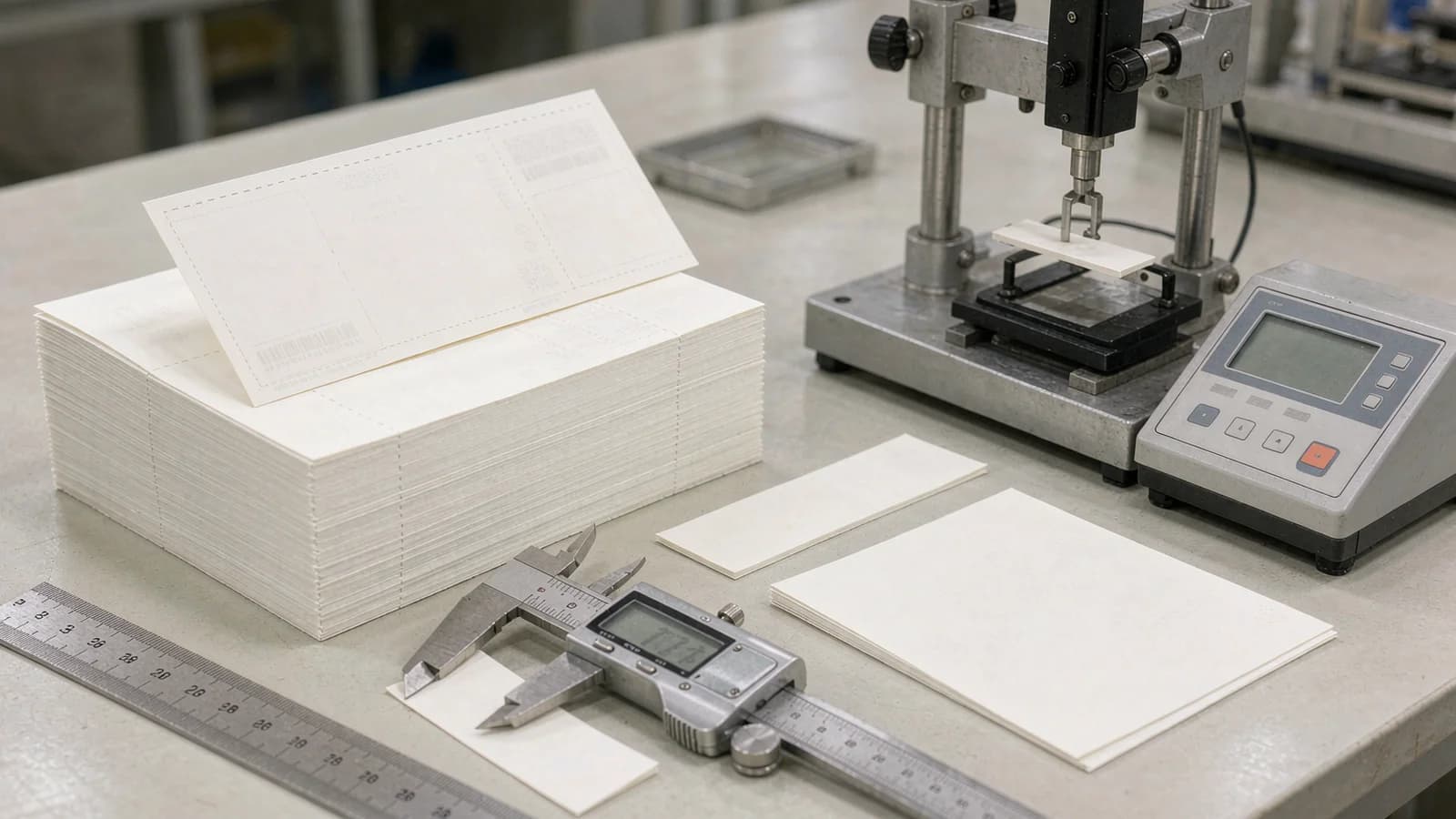
Heavyweight Thermal Paper: When 65–80 GSM Grades Earn Their Cost
A grade-selection guide to heavyweight thermal paper — what counts as heavyweight, how grammage converts into stiffness and caliper, which applications genuinely need the heavier stock, what the weight premium buys and costs in yield and freight, and how to write a heavyweight specification a mill can quote.
Read the guide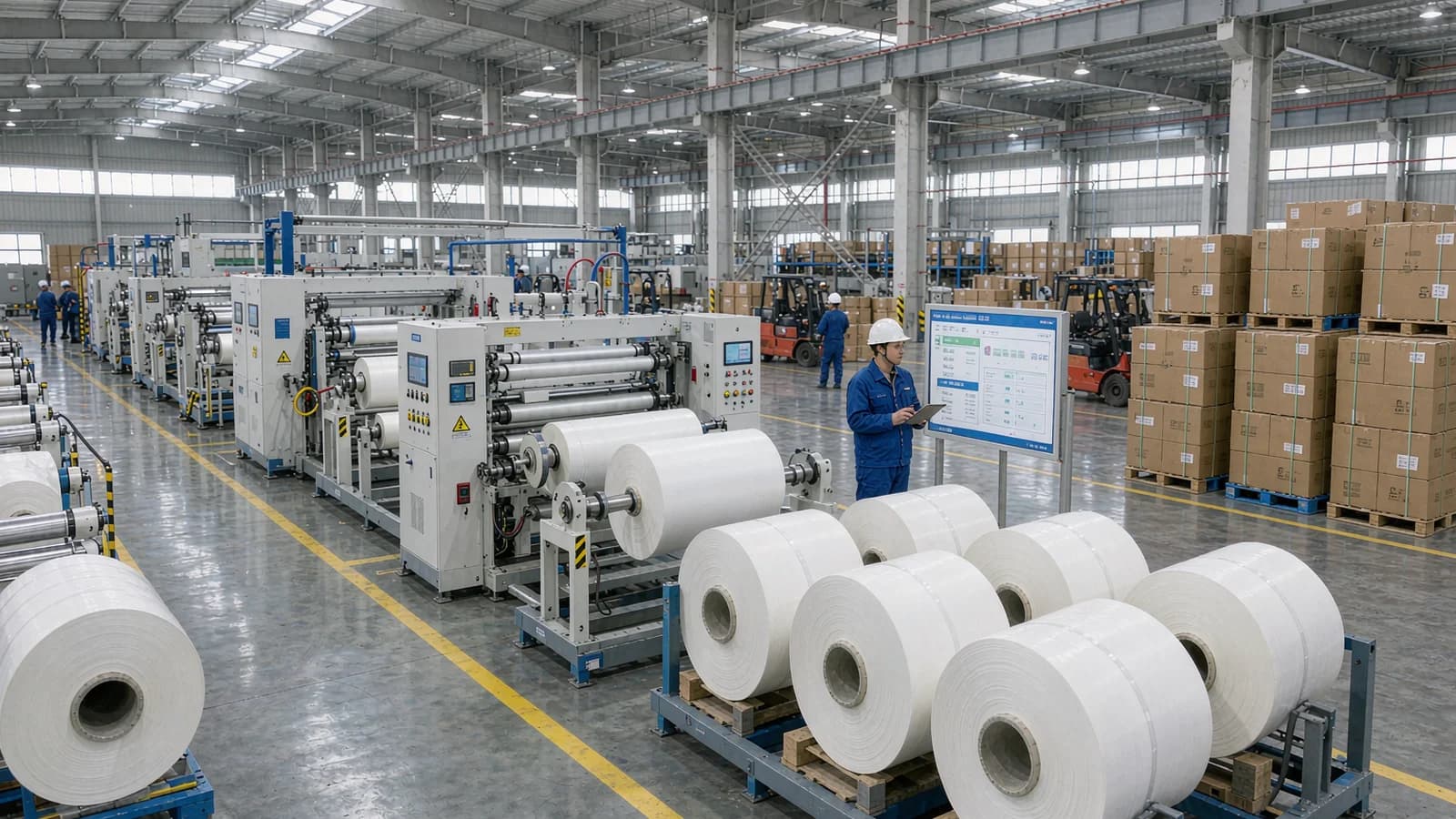
Thermal Paper Factory Capacity: How B2B Buyers Verify Output, MOQ and Lead Time
A due-diligence guide for thermal paper importers — what factory capacity actually means in coating versus converting terms, how monthly output and machine rates are read, why MOQ and lead time follow from the production schedule, and how to verify capacity claims with questions, data and audits.
Read the guide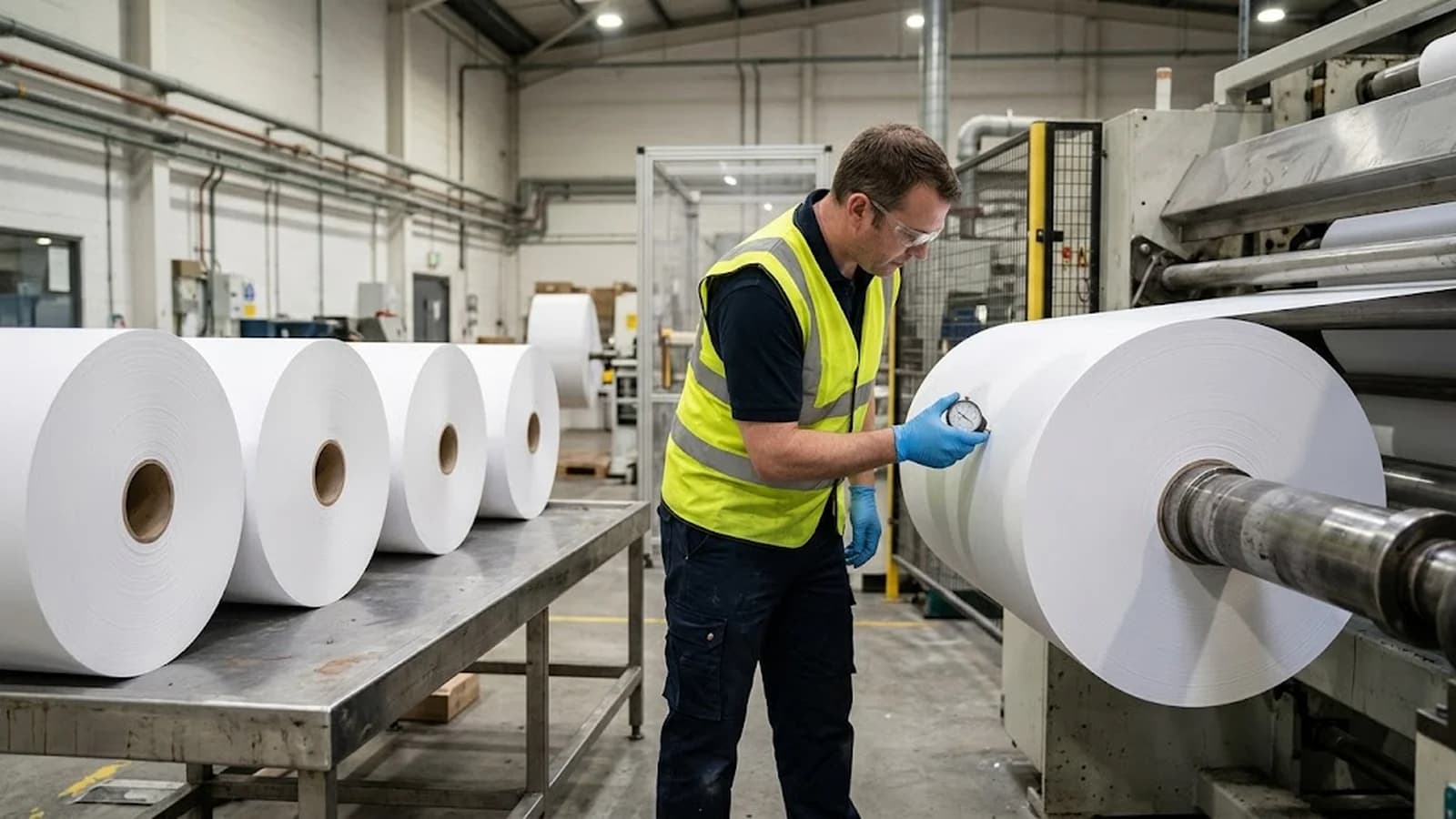
High Sensitivity Thermal Paper: What the Rating Means and When to Specify It
A buyer's guide to thermal paper sensitivity — how sensitivity is measured, what activation temperature and dynamic sensitivity really describe, the trade-off against image stability, and how to write a sensitivity specification that a mill can quote and a QC lab can verify.
Read the guide
Fanfold Thermal Labels: How Folded Stock Compares with Rolls and When to Choose It
A practical buyer's guide to fanfold thermal labels — how z-fold stacks are converted from jumbo stock, how they compare with rolled labels on feeding, storage footprint, changeout downtime and cost per label, and the specification and inspection checklist for ordering folded shipping label stock.
Read the guide
The Thermal Paper Slitting Process: How Jumbo Rolls Become Finished Rolls
A converter-grade guide to the thermal paper slitting process — unwind tension, shear versus crush cutting, width tolerance, edge quality, dust control, wound-in tension profiles and the QC checkpoints that separate clean finished rolls from rolls that misfeed and scratch printheads.
Read the guide
Coreless Thermal Paper Rolls: How They Work, Yield Gains and Buying Considerations
A buyer's guide to coreless thermal paper rolls: how paper-drive feeding works without a core, the 10–20 percent yield gain at the same outer diameter, machine compatibility requirements, converting and quality considerations, and the specification checklist for testing coreless on an existing terminal fleet.
Read the guide
Thermal Paper Roll Sizes: The Complete Index of Standard Widths by Application
A complete index of standard thermal paper roll sizes across every application — receipt rolls, label rolls, ticket and kiosk stock, ATM journal widths and jumbo parent rolls — with the common width, diameter, core and length for each, so buyers can match any device or converting plan to a standard specification.
Read the guide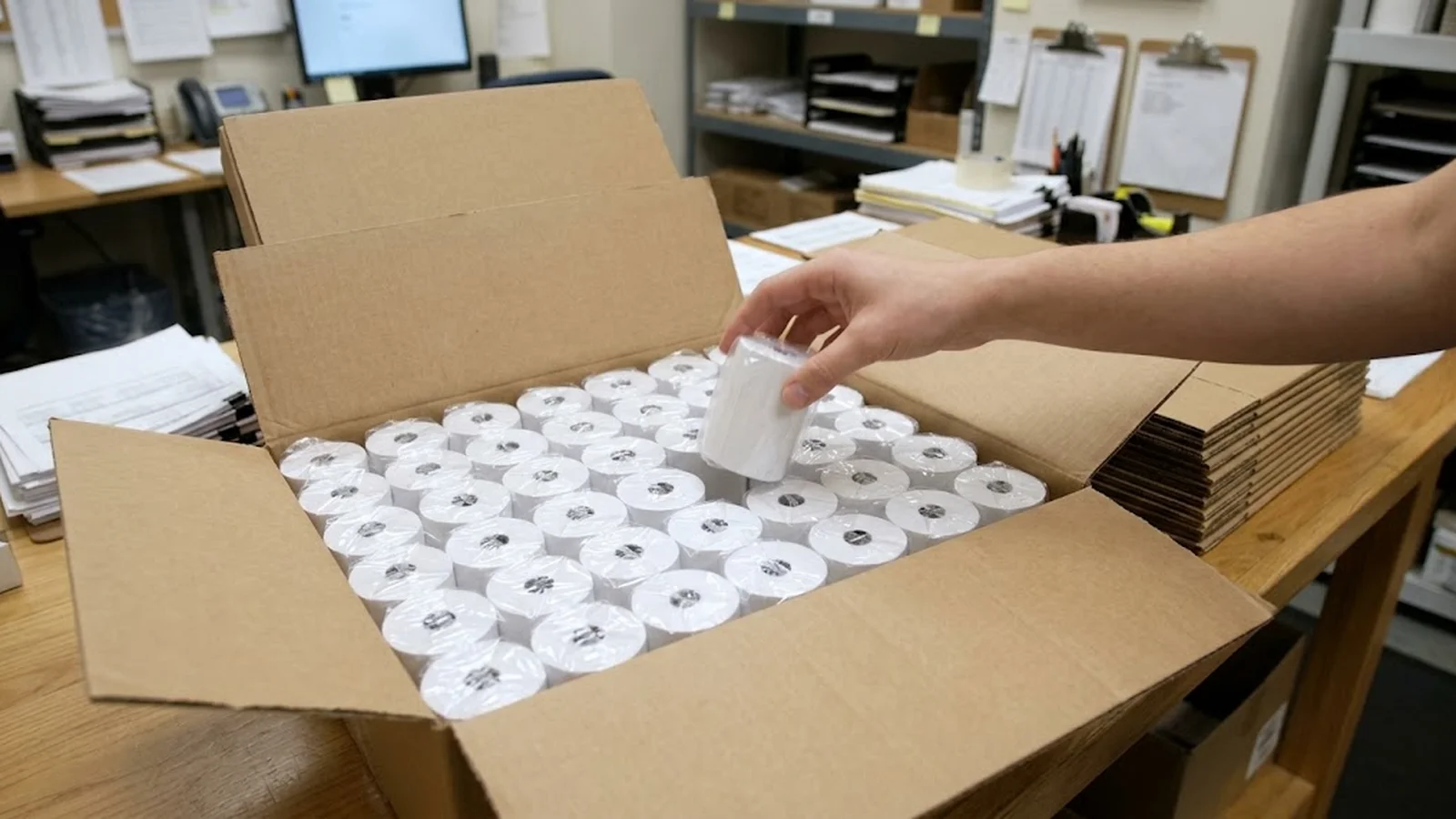
3 1/8 x 230 Thermal Paper Roll Explained: What It Is, Equivalents and Buying Checks
What the 3 1/8 x 230 thermal paper roll actually is: how to read the width-by-length label, its metric equivalents against 80 x 80 and 80 x 70, how many metres and receipts each roll yields, per-case packing maths, and the buying checks that keep North American receipt replenishment predictable.
Read the guide
Thermal Paper Size Guide: How to Specify Roll Width, Diameter, Core and Length
A practical thermal paper size guide for buyers: how 80x80, 57x40 and 3 1/8 x 230 dimensions are written, how core and roll diameter affect fit, and what to send for a quote.
Read the guide
Thermal Paper GSM Guide: Choosing 48, 55, 65 and 75 gsm for Your Application
How thermal paper gsm affects caliper, image density, roll length, handling and cost — with a grade-by-grade comparison for POS receipts, ATM records, tickets and direct thermal labels.
Read the guide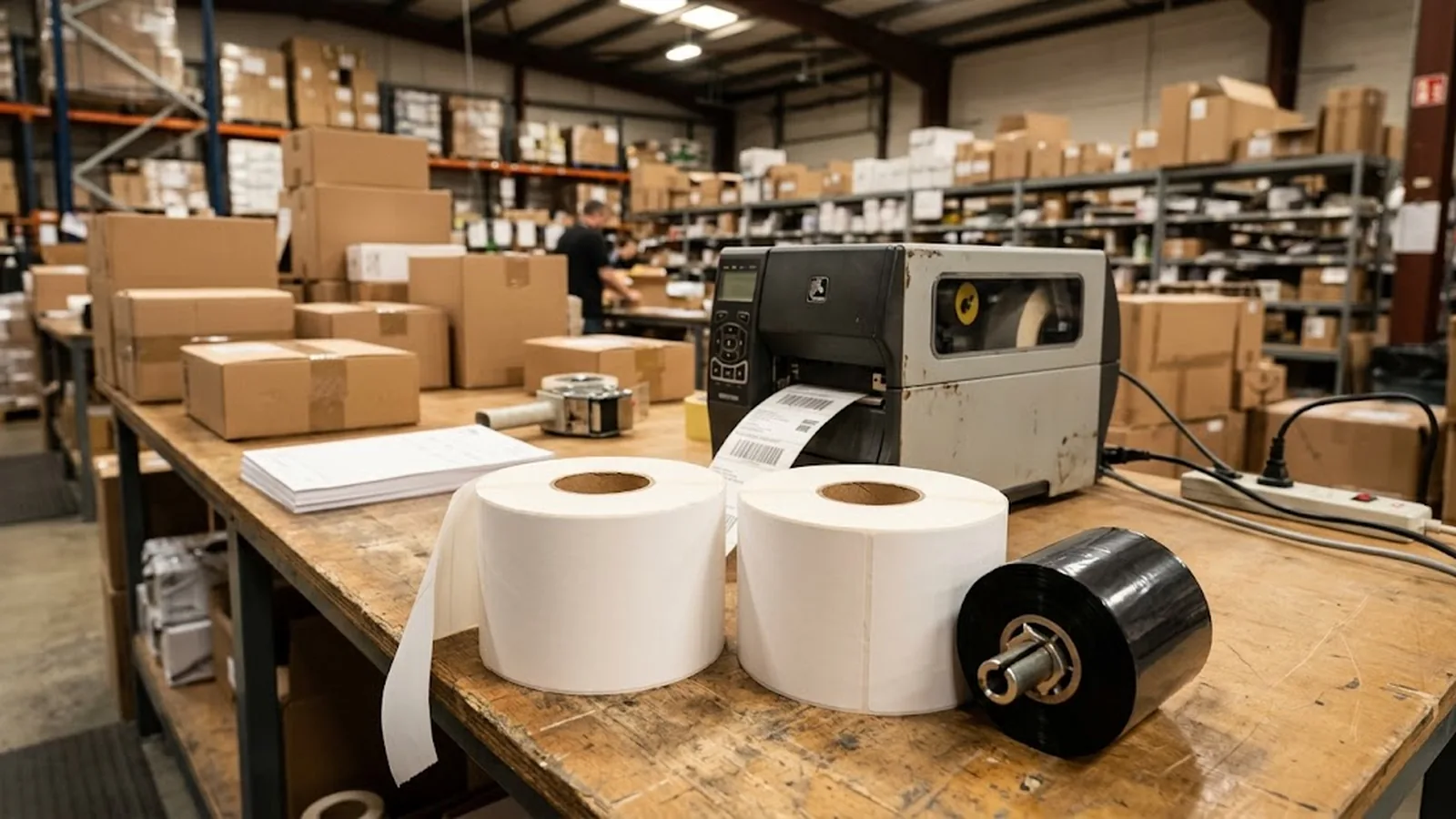
Direct Thermal vs Thermal Transfer: How to Choose the Right Label Media
A buyer-focused comparison of direct thermal and thermal transfer printing: how each method works, where each is more economical, durability and storage limits, and a checklist for selecting label media.
Read the guide
How Thermal Paper Is Made: From Base Paper to Finished Jumbo Rolls
A step-by-step walkthrough of thermal paper manufacturing — base paper selection, precoat, the heat-sensitive thermal layer, topcoat, supercalendering and jumbo roll converting — and why each layer affects the paper you buy.
Read the guide
Thermal Paper Shelf Life: How Long It Lasts and How to Store It
How long thermal paper lasts before printing and after printing, why thermal images fade, and the storage conditions — temperature, humidity, packaging and handling — that protect both unprinted rolls and printed records.
Read the guide
How to Measure a Thermal Paper Roll: Width, Diameter, Core and Length
A practical guide to measuring thermal paper rolls — width, outside diameter, core inner diameter and roll length, including the length formula, tolerances and how to turn measurements into a specification suppliers can quote accurately.
Read the guide
How to Store Thermal Paper Rolls: Warehouse and Transit Guide for B2B Buyers
A practical storage guide for thermal paper rolls — ideal temperature and humidity ranges, packaging practices, warehouse layout, container transit protection and shelf-life rotation for distributors, converters and end users.
Read the guide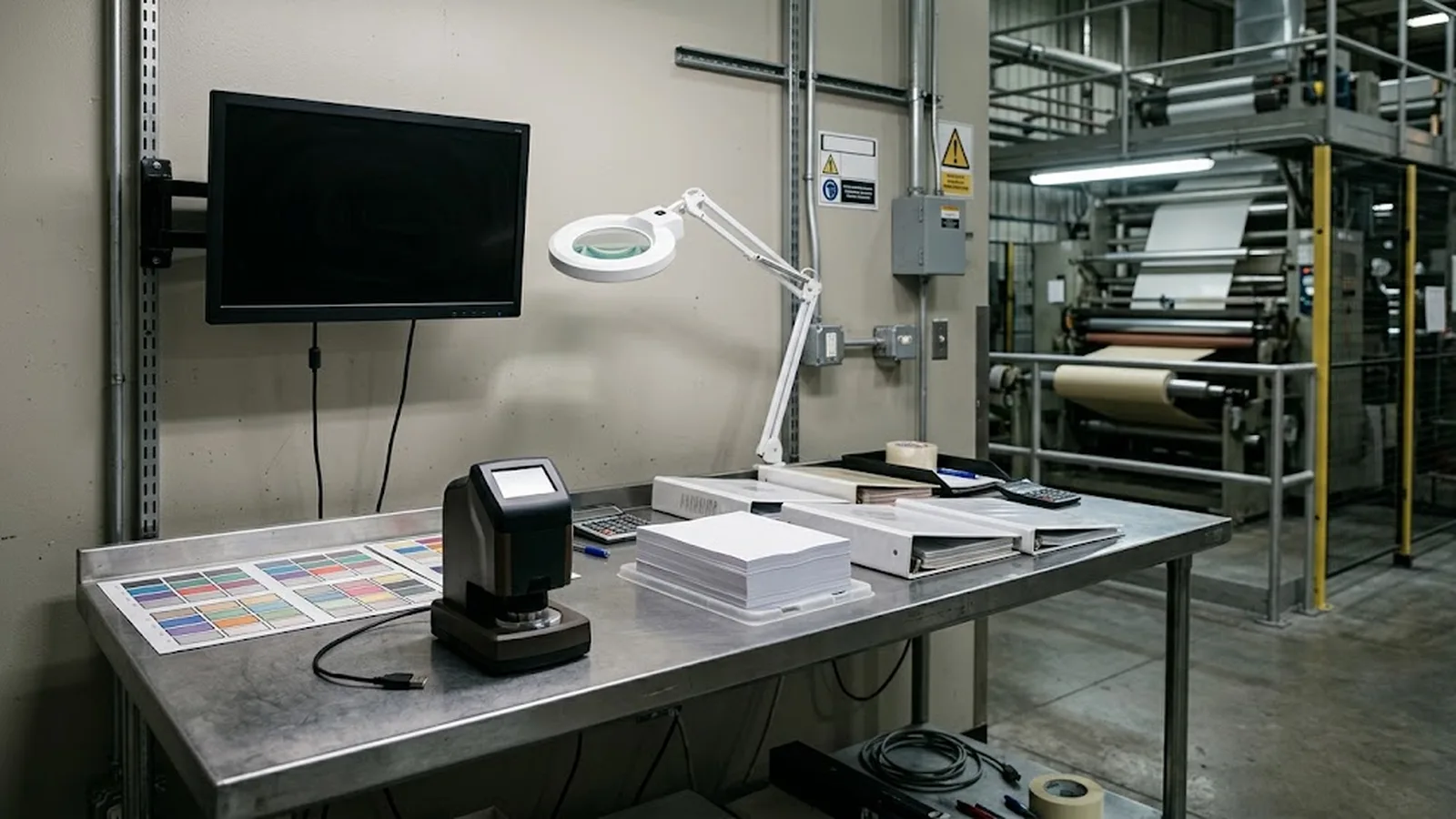
BPA-Free vs Phenol-Free Thermal Paper: What Export Buyers Need to Know
The difference between BPA-free and phenol-free thermal paper, how developers like BPS, Pergafast and D8 compare, which regulations matter in the EU, US and beyond, and how to specify and document a compliant grade for your market.
Read the guide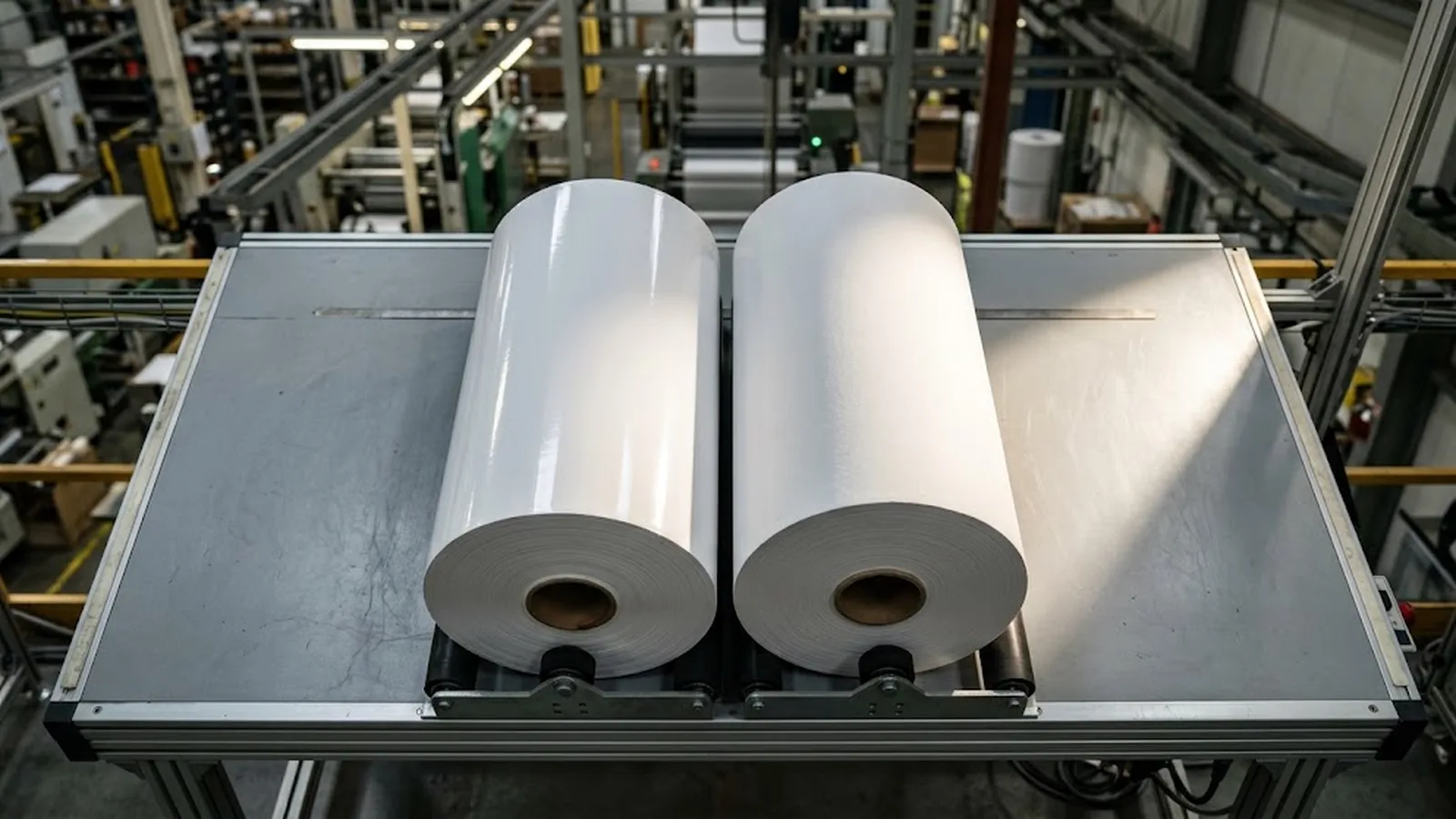
Top Coated vs Non Top Coated Thermal Paper: How to Choose the Right Grade
What the topcoat actually does, how top coated and non top coated thermal paper compare on price, print quality, image retention and machine behaviour, and a decision framework for matching the grade to receipts, labels, tickets and archival documents.
Read the guide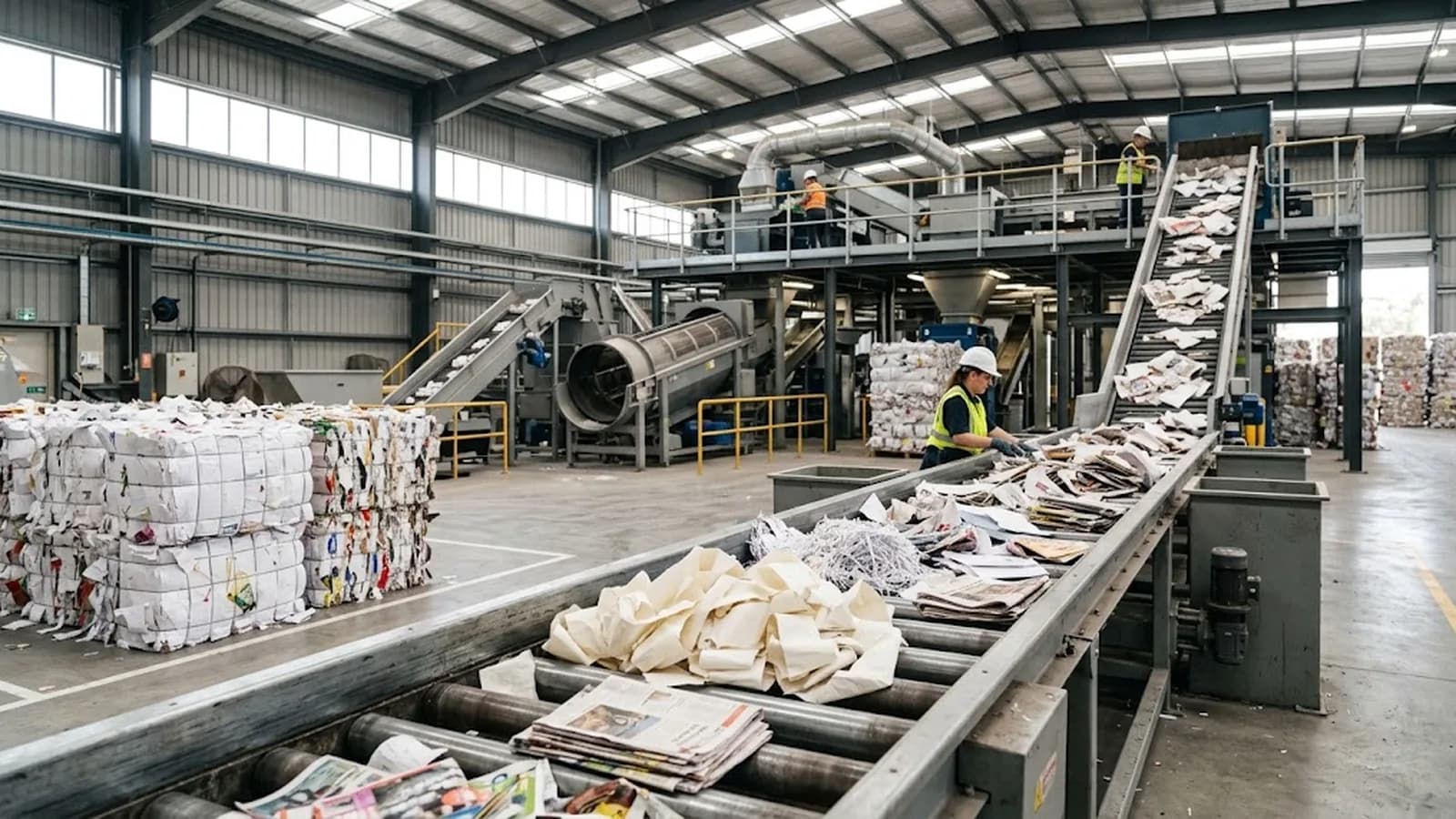
Is Thermal Paper Recyclable? What Buyers Need to Know in 2026
Whether thermal paper can be recycled, how the thermal coating and developer chemistry affect recycling streams, what regulations in the EU and US require, and how B2B buyers should handle sustainability questions in tenders and supplier assessments.
Read the guide
Thermal Paper Buyer Guide: How to Source, Compare and Qualify Suppliers
A complete B2B buying framework for thermal paper — writing the specification, structuring RFQs so quotes are comparable, sampling and testing, quality and compliance documents, incoterms and container logistics, and qualifying a manufacturer for long-term supply.
Read the guide
Thermal Paper Export and Shipping: Packing, Container Loading and Documentation
How thermal paper is packed, loaded and documented for international shipment — moisture-barrier packing, pallet and container loading practice, HS classification, Incoterms, the document set importers need and what to inspect on arrival.
Read the guide
Thermal Label Adhesive Guide: Choosing Adhesive, Liner and Facestock
How to specify a direct thermal label: the three-layer construction, adhesive families and when to use each, minimum application versus service temperature, freezer and low-surface-energy applications, liner choice, facestock selection and a specification checklist for converters and buyers.
Read the guide
Food-Safe Thermal Labels: Food Contact Compliance for Direct Thermal Media
When a direct thermal label counts as a food contact material, which regulatory frameworks apply in the EU and US, what migrates from the coating and adhesive, why bisphenols are restricted, and how declarations of compliance and migration testing are used to qualify a label supplier.
Read the guide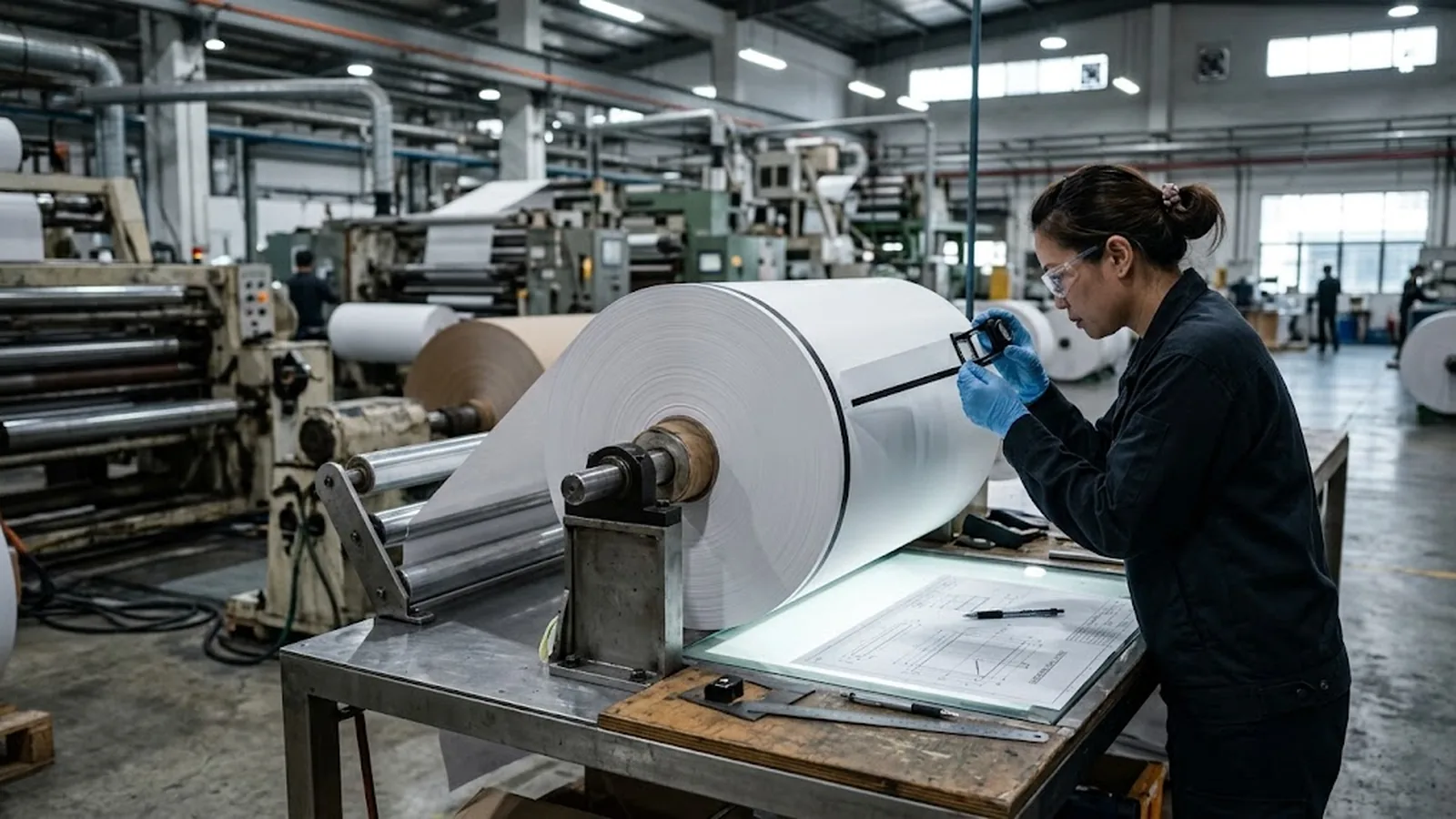
What Is Black Mark Thermal Paper? A Buyer's Guide to Sense-Mark Rolls
Black mark thermal paper carries a printed registration mark that tells a machine where each document begins and ends. How the mark works, where it is placed, how it is converted, and what buyers should specify when sourcing sense-mark rolls for ATMs, kiosks and ticketing.
Read the guide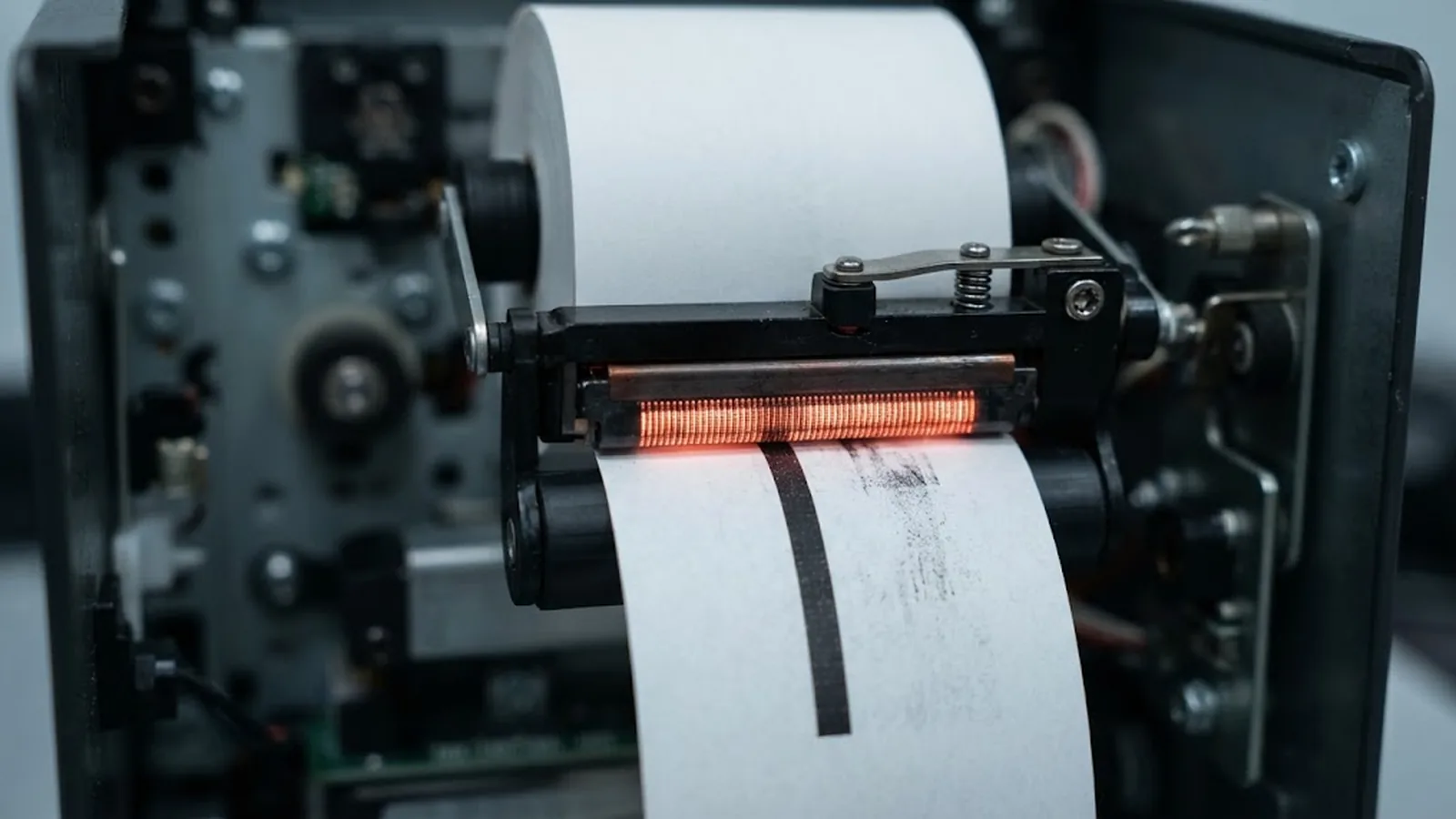
How Does Thermal Paper Work? The Chemistry Behind Direct Thermal Imaging
Thermal paper images through a heat-triggered chemical reaction, not ink. How the leuco dye and developer react, what the coating layers do, why heat control decides print quality, and what buyers should check when qualifying a thermal paper supplier.
Read the guide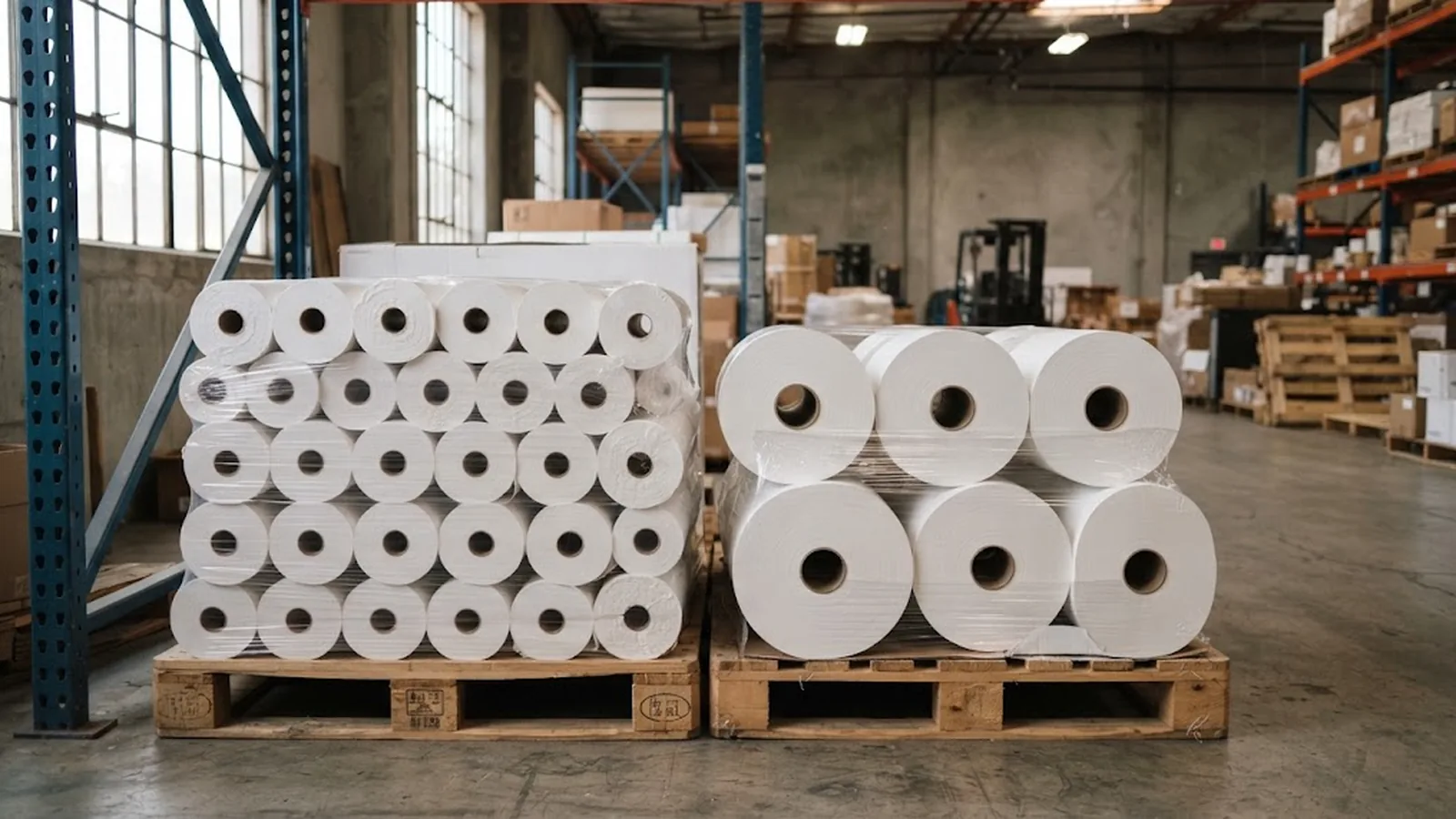
Thermal Paper Core Size Explained: 1-Inch vs 3-Inch Cores for Converters and Buyers
Core size decides how much paper fits on a roll, which machine spindle it fits, and how it converts from jumbo stock. The difference between 1-inch and 3-inch cores, core versus outer diameter maths, and what export buyers should state when ordering.
Read the guide
Thermal Paper Image Retention: How Long Printed Images Last and How to Protect Them
Printed thermal images fade through heat, light, humidity and chemical contact. What image retention actually measures, the main fade factors, how top coating and storage extend document life, and what B2B buyers should specify for records that must stay readable.
Read the guide
What Is Thermal Paper? A Plain-Language Guide for Buyers and Converters
A plain-language explanation of what thermal paper is, how it differs from ordinary paper, the main constructions buyers encounter, and where it is used — written for importers, converters and procurement teams evaluating direct thermal products.
Read the guide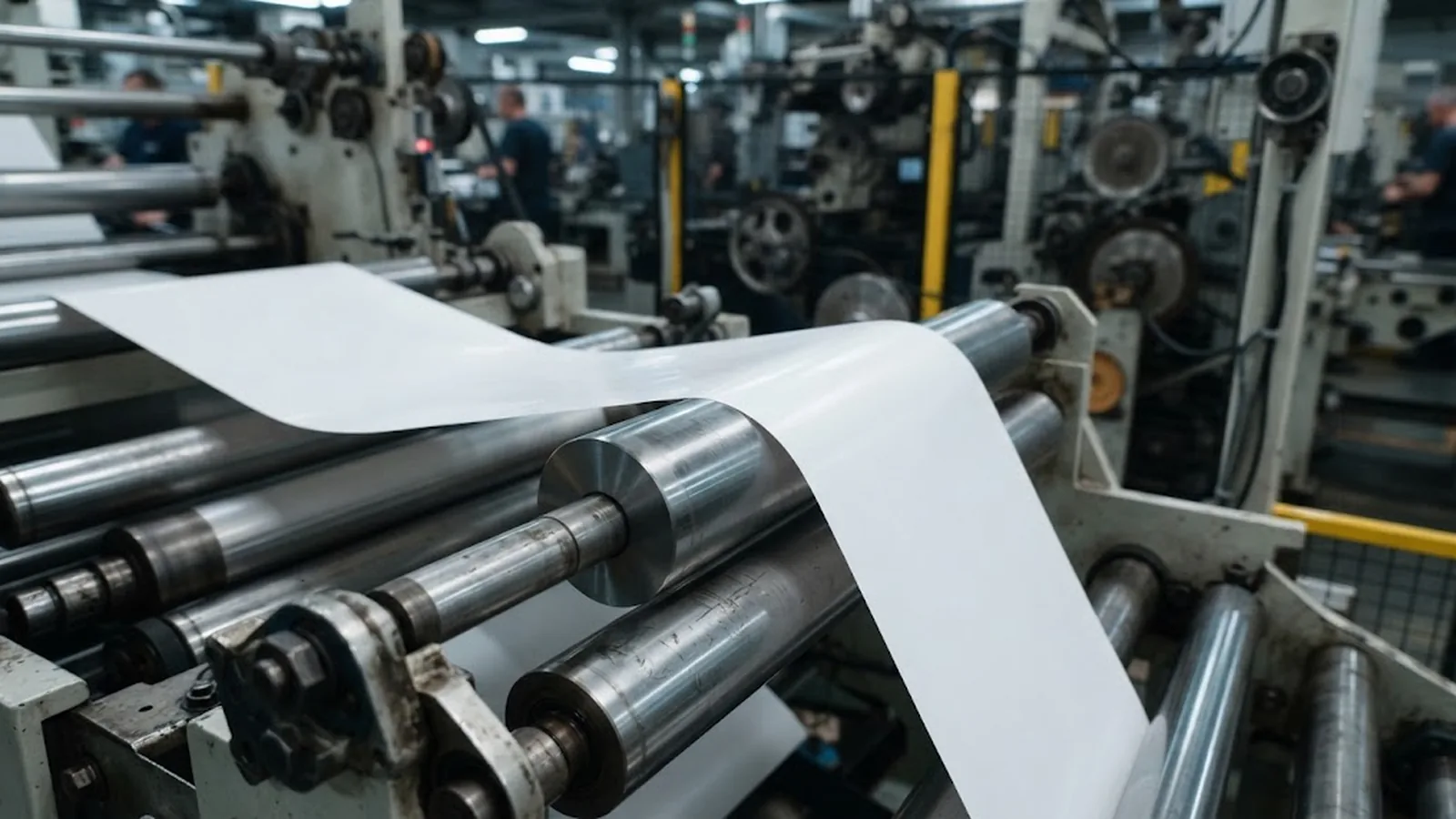
Thermal Paper Structure Explained: The Five Layers Inside Every Roll
What a sheet of thermal paper is actually made of: the base paper, precoat, heat-sensitive thermal layer, protective topcoat and backcoat — what each layer does, how the weight splits, and how construction drives stiffness, curl and print behaviour. Written for buyers, converters and QC teams.
Read the guide
Thermal Paper Coating Layers: What's in the Coating and Why It Matters
A technical look inside the thermal paper coating system: the chemistry of the sensitive layer (leuco dye, developer, sensitiser, binder), what a topcoat and backcoat actually do, how coating weight is applied and controlled, and the QC tests buyers can use to evaluate coating quality.
Read the guide
How to Choose Thermal Paper: A Practical Selection Framework
A step-by-step framework for choosing the right thermal paper: work backwards from the application to coating type, chemistry and compliance, grade weight, roll dimensions and print performance — before you ever request a quote.
Read the guide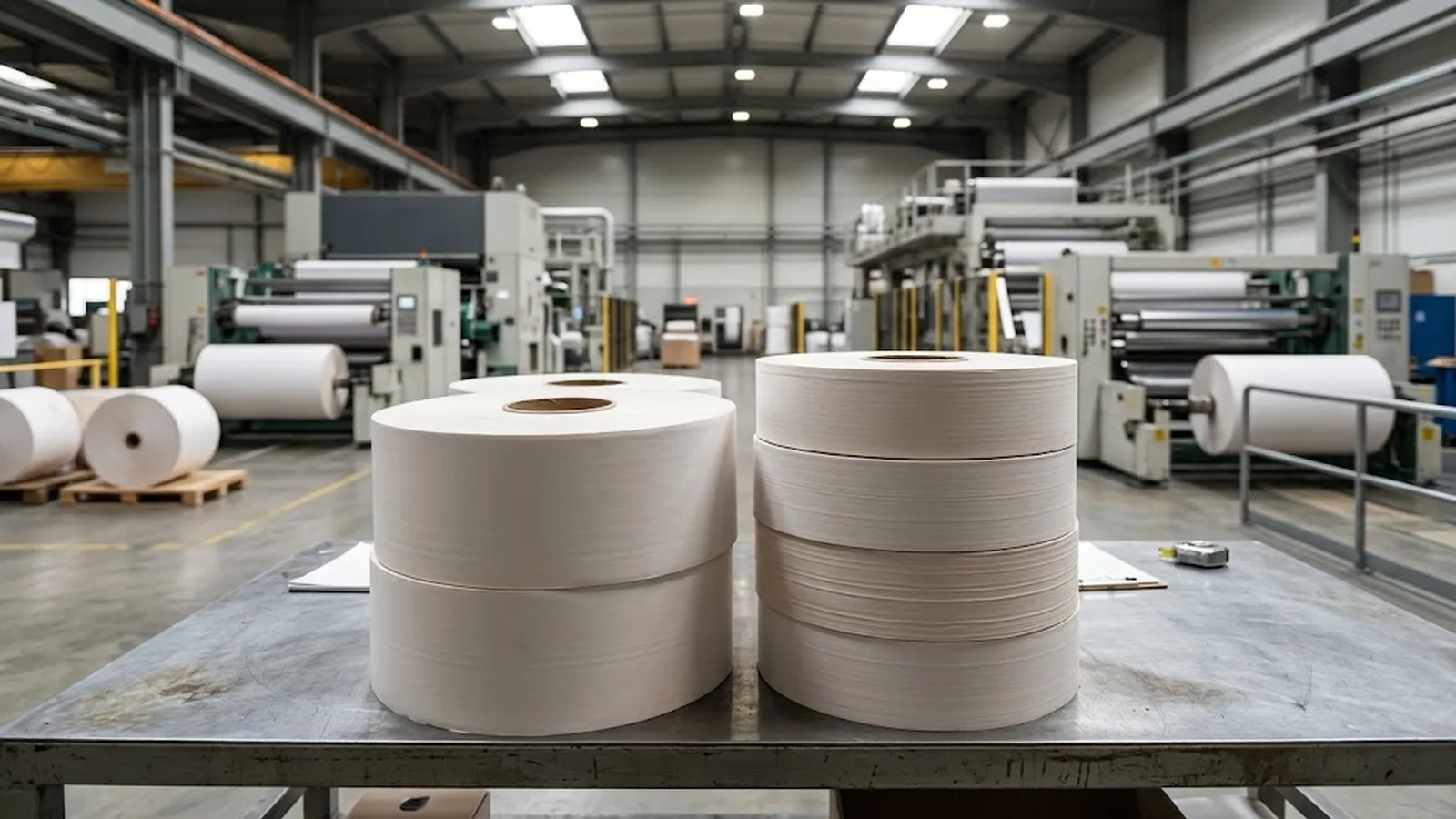
48 GSM vs 55 GSM Thermal Paper: Which Grade Should You Buy?
A head-to-head comparison of 48 gsm and 55 gsm thermal paper: thickness, stiffness, feel, roll length, cost per metre, print behaviour and the applications each grade suits, so buyers can commit to the right specification.
Read the guide
How to Choose the Right POS Paper Roll Size for Your Business
A decision guide to POS paper roll sizing: match roll width, diameter and core to your printer model, balance diameter against storage and change frequency, and pick the right size for each station from checkout to kitchen.
Read the guide
What GSM Thermal Paper for Receipts? A Buyer's Weight Selection Guide
Which gsm should receipt paper be? A practical guide for importers, distributors and retail operators choosing between 48, 55, 60 and 65 gsm thermal receipt paper — covering yield per roll, stiffness, print quality and cost per receipt.
Read the guide
55 GSM vs 65 GSM Thermal Paper: Which Grade Fits Which Programme?
A side-by-side comparison of 55 gsm and 65 gsm thermal paper for importers, converters and retail buyers — covering yield per roll, stiffness, print performance, application fit and total cost, so the specification decision is deliberate rather than habitual.
Read the guide
Why Thermal Paper Fades: Causes, Mechanisms and How to Prevent It
A clear technical explanation of why thermal paper fades — heat, UV light, moisture, plasticisers, adhesives and friction — how the fading mechanism works inside the coating, and the storage, handling and grade-selection practices that keep receipts, labels and tickets readable for years.
Read the guide
Thermal Receipt Paper Size Guide: Every Standard Roll Dimension Charted
A complete reference chart of thermal receipt paper sizes — 57 mm, 80 mm and 3-1/8 inch formats, the diameter-to-length maths behind each roll, core sizes and packaging counts — so buyers and distributors can specify the right roll for every terminal without guesswork.
Read the guide
How Long Does Thermal Paper Last? Lifespan Expectations by Scenario
A direct answer to how long thermal paper lasts: typical lifespan figures for unopened rolls and printed receipts under different storage conditions, a scenario-by-scenario timeline table, the factors that shorten life, and what buyers should specify when document retention matters.
Read the guide
BPA vs BPS in Thermal Paper: Chemistry, Regulation and Buyer Guidance
A technical comparison of BPA and BPS as thermal paper developers — how each works in the coating, the health and migration evidence, regulatory status across major markets, and what importers and distributors should specify and verify when moving to BPS-free and phenol-free grades.
Read the guide
Payment Terminal Paper Roll: Sizing, Specifying and Stocking for Card Machines
A buyer's guide to payment terminal paper rolls — the 2 1/4-inch and 57 mm formats behind countertop and mobile card machines, why terminal fleets punish the wrong roll geometry, how gsm and coating choice affect jam rates and scan life, and the stocking maths for banks, acquirers, ISOs and merchants running mixed fleets.
Read the guide
Ecommerce Thermal Labels: Specifying Shipping Labels That Scan First Time
A buyer's guide to ecommerce thermal labels — the carrier and marketplace label formats behind parcel fulfilment, why first-scan rate is the metric that matters, how facestock, adhesive and top-coat choices survive the courier journey, and the specification checklist for brands, 3PLs and label converters buying by the container.
Read the guide
Restaurant Thermal Paper Rolls: Specifying Paper for Front-of-House and the Kitchen Line
A foodservice procurement guide to restaurant thermal paper rolls — how to specify paper separately for dining-room receipts, payment terminal slips and kitchen order tickets, which GSM and roll sizes each station needs, how heat, grease and humidity change the construction decision, and how multi-site restaurant groups structure a programme with one supplier.
Read the guide
Banking Thermal Paper: Specifying Receipt Media for Branch Networks and Record Retention
A procurement guide to banking thermal paper — the paper streams across a bank branch from teller vouchers and customer receipts to queue tickets and ATM rolls, why record-retention rules make image life the deciding specification, which GSM and constructions suit each station, and how network-wide tenders, converter supply and chemistry documentation should be structured.
Read the guide
Event Ticket Thermal Paper: Specifying Admission Media for Venues, Promoters and Box Offices
A procurement guide to event ticket thermal paper — admission tickets, box-office receipts, VIP badges and self-service validation media, how GSM and stiffness shape a ticket guests actually keep, why outdoor shows need top-coated constructions for UV and moisture, what pre-print and black-mark features add, and how promoters and venues should structure seasonal programme buying.
Read the guide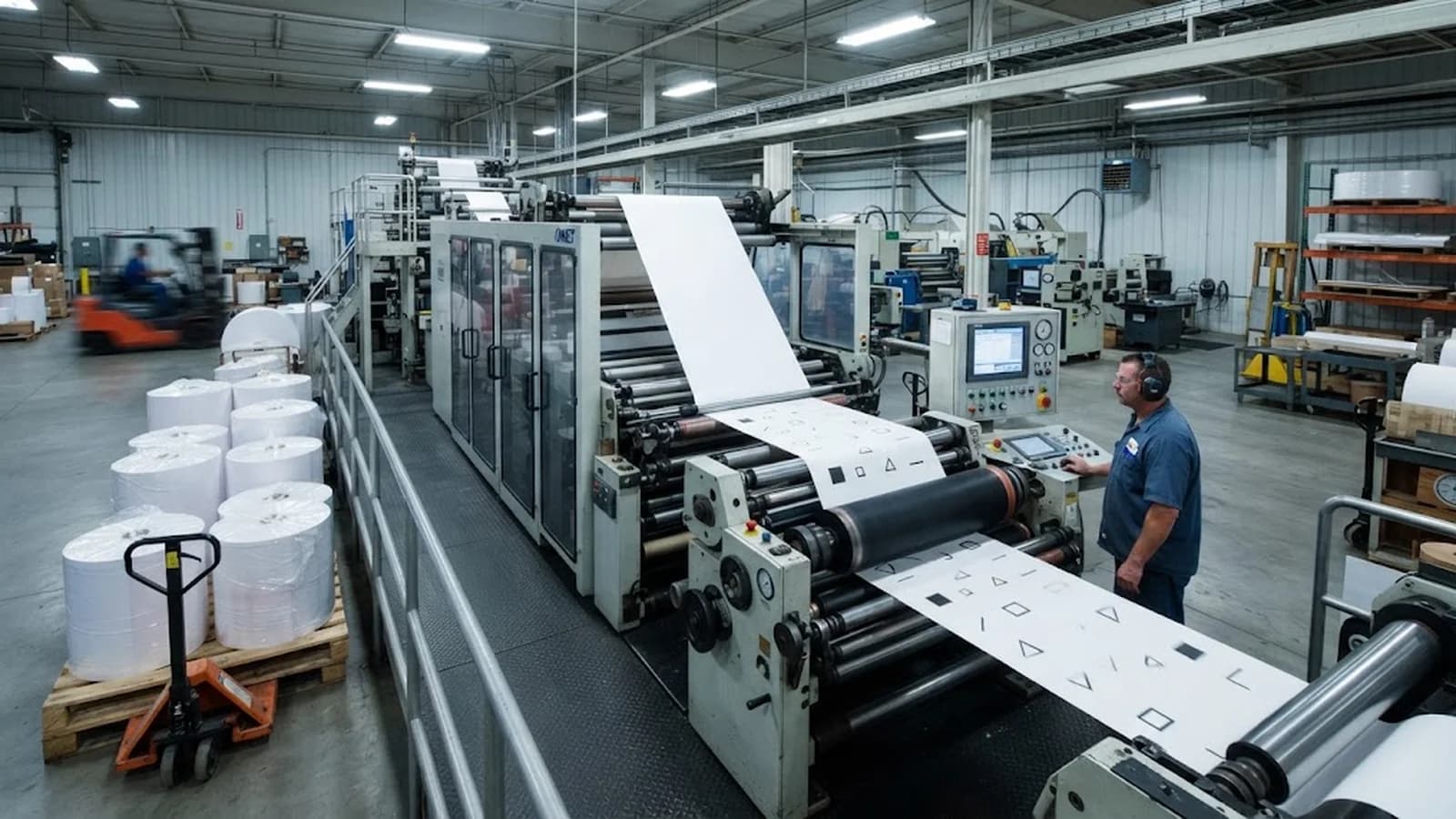
Logo Printed Thermal Paper Rolls: Specifying a Preprint Programme That Survives the Thermal Coating
A converter's guide to logo printed thermal paper rolls — how preprinting interacts with the thermal coating, which print position and ink system survive the print head, what artwork and security features are practical on a receipt, and how MOQs, plate costs and sampling should be structured before an OEM programme is awarded.
Read the guide
Weighing Scale Labels: Specifying Direct Thermal Media for Deli, Produce and Fresh Food Counters
A buyer's guide to weighing scale labels — how die-cut direct thermal label stock performs on in-store weighing scales at the deli, butcher and produce counter, which facestock, adhesive and topcoat choices survive chillers and condensation, how label sizes and gap marks match scale printers, and what compliance and barcode requirements shape the specification.
Read the guide
Convenience Store Thermal Paper: Building a Receipt Programme for High-Turnover Retail
A procurement guide to convenience store thermal paper — the roll streams behind a c-store counter from till receipts and payment terminal slips to kitchen and lottery printers, why heat, daylight and transaction volume stress the media, which widths and grades fit each station, and how chains should structure buying, preprint and replenishment across a fleet of small-format stores.
Read the guide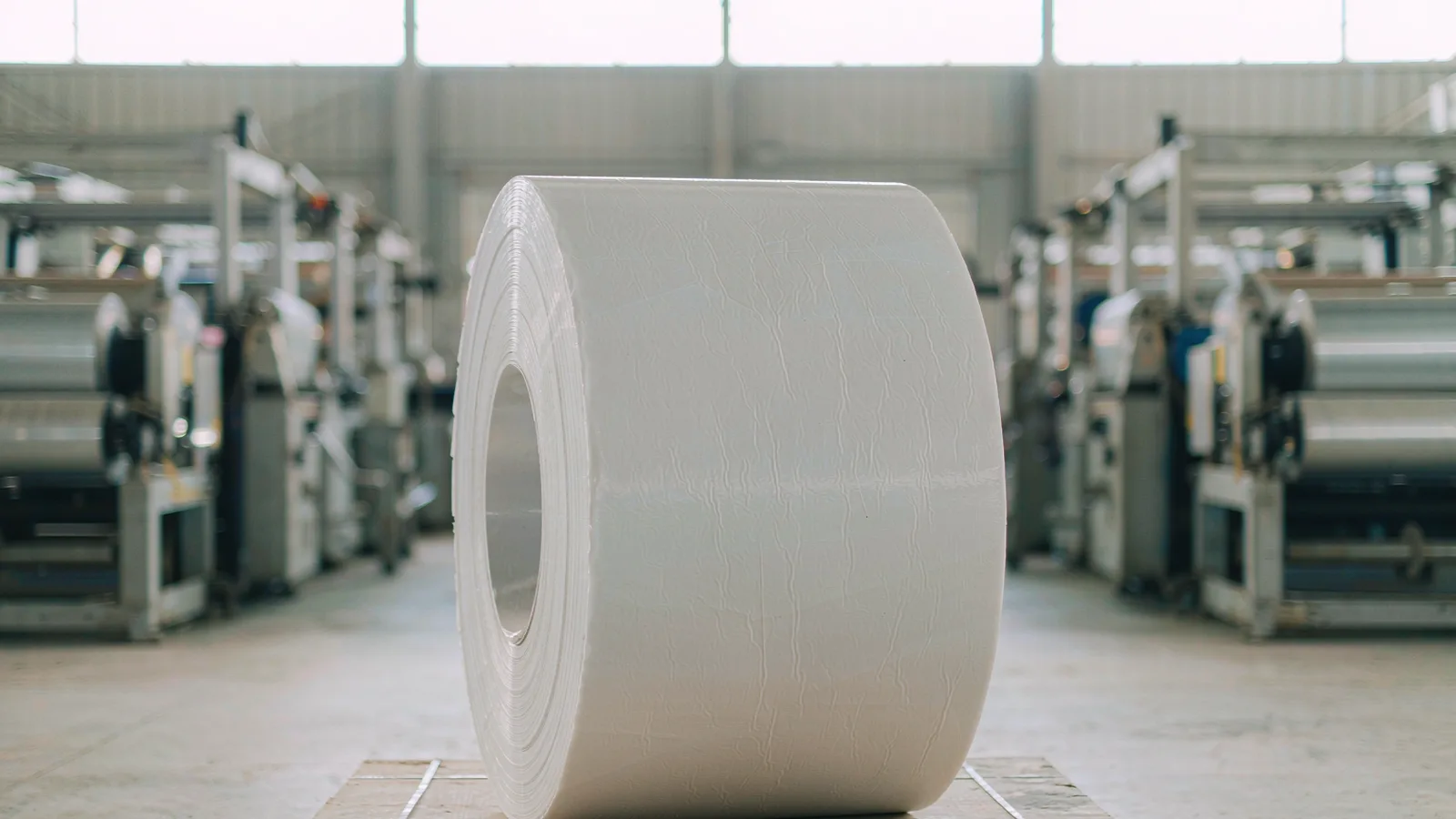
565mm Thermal Paper Jumbo Roll: Where This Width Fits in a Converter's Slitting Plan
A converter's guide to the 565mm thermal paper jumbo roll — what the width actually describes, how it maps onto common finished formats in a gang-up slit plan, which gsm, core and roll diameter combinations to specify, and how packing and ocean freight should be planned for wide parent rolls.
Read the guide
BPA Free POS Paper Roll: Specifying Compliant Receipt Stock Without Guesswork
A procurement guide to BPA free POS paper rolls — what the claim means in developer chemistry, how BPA-free differs from BPS-free and phenol-free classes, which regulations and retailer policies drive the requirement, and how COAs, SDS documents and migration testing should verify the claim before a POS consumable contract is awarded.
Read the guide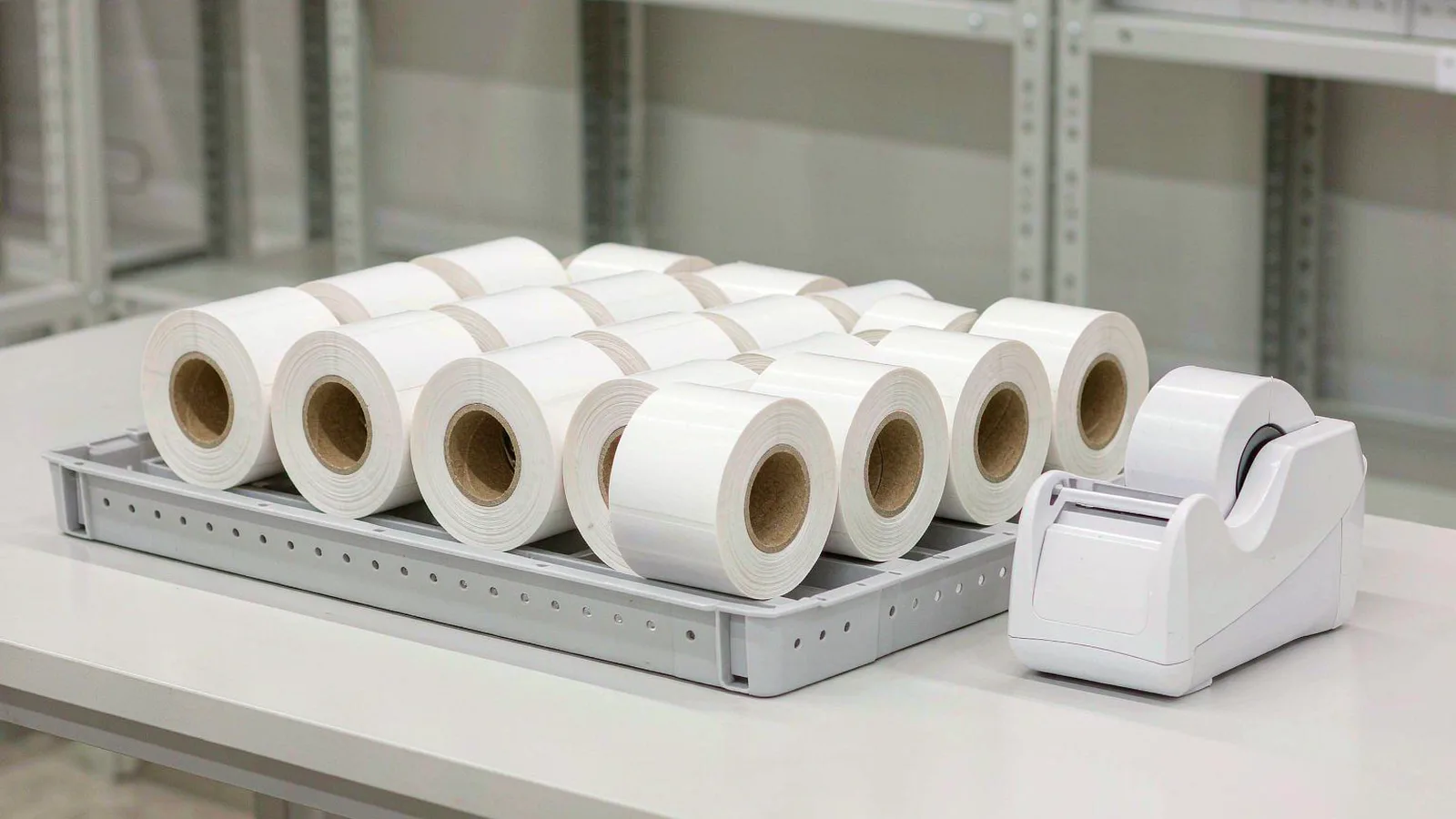
Thermal Price Labels: A Shelf-Edge Labelling Guide for Retail Buying Teams
A retail buyer's guide to thermal price labels — what the category covers from price-gun rolls to shelf-edge tags, which sizes and roll formats suit each dispenser, how print contrast keeps barcodes scanning at the shelf edge, which adhesives survive chilled and frozen cases, and how to structure the supply programme behind a multi-store roll-out.
Read the guide
Thermal Paper Exporter: What Importers and Distributors Should Evaluate Before the First Container
An importer's guide to evaluating a thermal paper exporter — the documentation set that must travel with every shipment, how incoterms and container planning shape landed cost, the difference between a mill audit and a trading-company relationship, and a sample process that catches specification errors before the container sails.
Read the guide
Receipt Paper Jumbo Rolls: A Converter's Guide to Spec, Slit Planning and Supply
A converter's guide to receipt-grade thermal jumbo rolls — how the construction differs from labelstock parent stock, which GSM and sensitivity classes cover the receipt market, how to plan slits into 57mm and 80mm finals, and which core, diameter and packing options keep a slitting programme efficient.
Read the guide
EFTPOS Paper Rolls: A Procurement Specification Guide for Australia, New Zealand and Similar Markets
A procurement guide to EFTPOS paper rolls for Australian, New Zealand and similar markets — the 57x40 and 57x50 formats that fit payment terminals, BPA-free chemistry expectations, core and wound-length details that decide fit, and how to write a retail spec sheet that survives supplier changes.
Read the guide
Thermal Receipt Paper: A Buyer's Guide to Grades, GSM, Chemistry and Programme Buying
A buyer's guide to thermal receipt paper — matching sensitivity class to the printer fleet, choosing gsm by receipt format, fixing BPA-free or phenol-free chemistry per market, the roll-quality markers that prevent till-side complaints, and how programme buying from a manufacturer works.
Read the guide
Direct Thermal Shipping Labels: A Specification Guide for E-commerce and 3PL Programmes
A spec guide to direct thermal shipping labels — adhesive classes from general-purpose to cold-chain, facestock gsm and top-coating choices, liner and die-cut tolerances that decide printer feeding, print darkness and shelf life, and programme buying for e-commerce sellers and 3PLs.
Read the guide
ATM Thermal Paper: A Programme Guide to Formats, Black Marks, Jam Prevention and Tender Buying
A programme guide to ATM thermal paper — 80mm formats and core specifications, black-mark variants and sensor alignment, winding and tension quality that prevents jams, image-retention requirements for settlement receipts, and the banking-grade documentation and tender structure buyers require.
Read the guide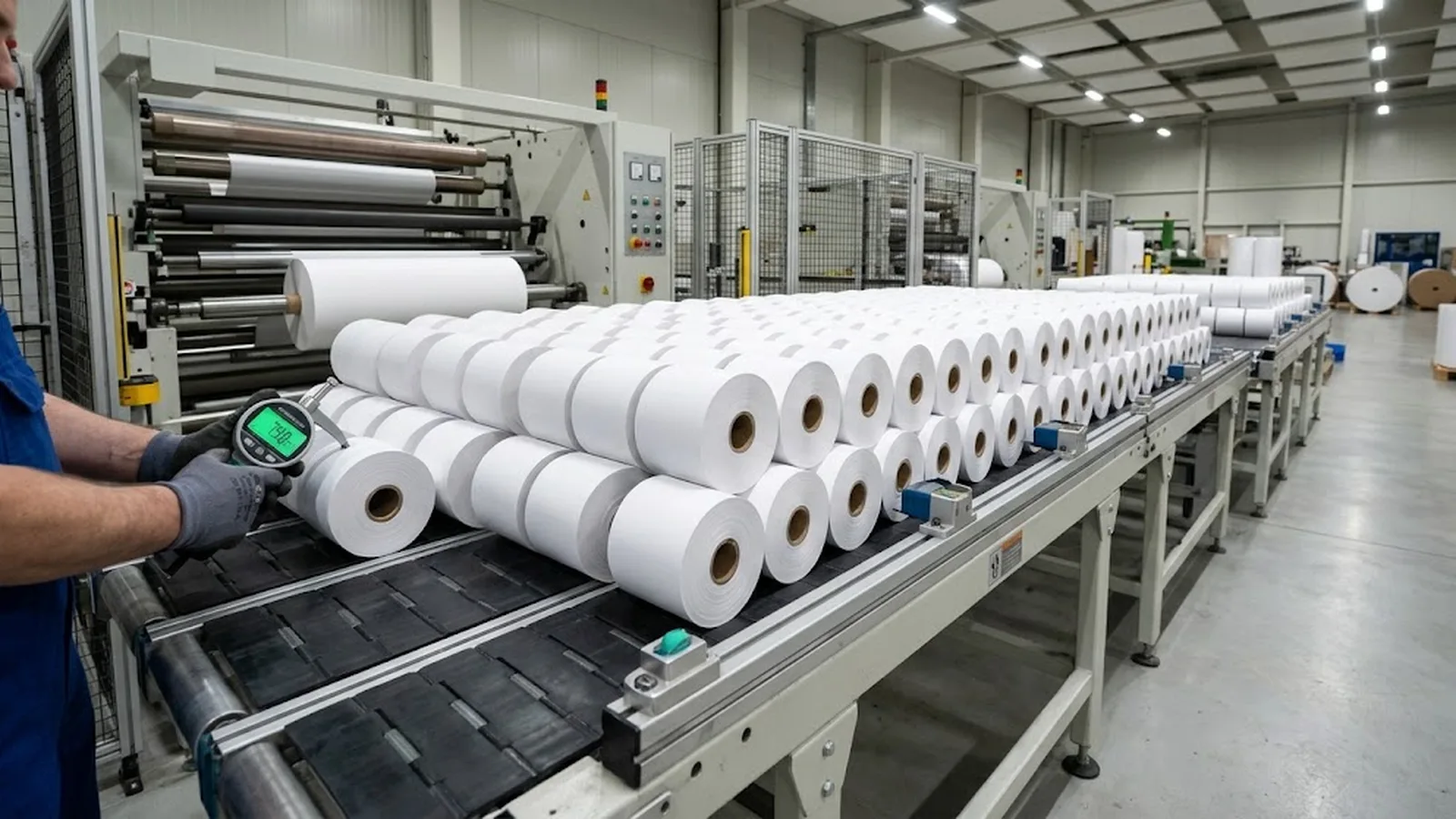
80x80 Thermal Paper Roll: Specs, GSM Options and Buying Checklist for POS Programmes
A buyer's guide to the 80x80 thermal paper roll — why the 80mm by 80mm format became the retail default, how gsm changes metres per roll and printer-bay capacity, which core and winding specs to check, and how to buy the format on a manufacturer specification sheet.
Read the guide
Medical Thermal Paper Roll: Specifying Paper for ECG, Monitoring and Pharmacy Printing
A buyer's guide to medical thermal paper rolls — the paper classes behind ECG and CTG printouts, patient monitoring charts and pharmacy receipts, which specification points matter for diagnostic trace quality and record retention, how chemistry compliance works for patient-adjacent use, and how to qualify a roll against device feed requirements.
Read the guide
Thermal Paper Sample Manufacturer: How Buyers Source and Qualify Samples Before an Order
How to source thermal paper samples from a manufacturer the professional way — what to send with the enquiry, what a mill sample pack should contain, how to run a lab-to-line qualification that predicts production behaviour, what sampling costs and how it ships, and how to convert a passed sample into a programme with batch discipline.
Read the guide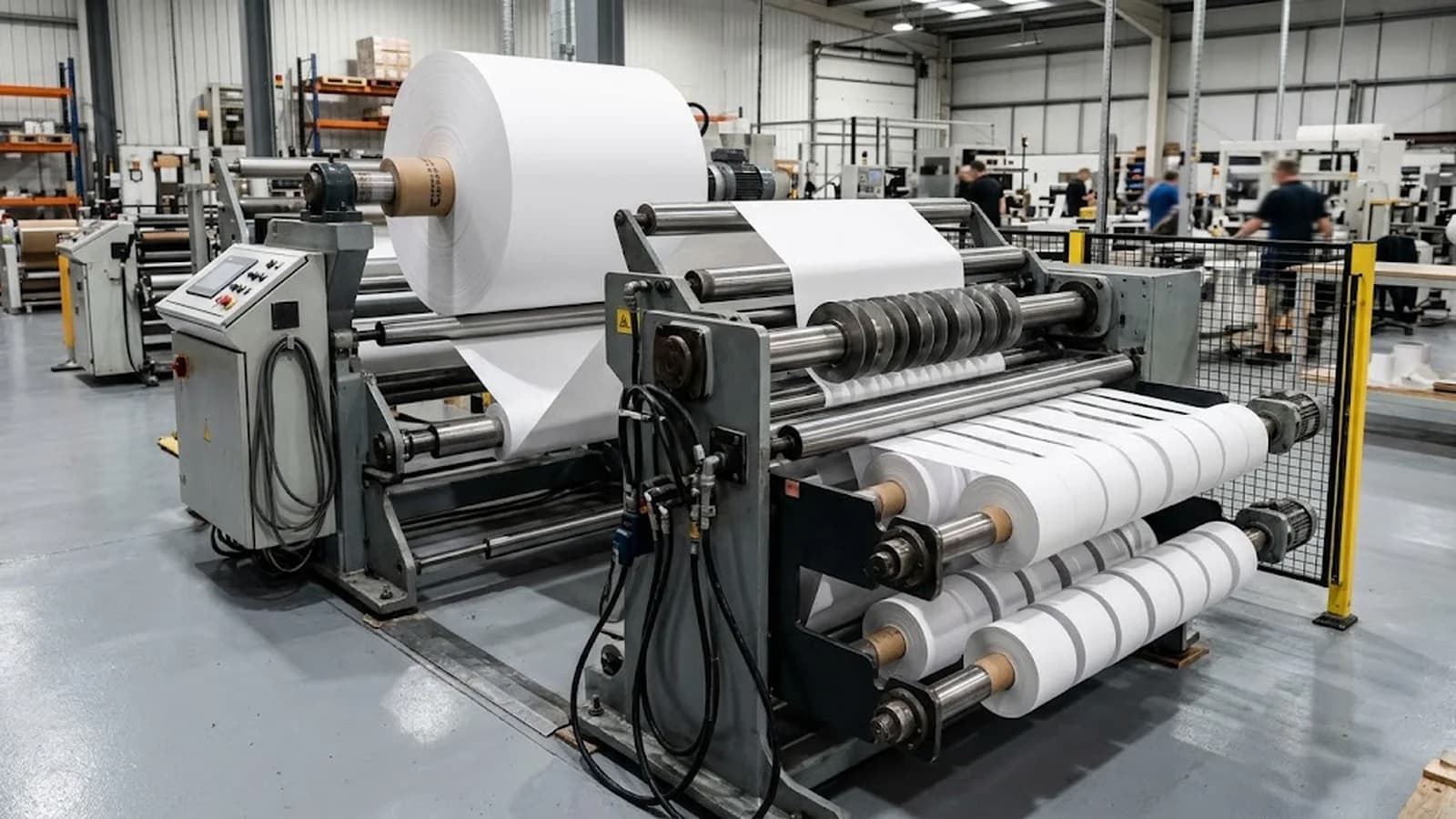
405mm Thermal Paper Jumbo Roll: The Compact Parent for Receipt Slitting Plans
A converter's guide to the 405mm thermal paper jumbo roll — where it sits in the jumbo width ladder, the 7 x 57mm and 5 x 80mm slit plans it carries, the yield arithmetic from parent to finished receipt rolls, and the specification checklist for ordering 405mm parents by the container.
Read the guide
80x60 Thermal Paper Roll: Why Some Machines Specify the Shorter 80mm Roll
A buyer's guide to the 80x60 thermal paper roll — why machines specify the shorter 80mm roll beside the 80x80 standard, the length and yield maths per roll, how geometry and sensitivity decide change frequency and print quality, and the specification checklist for buying 80x60 stock by the carton or container.
Read the guide
A6 Thermal Shipping Labels: The European Courier Standard, Specified Properly
A buyer's guide to A6 thermal shipping labels — why the 100x150mm format became the European courier standard, how roll and fanfold presentations differ on the packing line, what facestock, adhesive and liner specification the fulfilment environment demands, and the sourcing checklist for importers buying by the container.
Read the guide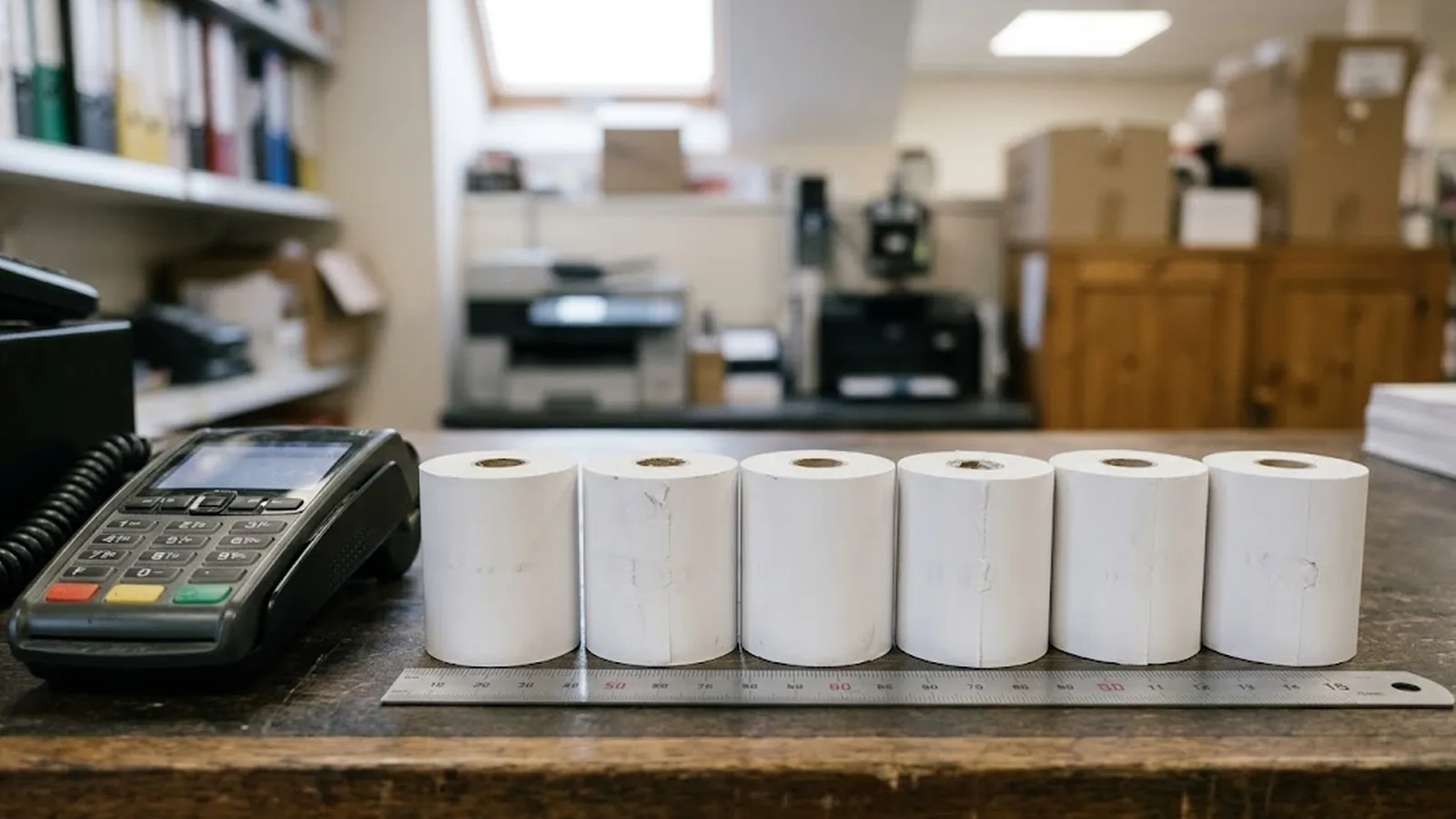
2 1/4 x 50 Thermal Paper Roll Explained: Feet, Metres and the 57 x 40 Twin
What the 2 1/4 x 50 thermal paper roll actually is: how the imperial width-by-feet label decodes to 57.15 mm and 15.2 m, why it is the physical twin of the metric 57 x 40 roll, how many card and mobile receipts each roll yields, standard case packing, and the specification checks that keep handheld receipt replenishment trouble-free.
Read the guide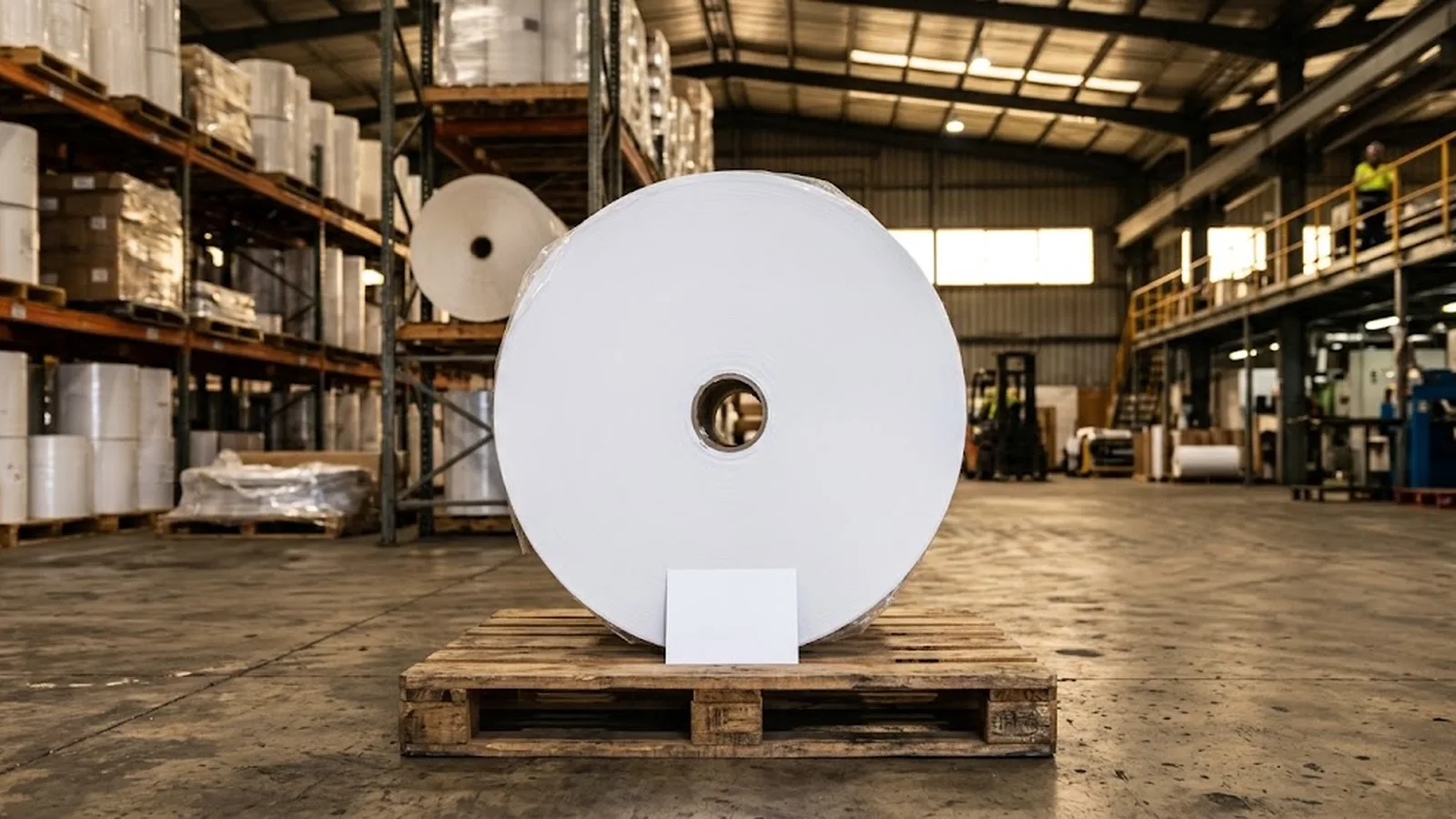
65 gsm Thermal Paper Jumbo Roll: The Mid-Heavy Grade and How to Order It
A converter's guide to the 65 gsm thermal paper jumbo roll — where the mid-heavy grade sits between 55 and 75 gsm, what it changes in weight, diameter and yield per tonne, the label facestock and durable-receipt programs it suits, the five-line ordering frame, and the weight-to-length audit that verifies a container on a floor scale.
Read the guide
Warehouse Barcode Labels: Stock Choices That Survive Racks, Coolers and Scan Lines
A buyer's guide to warehouse barcode labels in direct thermal stock — which label types carry rack, bin, pallet and pick-face identification, how cold store, abrasion and dwell time change the facestock and adhesive decision, the size and die-cut standards, scan-reliability checks, and the specification frame that keeps multi-site rollouts consistent.
Read the guide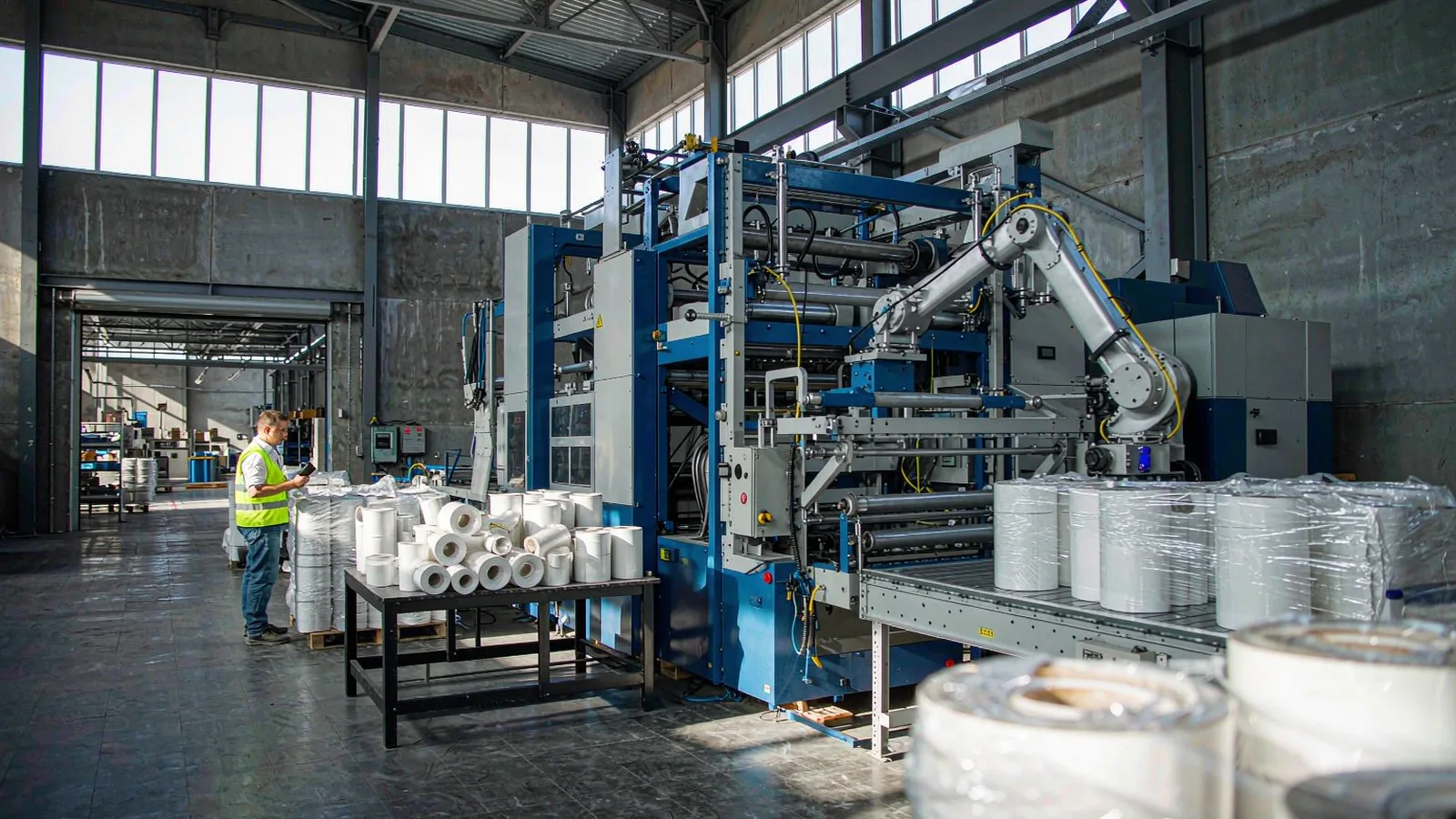
Industrial Thermal Labels: Specifying Direct Thermal Stock for Factory-Floor Identification
A buyer's guide to industrial thermal labels in direct thermal stock — work-in-progress tags, pallet and drum identification, equipment and pipe labels, and the abrasion, heat, chemical and dwell factors that decide between uncoated and top-coated constructions, adhesive classes and label formats before a plant-wide programme is ordered.
Read the guide
Medical Receipt Paper: Direct Thermal Stock for Pharmacies, Labs and Hospital Counters
A buyer's guide to medical receipt paper — thermal roll stock for pharmacy dispensing slips, laboratory reports, hospital registration and payment receipts, and the compliance, width, gsm and image-retention factors that decide the specification for healthcare printing programmes.
Read the guide
Thermal Paper Distributor Private Label: Building a House Brand on Factory Capacity
A buyer's guide to private label thermal paper programmes for distributors — how factory-direct OEM rolls are specified, branded, packed and shipped, the MOQ and margin maths, the quality and compliance documentation a house brand needs, and the checklist that separates a durable private label programme from a one-off sticker job.
Read the guide
80x70 Thermal Paper Roll: What the Format Means and How to Buy It Right
A buyer's guide to the 80x70 thermal paper roll — what the 80 mm x 70 mm format actually delivers in roll length and receipts per roll, how it compares with 80x80, 80x65 and 80x50, the GSM and core decisions, and the export buying checklist for distributors and retail chains ordering this mid-diameter receipt class.
Read the guide
Parking Ticket Paper Roll: Specifying Thermal Stock for PARCS, Pay Stations and Enforcement
A buyer's guide to parking ticket paper rolls — barrier-gate exit tickets, pay-on-foot machine receipts and handheld enforcement tickets — covering ticket dimensions and black-mark registration, heat-in-vehicle and outdoor duty, heavy-gsm stock selection, developer compliance for public-handled tickets, and the supply programme for parking operators and equipment distributors.
Read the guide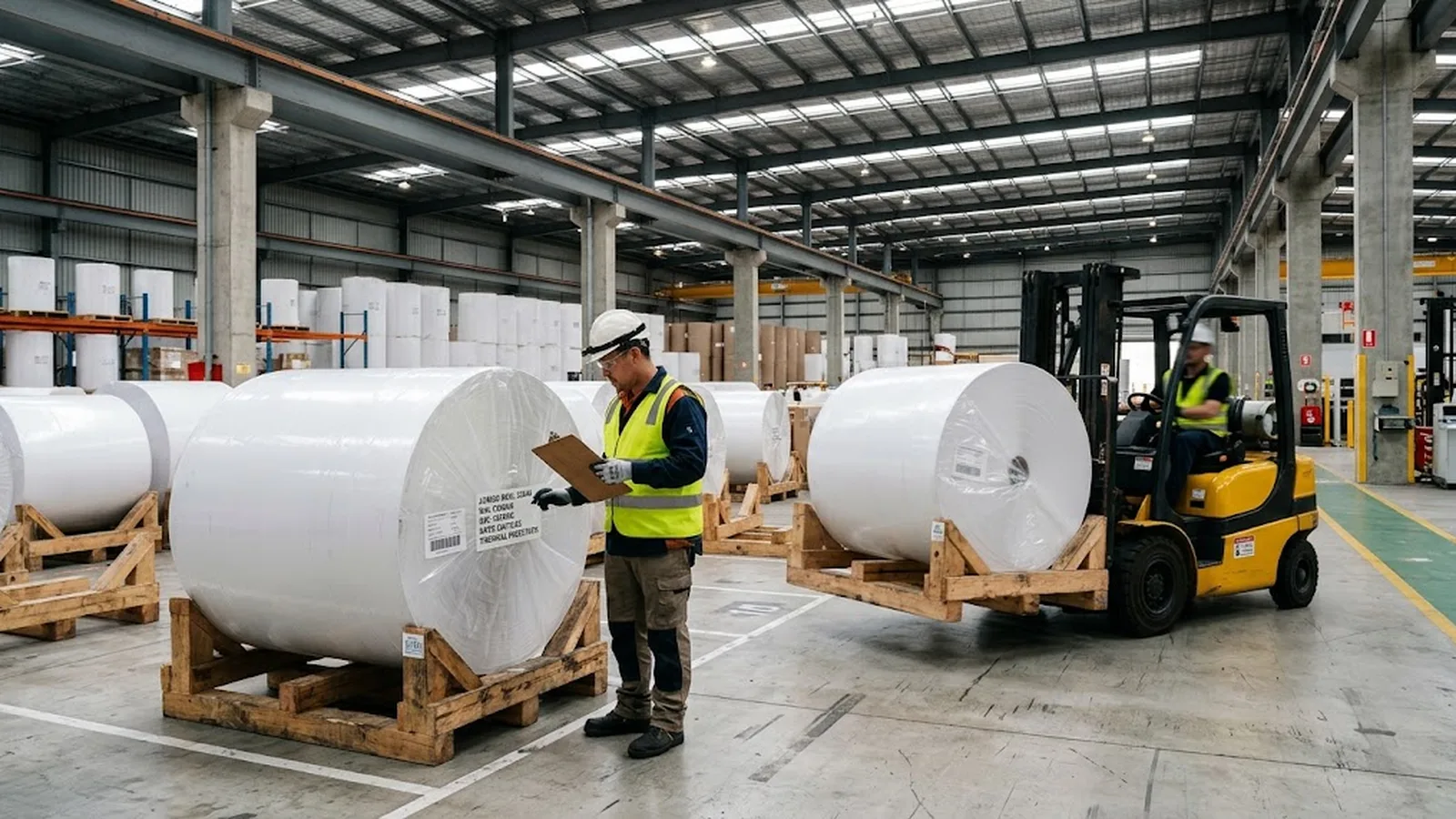
Thermal Paper Parent Rolls: How Converters and Distributors Spec and Buy Jumbo Stock
A converter's guide to thermal paper parent rolls — what a parent roll is, the width, grammage, core, outer diameter, winding and wrap specifications that define one, how per-tonne and per-square-metre pricing really compare, incoming QC checks, and the export logistics of shipping heavy jumbo stock from the mill to the converting floor.
Read the guide
57x50 Thermal Paper Roll: The Mid-Length 57mm Format Buyer Guide
A buyer's guide to the 57x50 thermal paper roll — where the 50mm-diameter format sits between 57x38, 57x40 and taller 57mm rolls, the length and yield arithmetic per roll and per carton, the grade and sensitivity decisions for card terminals and compact printers, and the specification checklist for ordering by carton or container.
Read the guide
Supermarket Receipt Rolls: Specifying Paper for High-Volume Grocery Front-Ends
A supermarket receipt roll buyer guide — how grocery duty differs from other retail, the format and grade decisions per station from front-end lanes to deli scales and self-checkout, the compliance documentation retailers increasingly demand for public-handled receipts, and how to structure supply across every lane from one specification sheet.
Read the guide
Thermal Paper Jumbo Roll Wholesale: Buying Parent Supply by the Tonne
A wholesale buying guide for thermal paper jumbo rolls — what wholesale means at parent-roll scale, how to compare per-tonne quotes on width, gsm, core and length, MOQ and price validity, palletisation and container fill, mixed-width consolidation, and the incoming QC and documentation that protects every tonne you buy.
Read the guide
58mm Thermal Paper Rolls: Width, Diameter and Grade Decisions for the 58mm Format
A 58mm thermal paper roll buying guide — what the 58mm width class is and which hardware demands it, how roll diameter, core and metres per roll interact, the grade and sensitivity decisions for card terminals and portable printers, feed reliability checks, and how to source 58mm stock with your own specification.
Read the guide
Courier Shipping Labels: Specifying Direct Thermal Stock for Express Parcel Operations
A courier shipping label buyer guide — what express-carrier duty does to label stock, the parcel-label format map from 100x150 main labels to waybills and summary labels, adhesive and facestock performance on cartons and poly bags, scannability at hub speed, and how to structure label supply across a courier network.
Read the guide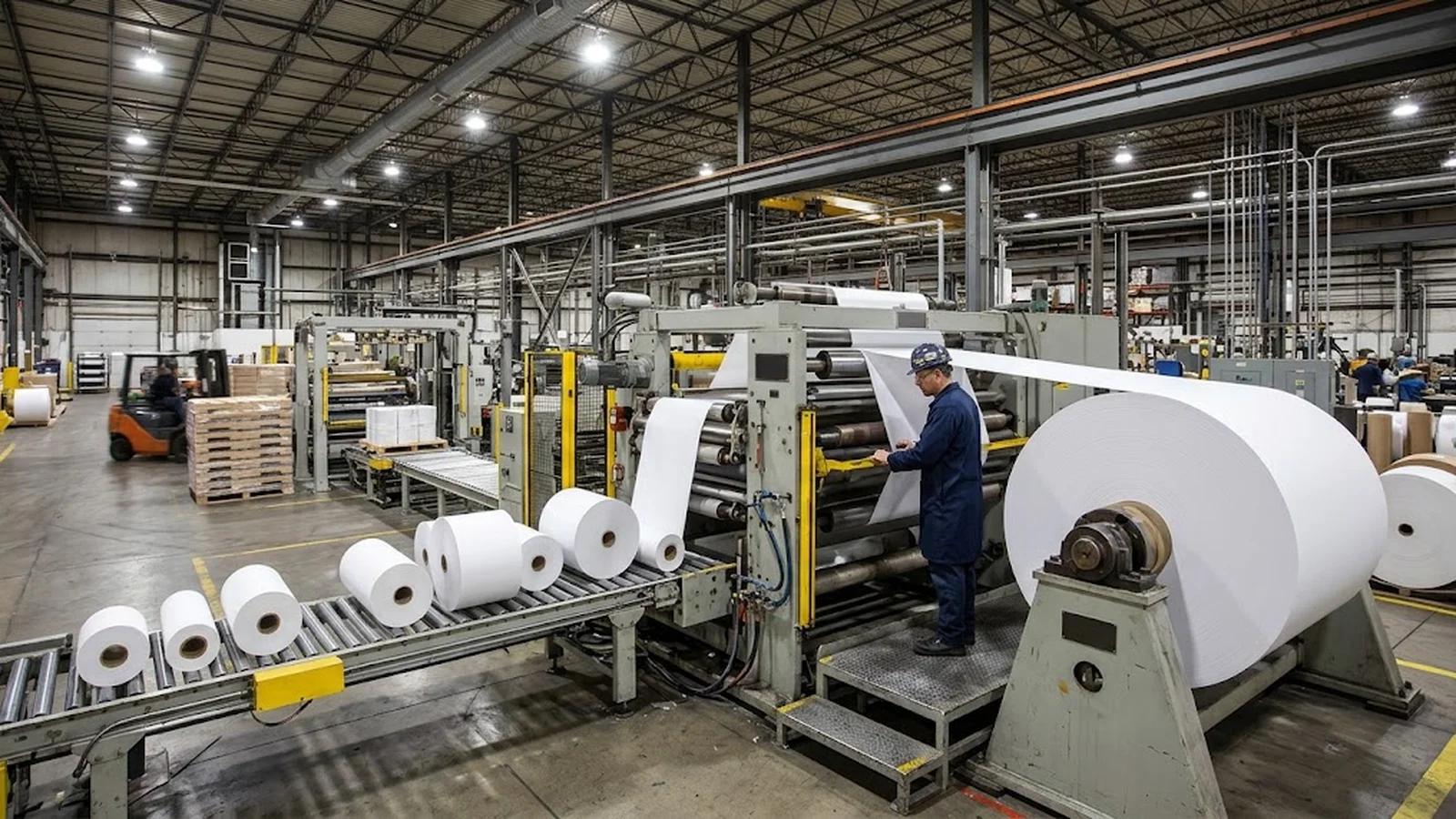
Thermal Paper Bulk OEM: Building High-Volume Supply Around Your Own Specification
A thermal paper bulk OEM buyer guide — what bulk OEM means versus plain wholesale, the specification pack that defines your programme (GSM, width, core, diameter, developer class, print, packing), how MOQ, lead time and pricing work at bulk scale, the QC and documentation that make bulk lots auditable, and the logistics of moving tonnage.
Read the guide
57x38 Thermal Paper Roll: The Compact Format Buying Guide for Terminals and Mini Printers
A B2B buying guide to the 57x38 thermal paper roll — the short-diameter 57 mm format behind compact card terminals, mini printers and handheld devices. Covers the full geometry (width, core, outside diameter, wind), metre yield and roll-count maths, gsm and coating selection, tolerance and winding quality, and how to source the format at programme volume without jam complaints.
Read the guide
60 GSM Thermal Paper: The Mid-Weight Grade Buyers Standardise On
A B2B buyer's guide to 60 gsm thermal paper — the mid-weight direct thermal grade between the 55 gsm receipt classes and the 65–70 gsm durable grades. Covers what 60 gsm changes in feel, caliper, opacity and image life, where the grade earns its premium, how it converts to jumbo and finished formats, the specification line that prevents grade drift, and how to source it at programme volume.
Read the guide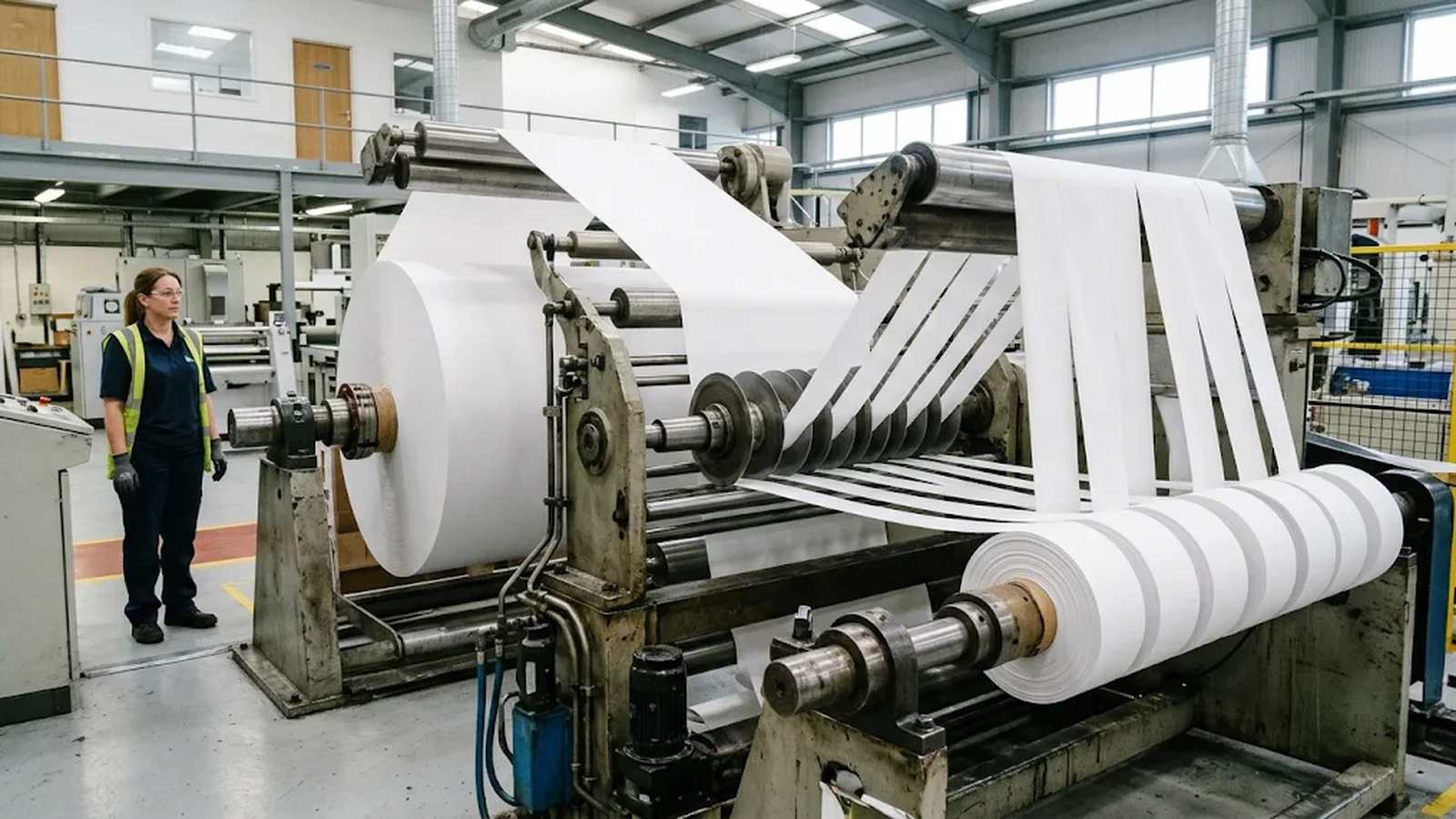
Thermal Paper Converter: How to Qualify the Partner Behind Your Rolls
A B2B sourcing guide to choosing a thermal paper converter — what converting actually adds to jumbo stock, the slitting, winding, tolerance and QC disciplines that separate a manufacturer-converter from a trader, the documentation and OEM programme structure to demand, and the commercial terms (MOQ, lead time, packing) that decide whether a converting partnership scales.
Read the guide
Cash Register Paper Rolls: Specifying the Consumable Your Fleet Actually Runs On
A B2B buying guide to cash register paper rolls — the device classes they serve, the width, core, diameter and grade specifications that decide feed reliability, developer and top-coat choices for demanding floors, and the commercial terms (MOQ, printed rolls, export packing) that decide whether a supply programme scales.
Read the guide
Thermal Sticker Label Buying Guide: Facestock, Adhesive and Liner Without the Guesswork
A B2B buying guide to thermal sticker labels — how direct thermal facestock, pressure-sensitive adhesive and release liner combine into a die-cut roll label, the adhesive classes and service-temperature limits that decide where a sticker survives, top-coated versus non top-coated constructions, and the die-cut, core and packing specifications to demand from a label stock supplier.
Read the guide
Thermal Paper Manufacturer in China: How Importers Qualify the Factory Behind the Quote
A B2B qualification guide for importers sourcing from a thermal paper manufacturer in China — how to tell a coating manufacturer from a trader, the capacity and laboratory signals to verify, the compliance dossier (REACH, SDS/COA, FSC) to demand, a sampling protocol that de-risks first orders, and the Incoterms, payment and container-planning structures that protect an import programme.
Read the guide
3 1/8 Thermal Paper Rolls: Specifying the Inch Format North American Receipts Run On
A B2B buying guide to the 3 1/8 thermal paper roll — what the inch format actually names, its metric equivalents and sub-format landscape, the width, core and grade specifications that decide feed reliability in North American receipt duty, and how to buy the class at manufacturing scale.
Read the guide
Shipping Thermal Labels: Specifying the Consumable Behind Every Outbound Parcel
A B2B buying guide to shipping thermal labels for e-commerce fulfilment — why scan-first conveyors make print quality a barcode-grade requirement, how facestock, adhesive and top-coating must match the parcel journey, the roll versus fanfold format decision, and how to source the programme at manufacturing scale.
Read the guide
Direct Thermal Paper Supplier: Choosing the Tier That Can Actually Back Your Programme
A B2B sourcing guide to choosing a direct thermal paper supplier — the four supplier tiers behind every quotation, what each tier can and cannot document, how to qualify a shortlist on measurement records and batch traceability, and the commercial architecture (dual sourcing, grade continuity, freight terms) that keeps a thermal programme stable.
Read the guide
4 x 6 Direct Thermal Labels: Why the Format Won Parcel Shipping and How to Buy It Well
Why 4 x 6 became the parcel and freight label standard, the 100 x 150 mm metric equivalent, roll versus fanfold variants, core and outer diameter options, facestock and adhesive selection for parcel environments, and the specification discipline that keeps stock arriving right first time.
Read the guideTurn a specification into a quotation.
Send your printer model, dimensions, grade and monthly quantity. We will confirm a matching construction and prepare a representative sample.
Tell us what you need.
Share your format, volume and printer requirements. We will reply with a practical specification and quotation.