
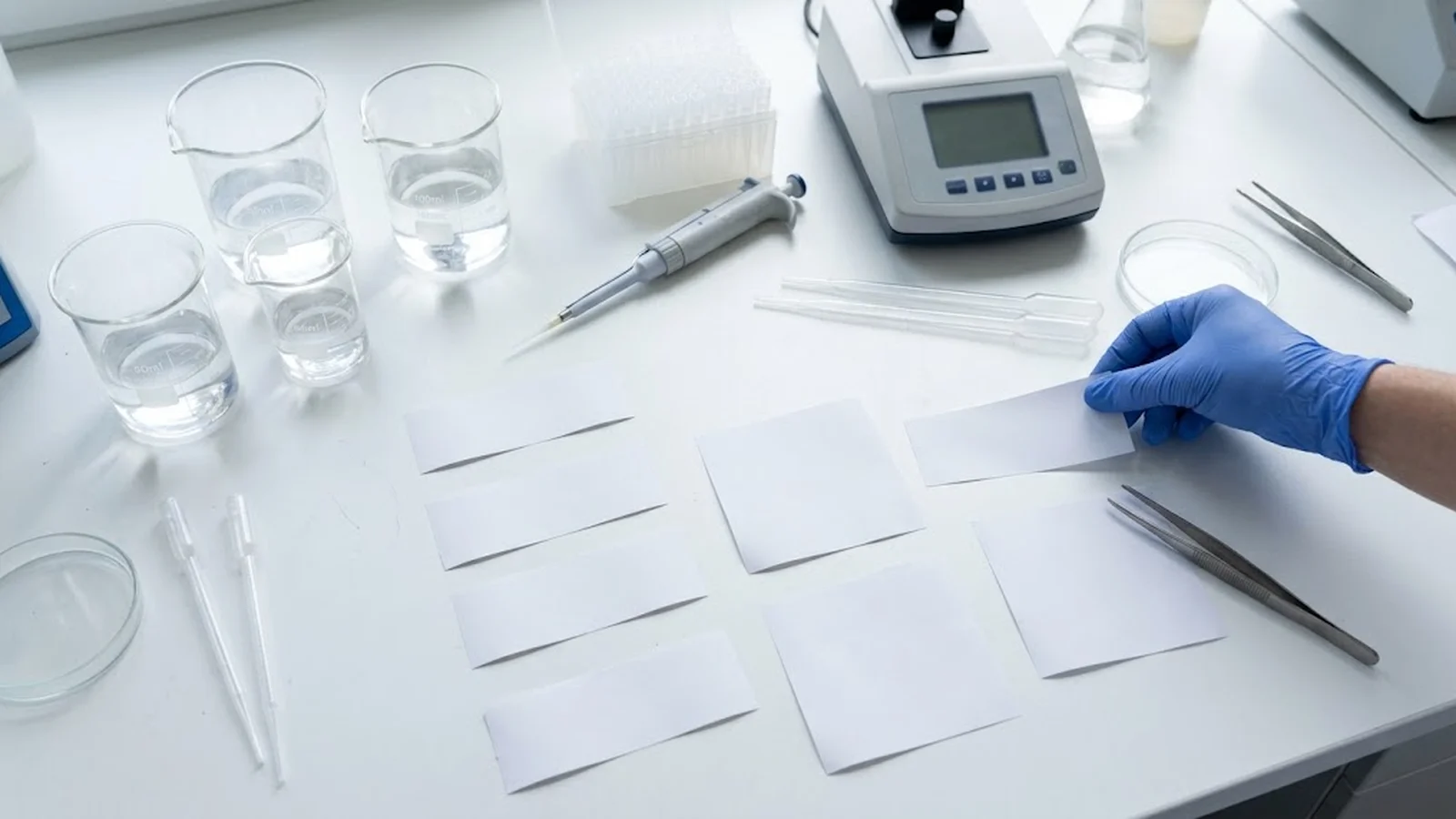
BPA (bisphenol A) and BPS (bisphenol S) are both acidic developers that make thermal paper turn black when heated; BPS was adopted as the main BPA replacement because its larger, sulfonated molecule migrates less readily, but it shares the same bisphenol backbone and endocrine-activity concerns. BPA is now banned or restricted in thermal paper across the EU, several US states and other markets, while BPS is increasingly restricted in turn — France bans both, and the EU has added BPS to its candidate list of substances of very high concern. For buyers the practical position is clear: BPA-free is no longer a differentiator but an entry requirement, and phenol-free developer systems (urea-based and similar chemistries) are the specification that future-proofs receipt and label stock.
Ten years ago, a distributor could win retail tenders by offering BPA-free thermal paper. Today BPA-free is the baseline: the world's major markets have restricted bisphenol A in thermal paper outright, and the industry conversation has moved to what replaced it — and whether the replacement is any better.
That replacement, in most conventional thermal grades, is bisphenol S. BPS works exactly the same way in the coating: an acidic developer that meets a colourless leuco dye when the print head applies heat, flipping the dye to its black form. Its molecule is larger and carries a sulfonate group, which slows migration through skin and into the environment — a genuine improvement. But it is still a bisphenol, still an endocrine-active phenolic compound, and regulators have begun following it with the same instruments they used on BPA.
This guide compares the two developers head-to-head: what each does inside the coating, what the health and migration research shows, where each is restricted market by market, and — most usefully for importers and converters — what to specify, test and document so a receipt or label programme does not get caught by the next regulatory wave. This is the chemistry and compliance view; for the procurement-side comparison of free-claim grades, see our BPA-free vs phenol-free guide.
Requests that combine several formats can be quoted together; see 48 gsm lightweight thermal paper for the construction options behind each one.
- BPA and BPS do the same job in the coating — acidic developers that colour the dye on heating; the difference is molecular structure and migration behaviour.
- BPS migrates less readily than BPA thanks to its larger, sulfonated molecule, but it is still an endocrine-active bisphenol.
- BPA is banned in thermal paper in the EU (since 2020), France, several US states and other jurisdictions; BPS restrictions are following — France bans it and the EU lists it as a substance of very high concern.
- Phenol-free developer systems — urea-based and similar — remove the bisphenol question entirely and are now commercially mature for receipt and label grades.
- Buyers should require third-party test reports stating the developer system and measured bisphenol content, not just 'BPA-free' marketing wording.
Same job in the coating, different molecules
In any conventional direct thermal paper, the developer is the acidic partner in the image-forming reaction. The coating holds a colourless leuco dye and the developer as solids, separated by the binder matrix. Heat from the print head melts the microcapsule of chemistry locally, dye meets developer, the acidic proton shifts the dye's molecular structure into its visible black form, and the spot cools solid. Bisphenol A did this job for decades because it is cheap, thermally reliable, and produces a dense, stable black image at the print energies receipt devices use.
Bisphenol S entered the coating for the same reasons it entered plastics: it is a structural cousin — two phenol groups joined differently — that performs the developer function while being far less mobile. Its sulfonate group (-SO3-) makes the molecule larger, more polar and less lipophilic, so it passes through skin lipid layers and environmental partitions more slowly than BPA. Migration studies consistently show lower dermal transfer for BPS at equivalent handling, which is precisely why paper makers adopted it as the drop-in answer when BPA restrictions arrived.
The catch is functional similarity where it matters least and chemical similarity where it matters most. BPS is still a phenolic compound with demonstrated estrogen-receptor activity in laboratory settings, and because it is less studied than BPA, toxicologists treat its safety margin with caution rather than confidence. From a buyer's standpoint, the honest summary is: BPS is a lower-migration bisphenol, not a bisphenol-free chemistry — a risk reduction, not a risk elimination.
| Property | BPA (bisphenol A) | BPS (bisphenol S) |
|---|---|---|
| Role in coating | Acidic developer | Acidic developer |
| Molecular feature | Two phenol groups, bridged | Two phenol groups, sulfonated bridge |
| Migration through skin | Higher; well documented | Lower; slower dermal transfer |
| Endocrine activity | Established | Demonstrated; less studied |
| Regulatory trend | Banned in thermal paper (EU, France, US states) | Increasingly restricted; EU SVHC-listed, banned in France |
| Image quality | Dense, stable black | Comparable; slightly different sensitivity profile |
| Commercial status | Legacy; compliance liability in most export markets | Current mainstream in 'BPA-free' grades |
Where each is regulated: the market map
The European Union set the benchmark: under its REACH restrictions, thermal paper containing more than 0.02 percent (200 ppm) BPA by weight cannot be placed on the EU market from January 2020. France went further and earlier — its 2018 national law banned BPA in thermal paper and subsequently extended the ban to BPS, making it the first market to close the substitution loop. Denmark and Sweden have also pushed restrictions beyond the EU minimum through national measures and proposals.
In the United States there is no federal ban, but state law drives the market. Washington state restricted BPA in receipt paper, and its ecology department later identified BPS as a chemical of concern for the same use; New York, Connecticut and others restrict BPA in thermal paper by statute; California's Proposition 65 listing of BPA forces warning labels or reformulation for products sold statewide. Canada has listed BPA as a toxic substance, and Japan's industry has largely moved off both bisphenols voluntarily in consumer-facing grades.
The direction of travel is unmistakable: each regulator first restricts BPA, then turns to BPS once substitutes dominate. The EU's addition of BPS to the SVHC candidate list is the clearest signal — it does not ban the substance yet, but it flags the substance for authorisation requirements down the chain. For an exporter shipping receipt rolls into twenty markets, the safe specification is therefore not 'compliant today' but 'chemically ahead of the trend': phenol-free developer systems that no current or announced rule targets.
Our top-coated thermal label stock programme publishes the test data behind each grade, so specifications can be verified against the mill's own measurements rather than a catalogue claim.
- EU: BPA in thermal paper capped at 200 ppm since January 2020 (REACH); BPS on the SVHC candidate list.
- France: bans both BPA and BPS in thermal paper — the strictest major market.
- US: no federal ban; Washington, New York, Connecticut and others restrict BPA; Prop 65 pressures reformulation.
- Practical spec: phenol-free grades clear every current and announced restriction in one move.
Phenol-free developers and how the grades perform
Removing the bisphenol entirely means changing the developer chemistry, not just swapping one bisphenol for another. The commercial systems that have matured over the past decade are urea-based developers — sulfonyl urea compounds in particular — often paired with sensitiser packages to hit the print-energy window of standard receipt devices. These phenol-free grades are now mainstream production chemistry, not laboratory curiosities: major coating houses run them at scale, and their share of new retail and label tenders grows every year as buyers pre-empt the next restriction.
Performance gaps that existed in early phenol-free grades have largely closed. Modern systems deliver print density and sensitivity comparable to BPS-based coatings, with the remaining differences living in the details: image stability under heat and humidity profiles, scuff behaviour, and sensitivity curves that converters must match to the device fleet. For buyers the practical consequences are modest — slightly different storage discipline, and the need to validate samples on the actual terminals in the fleet before a full switchover, exactly as one would for any coating change.
Cost remains the honest trade-off: phenol-free grades carry a price premium over BPS-based equivalents, driven by developer cost and coating-line changeover discipline. That premium buys regulatory headroom — one chemistry that satisfies the EU today, France today, and the US states today, with no announced rule anywhere targeting it. For customers selling into mixed or uncertain markets, that headroom usually outweighs the increment, and for compliance-sensitive verticals (healthcare, food retail, banking) it is effectively mandatory.
What importers and distributors should specify and verify
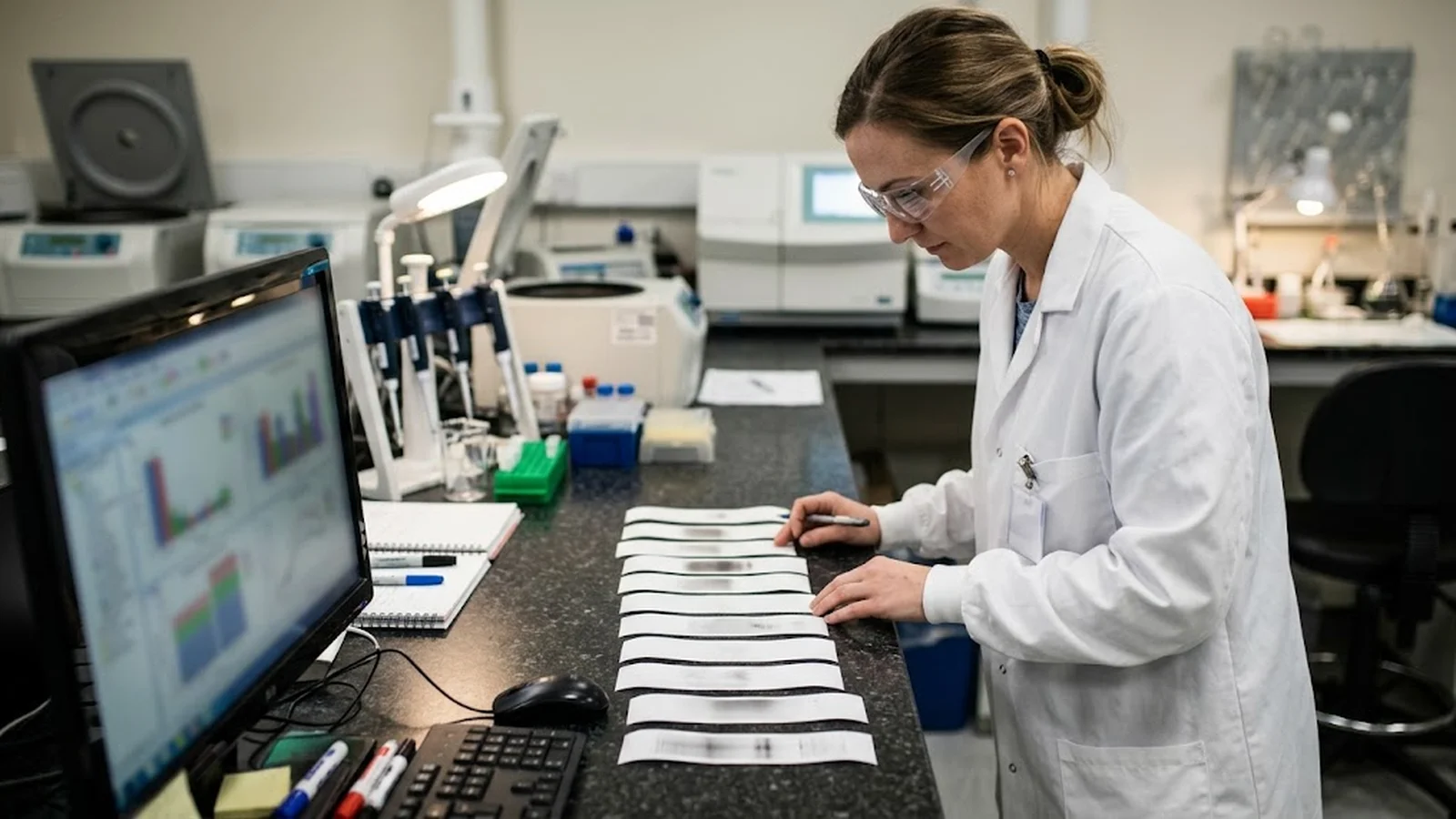
The first specification line is the developer system named explicitly: not 'BPA-free', but 'phenol-free developer, no BPA and no BPS'. A supplier confident in its chemistry will state the system and support it with third-party test reports showing measured bisphenol content below detection limits — a datasheet that only says 'BPA-free' without a method and a number is a claim, not evidence. Where the destination market has a numeric limit (the EU's 200 ppm is the reference), the test report should reference that threshold.
The second line is performance validation on your own devices. Request samples of the phenol-free grade, print a real week's volume across the terminal models in the field, and check density, background cleanliness and scan rates before committing volume. Converters running their own slitting should also confirm storage recommendations for the new grade — some phenol-free systems have slightly tighter humidity tolerances — and adjust customer-facing guidance accordingly.
Finally, plan the narrative. Distributors who can hand a retail buyer a migration-tested, SVHC-aware, phenol-free datasheet are selling compliance certainty in a market where receipt chemistry is a standing news topic; distributors still quoting BPS-only stock should at least know which of their markets will demand phenol-free next. The manufacturer's role in this is to make the evidence pack routine — per-batch developer verification, regulatory status summaries by destination market, and a conversion path for existing SKUs that does not disrupt supply.
Where developer compliance is part of the specification, our BPA-free vs phenol-free guide documents the chemistry, the regulations and the paperwork behind each class.
Specification shorthand that works in any tender: 'Phenol-free developer system; BPA and BPS below detection; EU REACH 200 ppm limit met with margin; third-party report per batch available.'
Frequently asked questions
What is the difference between BPA and BPS in thermal paper?
Both are acidic developers that react with the leuco dye when heated to form the black image. BPS has a larger, sulfonated molecule that migrates through skin and the environment more slowly than BPA, making it the lower-migration substitute — but it is still a bisphenol with demonstrated endocrine activity, so it is a risk reduction rather than a different chemistry class.
Is BPS thermal paper safe?
BPS is less mobile than BPA but is still an endocrine-active phenolic compound, and regulators are increasingly treating it with caution — France bans it in thermal paper and the EU lists it as a substance of very high concern. For buyers who want to avoid the whole bisphenol question, phenol-free developer grades are the specification to ask for.
Is BPA banned in thermal paper?
In the EU, thermal paper containing more than 200 ppm BPA cannot be placed on the market since January 2020. France bans it outright, several US states restrict it by statute, and Prop 65 pressures reformulation in California. Globally, BPA-free has become the baseline requirement for export-grade receipt and label paper.
Does phenol-free thermal paper print as well as conventional grades?
Modern phenol-free grades deliver print density and sensitivity comparable to BPS-based coatings on standard receipt devices. The main due-diligence step is validating samples across your actual terminal models before switchover, and confirming the grade's storage recommendations with the supplier.
What should I ask a supplier to prove a grade is BPA- and BPS-free?
Ask for the named developer system and third-party test reports with measured bisphenol content below detection limits, referencing the EU 200 ppm threshold where relevant. Per-batch reports are the standard a capable manufacturer can provide; a datasheet that only says 'BPA-free' without a method and a number is not evidence.