
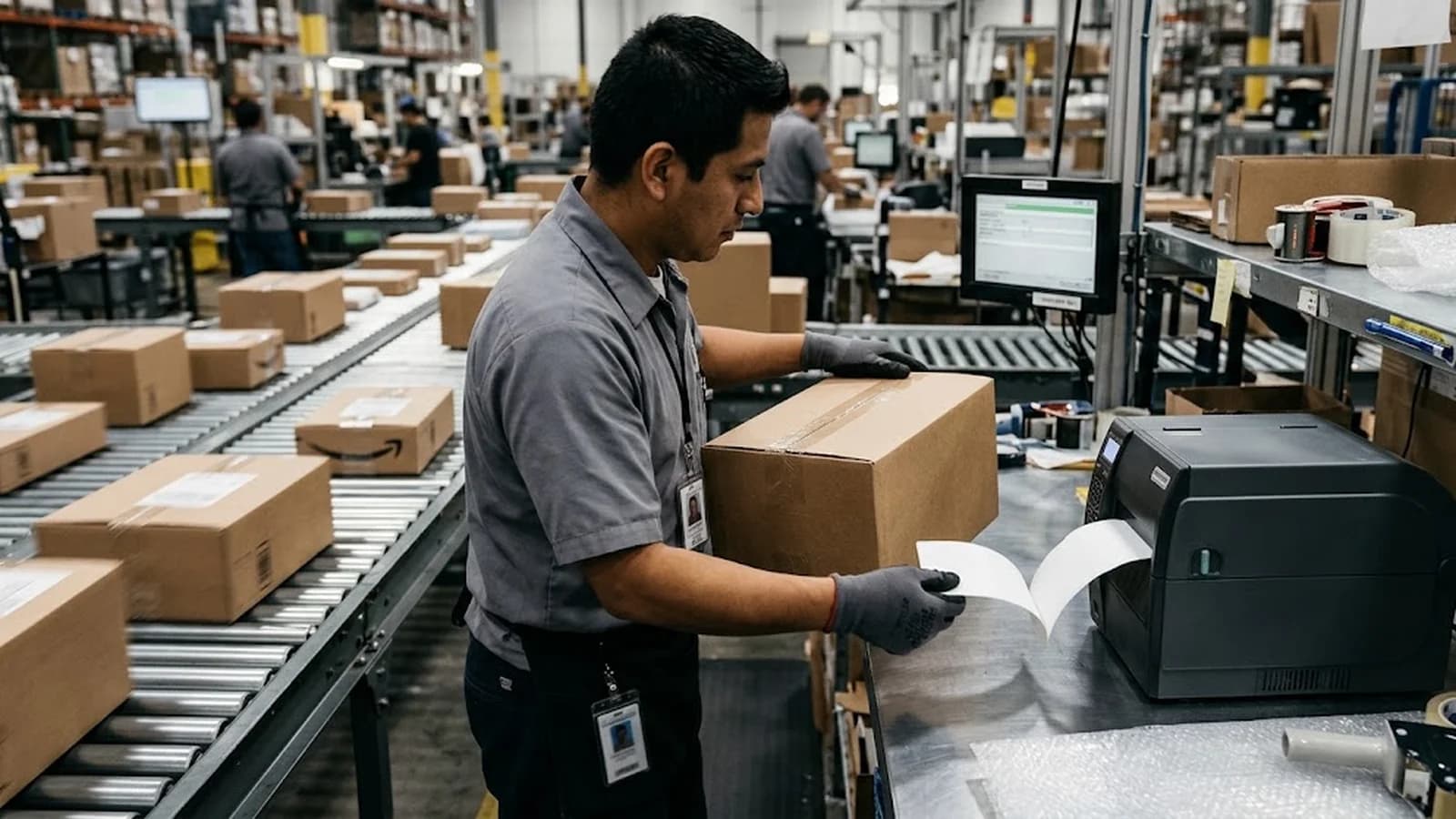
A6 thermal shipping labels are direct thermal labels cut to the A6 paper format — 105 x 148mm nominally, and in practice the 100 x 150mm stock every European carrier template assumes. The format became the continental standard because it carries a full courier label — barcode, address block, service icons, sorting codes — at a size that prints fast, feeds reliably and stacks on any carton face. For buyers, the specification work concentrates in three areas: presentation (roll or fanfold, matched to how the packing line actually feeds), construction (facestock weight, top-coated or uncoated, adhesive class matched to the carton surface), and liner and core (which decide autocator behaviour and rolls-per-pallet economics). Sourced well, a single A6 programme covers every major European carrier without format changes; sourced cheaply, it becomes the most visible failure in the warehouse — labels that won't scan, won't stick, or won't feed.
Every parcel crossing a European sorting hub wears one piece of paper that decides its fate: the A6 shipping label. At 100 x 150mm — the practical rendering of the A6 format — it is the size every major carrier's template is drawn to, the size every thermal printer in the region's fulfilment centres is loaded with, and the size that decides whether a parcel sorts itself or becomes an exception on the exception desk. For buyers supplying that ecosystem, the A6 label looks like a commodity. It is anything but.
The format's simplicity hides a dense specification: presentation format (roll versus fanfold), facestock weight and coating, adhesive class, liner type, core size and labels-per-roll — each line interacts with the packing line's hardware and the carton surfaces it must survive. A label that scans at the pack bench but fails on a rainy loading dock, or feeds beautifully on one printer and misfeeds on another, traces back to a line in that specification someone bought on price alone.
Buyers comparing label constructions can review our top-coated thermal label stock, where facestock, coating class and adhesive are documented per grade before an order is placed.
This guide covers why A6 became the European standard, how roll and fanfold presentations differ in practice, and the construction and sourcing checklist importers should hold a courier-label programme to.
- A6 in practice means 100 x 150mm direct thermal stock — the format every major European carrier template and fulfilment printer assumes.
- Presentation decides line behaviour: rolls for autocutters and print-and-apply, fanfold for desktop printing without spindle changes.
- Facestock weight (60-80 gsm class) and top-coating decide scan durability through sorting, weather and handling.
- Adhesive class must match the carton reality — recycled linerboard, polybags and cold docks each demand different tack.
- Core size and labels-per-roll drive the warehouse economics: more labels per roll means fewer spindles touched per shift.
Why A6 became the European courier standard
The A6 format's rise is a story of standardisation from both ends. Carriers designed their label templates — barcode field, address block, routing codes, service icons — around a size large enough to print reliably at thermal resolution and small enough not to waste stock; 100 x 150mm hit the balance. Printer makers then built their desktop and industrial label ranges around the same footprint, and the loop closed: today a 100 x 150mm label drops into any European carrier's system without template adjustment, and a pallet of A6 stock serves every major courier from one SKU.
That universality is the buyer's opportunity and the trap. One format serves DPD, GLS, Royal Mail, DHL and the region's regional couriers alike, so consolidation is genuine — but the format's ubiquity also means an A6 programme is judged against the very best stock the warehouse has ever run. Sorting hubs scan barcodes at speed; labels that print at marginal density or lose contrast through cold-chain condensation generate the exceptions that cost carriers and shippers alike. Density stability, not just darkness, is the property that separates an adequate A6 stock from a professional one.
Volume concentrates the economics. A mid-size fulfilment operation printing thousands of parcels a day consumes A6 stock in pallet quantities, and the difference between a 500-label roll and a 1,000-label roll is measured in spindle touches per shift — the quiet labour cost that scales with every roll change. Buyers who model labels-per-roll alongside unit price consistently find the larger-format economics worth the container commitment.
Where those volumes start from parent stock, our thermal paper jumbo rolls document the label-grade parents that converters slit into finished A6 rolls and fanfold packs.
Roll or fanfold: how presentation decides line behaviour
The same A6 die-cut ships in two presentations, and the choice is dictated by the packing line, not preference. Rolls — die-cut stock wound on 25.4mm or 76mm cores — feed printers with spindles and autocutters, and they are the format of industrial print-and-apply heads that apply labels to parcels without an operator. Fanfold — labels stacked in zig-zag packs that feed flat — suits desktop printers without spindles and storerooms that stack stock by the carton; it also packs more labels per carton cube, which freight-conscious buyers notice.
Roll specification carries the operational lines. Core size must match the printer fleet's spindles; roll diameter must match the printer's maximum; label gap or black-mark sensing must match the fleet's sensors; and wind direction — labels out or labels in — must match the applicator. A mixed fleet is the normal case, which is why distributors serving fulfilment customers publish presentation options per SKU rather than forcing a single format.
Fanfold's specification is shorter but no less exacting: fold accuracy, stack squareness and liner strength decide whether the pack feeds cleanly through a long shift or misfeeds at the bottom of the stack. Warehouses running desktop printers on benches appreciate fanfold's no-spindle simplicity; high-throughput lines stay with rolls because autocut and applicator hardware demands it. Many operations run both — rolls on the line, fanfold at the overflow benches — and buy both from one specification to keep print density identical across the floor.
Where scan durability through sorting is the deciding factor, our top-coated vs non top-coated guide compares the two constructions on retention, cost and machine behaviour.
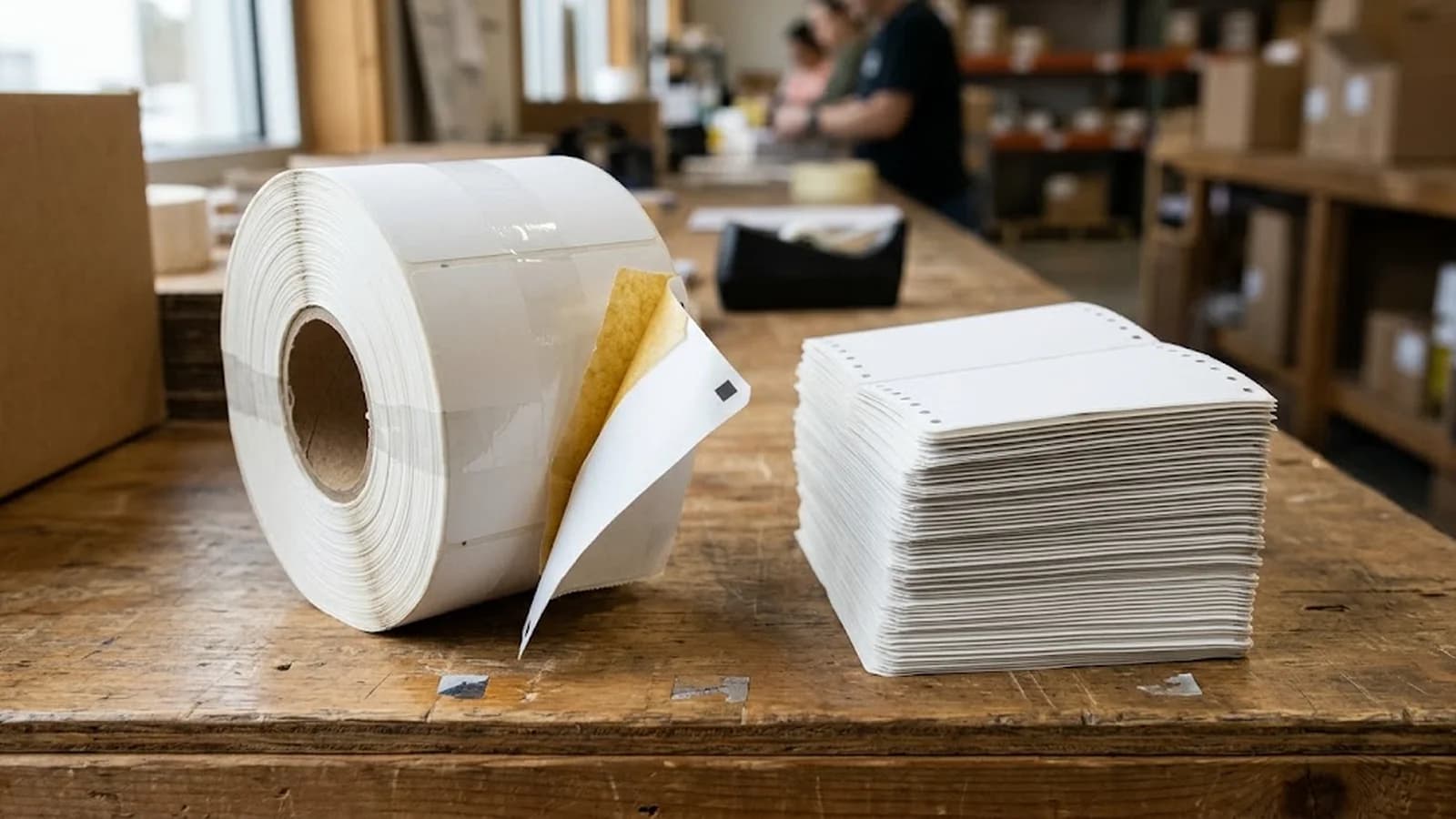
A6 roll spec shorthand for RFQs: 'Direct thermal label 100 x 150mm, die-cut on [liner], gap-sensed; [500/1000] labels per roll on 76mm core, labels-out wind; facestock [gsm] top-coated; adhesive [general-purpose / high-tack]; packing [rolls per carton], moisture-barrier lined.'
Facestock, adhesive and liner: the construction checklist
Facestock comes first. A6 shipping labels run a 60-80 gsm paper facestock class: light enough to feed fast through desktop and mid-range printers, heavy enough to survive conveyor sorting without tearing at the die-cut. Top-coated stock earns its premium wherever labels face moisture, abrasion or long retention — the coating stabilises print density against scuffing and damp, which is precisely what a European winter loading dock applies. Uncoated stock remains legitimate for dry, short-cycle flows where cost dominates; the error is specifying it where the scan happens outdoors or through condensation.
Adhesive is the second decision, and it must match the carton reality rather than the datasheet. General-purpose permanent acrylic covers most virgin corrugated and paper surfaces. High-tack classes earn their place on recycled linerboard, shrink-wrapped polybags and cold or damp surfaces — the situations where a standard adhesive peels at the corner and the parcel loses its label mid-network. Fulfilment buyers should test adhesive against their actual carton stock and their coldest dock temperature, because both degrade tack in ways a room-temperature lab test never shows.
Liner and conversion complete the construction: a stable glassine or PET liner that releases cleanly through the printer and holds the die-cut accurate, die-cutting registered to the sensing gap so every printer counts labels correctly, and packing that keeps humidity away from the stock until the day it loads. Where container planning is the next step, our export shipping guide covers pallet standards, moisture-barrier packing and the document set for ocean freight.
Sourcing then consolidates around documentation. A mill that publishes facestock, coating class, adhesive type and liner specification per grade lets a fulfilment buyer verify A6 stock against the actual fleet and carton surfaces before a container order — and per-batch certificates keep print density consistent across every roll in every carton, which is the property the sorting hub ultimately grades the programme on.
Frequently asked questions
What size is an A6 shipping label?
Nominally the A6 paper format (105 x 148mm); in practice the trade standard is 100 x 150mm, which is the size European carrier templates and fulfilment printer fleets are built around. Buyers should order the 100 x 150mm stock unless a specific carrier system states otherwise.
Should I buy A6 labels on rolls or fanfold?
Match the presentation to the hardware: rolls for printers with spindles, autocutters and print-and-apply applicators; fanfold for desktop printers without spindles and for storerooms that value packing density. Many operations run both and buy both from one specification to keep print density identical.
Do A6 shipping labels need to be top-coated?
Wherever labels face moisture, abrasion or retention — outdoor scanning, condensation, long storage — top-coated stock is the safe specification because it stabilises print density against scuffing and damp. Uncoated stock is legitimate only for dry, short-cycle flows where cost dominates.
Why do my shipping labels peel off recycled cartons?
Recycled linerboard and cold or damp surfaces degrade standard adhesive tack. Specify a high-tack adhesive class and test it against your actual carton stock and coldest dock temperature — a room-temperature lab test will not show the failure.
How many A6 labels fit on a roll?
Common formats run 500 to 1,000 labels per roll on a 76mm core, depending on liner thickness and roll diameter. More labels per roll means fewer spindle touches per shift — a labour saving that usually justifies the larger-format roll even at a higher unit price.