
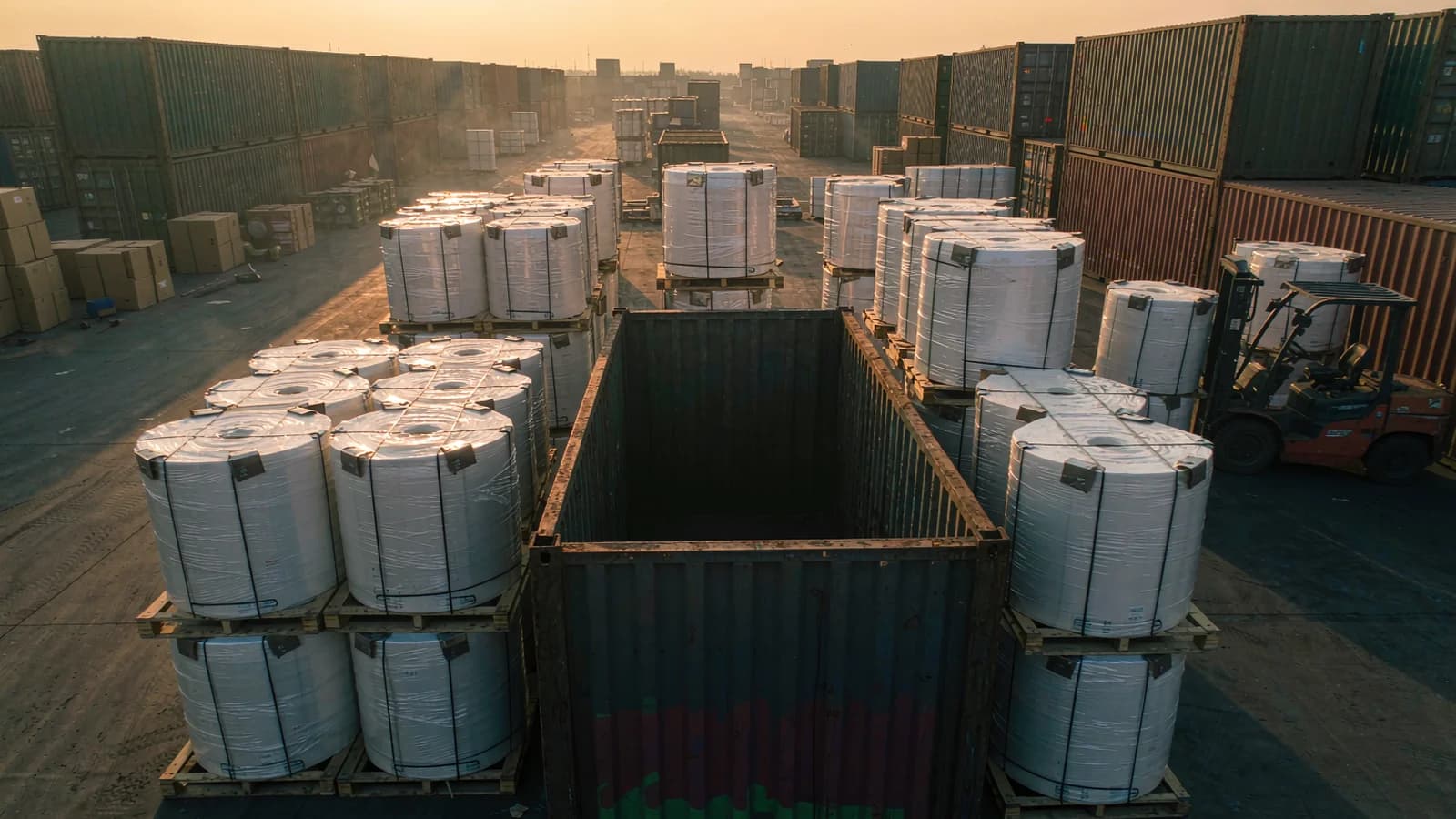
A thermal paper exporter is judged on more than price per tonne: importers should evaluate the export documentation set, the incoterms proposed, whether the seller is mill or trading company and what that means for traceability, the container plan — pallet standards, moisture-barrier packing and stowage — and a sample process that validates grade, sensitivity and packing before the first commercial order.
Buying thermal paper across a border changes what the buyer is actually purchasing. Alongside the paper itself comes a document set, a freight arrangement and a packing specification, and a failure in any of the three costs more than a price difference ever returns. A container that arrives without a certificate of origin can sit at port accruing demurrage; jumbo rolls packed without a moisture barrier can image faintly before they are ever loaded into a machine.
Evaluating a thermal paper exporter is therefore a different exercise from evaluating a local stationery supplier. The questions are about process: what ships with the goods, who owns the freight at each leg, what the pallet looks like inside the container, and what happens when a roll is wrong.
For production volumes, the same construction logic applies to our thermal paper jumbo rolls, quoted per jumbo roll, slit reel or finished format — the supply route most importers start from when building an export programme.
This guide walks through the five evaluations that matter: documentation, incoterms and container planning, the mill-versus-trader question, the sample process, and structuring the relationship so the second container is easier than the first.
- The document set is part of the product: invoice, packing list, bill of lading, certificate of origin and safety data sheet, agreed as a checklist before the first shipment rather than discovered at the port.
- Incoterms decide who owns risk at every leg — the cheapest term on paper often carries the highest hidden cost for a first-time importer.
- Container planning is a packing decision: pallet standards, moisture-barrier wrapping and stowage are specified before loading, not negotiated after condensation damage.
- Mill audits separate manufacturers from traders; both can be viable suppliers, but the questions to ask and the traceability you get differ.
- A structured sample ladder — grade samples, machine trials, a signed retained standard — is the cheapest insurance in cross-border paper buying.
What an exporter evaluation actually covers
When an importer shortlists a thermal paper exporter, the instinct is to compare quotations. The better sequence is to compare processes, because the quotation only describes the first day of a transaction that runs for weeks — production, packing, freight, customs, warehouse — and an exporter either controls the specification at each stage or does not.
A practical evaluation covers five dimensions. Documentation: what travels with the goods and how accurately it is prepared. Commercial terms: which incoterm is quoted and whether the exporter can operate under it. Physical supply: pallet design, moisture protection and container utilisation. Traceability: whether the seller manufactures, converts or trades, and what that means for batch records. Validation: how samples move from first enquiry to approved production standard.
The export documentation set
Paper cargo moves on paper. The core set for a thermal paper shipment: commercial invoice, packing list, bill of lading or air waybill, certificate of origin, and the safety data sheet for the coating chemistry. Depending on the destination, importers may also need fumigation or ISPM 15 evidence for timber pallets and insurance certificates under CIF terms.
What separates a disciplined exporter from a casual one is accuracy under pressure. A packing list that disagrees with the pallet count, an invoice description that does not match the HS classification the broker filed, a missing SDS requested at gateway — each creates delay at the journey's least flexible point.
The buying action is simple: ask the exporter for the document checklist for your destination and test it against what your customs broker requires. A specific, complete list on the first pass tells you how the relationship will run; 'we will provide all necessary documents' defers the question to the moment it is hardest to fix.
- Commercial invoice and packing list — checked against the broker's HS classification before sailing, not after arrival.
- Bill of lading — consignee, notify party and description fields reconciled with the buyer's import registration.
- Certificate of origin — form and issuing authority matched to the destination's preference agreements.
- Safety data sheet — current revision, covering the actual coating chemistry of the shipped grade.
- Pallet and packaging evidence — ISPM 15 treatment or fumigation where the destination requires it.
Incoterms and container planning
The incoterm on a quotation is not a formality; it allocates cost, risk and control across the journey. FOB gives the buyer control of ocean freight — the usual choice for importers with their own forwarder. CIF hands freight and insurance to the exporter and simplifies administration at the price of visibility. DAP and DDP suit buyers who want a landed price, though DDP raises import-registration questions to settle with the broker first.
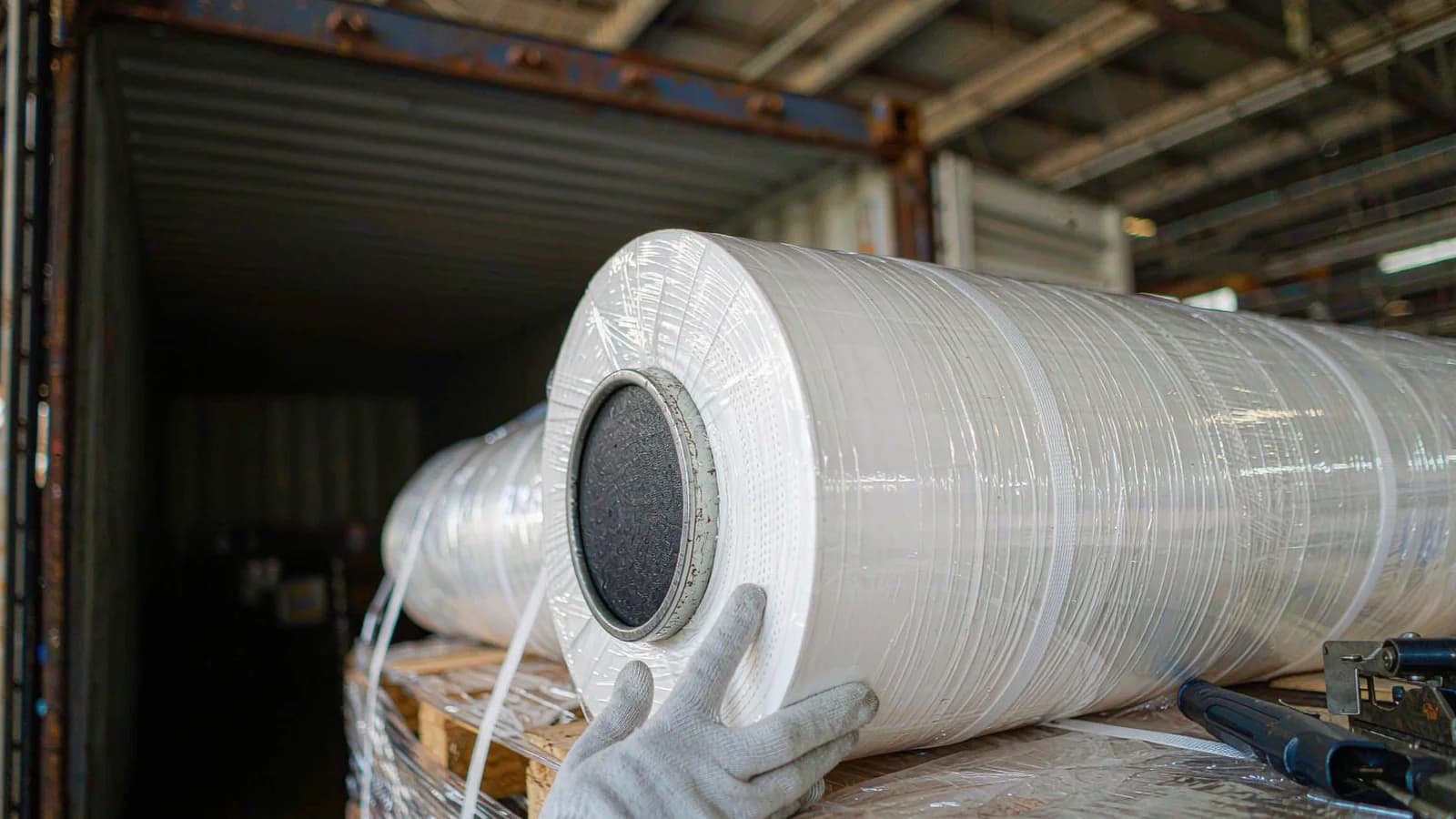
Container planning is the physical twin of the commercial term. Jumbo rolls are dense cargo: a 40-foot container typically stows 24 to 26 tonnes of thermal paper, and the loading plan — pallet sizes, roll orientation, dunnage, weight distribution — determines both freight economics and arrival condition. Thermal paper's vulnerability is moisture and heat in transit, which is why professional export packing uses moisture-barrier wrapping, desiccant where the route demands it, and stowage that keeps cargo clear of the container door's condensation zone.
Buyers comparing these specifications can review our top-coated thermal label stock, where basis weight, coating construction and packing are documented per grade before an order is placed — the same discipline that should govern the export packing of every grade in a programme.
| Incoterm | Exporter's responsibility ends | Best suited to |
|---|---|---|
| FOB | Goods loaded on the vessel at the origin port | Importers with a forwarder and repeat volumes |
| CFR / CIF | Ocean freight (and insurance under CIF) paid to destination port | Buyers who want simpler admin and predictable freight cost |
| DAP | Goods delivered to the named destination, duties unpaid | Buyers who want door delivery but clear customs themselves |
| DDP | Delivery with duties and taxes paid | Buyers without local import infrastructure — subject to registration limits |
Mill audit versus trading company
The mill-versus-trader question is not 'which is better' but 'which is this supplier, and is the price consistent with the claim'. A manufacturer describes coating heads, base paper sources and sensitivity formulations in concrete terms, offers production-floor visits or video audits, and provides traceability back to a coating run. A trading company describes a portfolio, flexibility across suppliers and consolidated shipping — genuinely valuable for a mixed-container buyer, provided the premium reflects the service.
A mill audit, even a remote one, produces checks a catalogue never will: whether quality control records exist per batch, whether the documented sensitivity class matches the datasheet, and whether pre-shipment inspection is independent of packing. Importers who cannot travel can approximate this with a video walkthrough of the coating line and warehouse, a live review of a batch test report, and third-party inspection at loading.
Where a programme needs several formats from one supplier, our custom thermal paper programme covers width, core, roll diameter and developer class in a single specification sheet — the kind of consolidated specification that makes an audit trail straightforward regardless of who holds the coating head.
The sample process: from enquiry to approved standard
Samples are the cheapest mistake-reduction tool in cross-border paper buying, but only when the process is structured. The sequence has three stages: small samples for print and handling tests, production-representative samples for machine trials, and a retained, signed-off reference sample that becomes the standard every future shipment is judged against. Skipping the middle stage is the classic error — a grade that prints beautifully as a sheet can still misbehave as a slit roll.
The tests should mirror destination reality: print on the machines the rolls will actually meet, store samples in the climate the goods will face, and check image retention under the conditions the buyer promises customers. The retained standard also protects against drift: a later shipment is compared against a document both parties signed, not a memory.
Pre-shipment inspection closes the loop: photographs of pallets and packing before loading, roll-edge and packaging checks against the approved standard, and third-party inspection for the first shipment if the relationship is new. The cost of all three is a fraction of one problem container.
Structuring the programme after the first container
The first container proves the exporter; the programme is where the economics arrive. Importers typically consolidate by moving from spot orders to a rolling schedule aligned with forecasts, fixing packing and pallet standards so every container loads identically, and widening the specification sheet so one construction family covers more of the demand — receipt formats, labelstock and specialty grades shipped together.
Where container planning is the next step, our export shipping guide covers pallet standards, moisture-barrier packing and the document set for ocean freight in detail — the natural companion to the evaluation framework in this article.
The final habit is review: after each shipment, reconcile documents against the checklist, log arrival condition against the packing standard, and score the exporter on the same five dimensions. Suppliers keep the discipline that buyers inspect.
Programme shorthand: 'Checklist agreed, incoterm matched to logistics capability, packing and pallet standard fixed, mill or trader verified, sample ladder to a signed standard, every shipment scored on the same five dimensions.'
Frequently asked questions
What documents should a thermal paper exporter provide with each shipment?
At minimum: commercial invoice, packing list, bill of lading or air waybill, certificate of origin and a current safety data sheet. Destination-specific additions include ISPM 15 or fumigation evidence for timber pallets and any regulatory declarations the market requires. The checklist should be agreed with the exporter and the buyer's customs broker before the first shipment.
Which incoterm is best for a first-time importer of thermal paper?
Most first-time importers choose FOB or CIF. FOB gives the buyer control of ocean freight through their own forwarder; CIF hands freight and insurance to the exporter for a simpler landed price. DDP is convenient on paper but requires the seller to handle import duties, which needs the buyer's registration support and should be settled with a broker first.
How can I tell a thermal paper mill from a trading company?
Ask for details only a manufacturer can give casually: coating line configuration, base paper sources, batch test reports tied to specific production runs, and a live or in-person audit of the coating floor. Traders can still be good suppliers — the test is whether their pricing and traceability claims are consistent with what they actually are.
How much thermal paper fits in a container?
A 40-foot container typically stows around 24 to 26 tonnes of thermal paper, with the exact figure set by the pallet design, roll diameters and packing standard. The loading plan should be agreed before production, including moisture-barrier wrapping and weight distribution across the container floor.
What should the sample process include before the first order?
Three stages: small samples for print and handling tests, production-representative rolls for trials on the destination's machines, and a signed retained reference sample that becomes the approval standard. Pre-shipment inspection against that standard — photographs or third-party checks — closes the loop for the first shipment.