
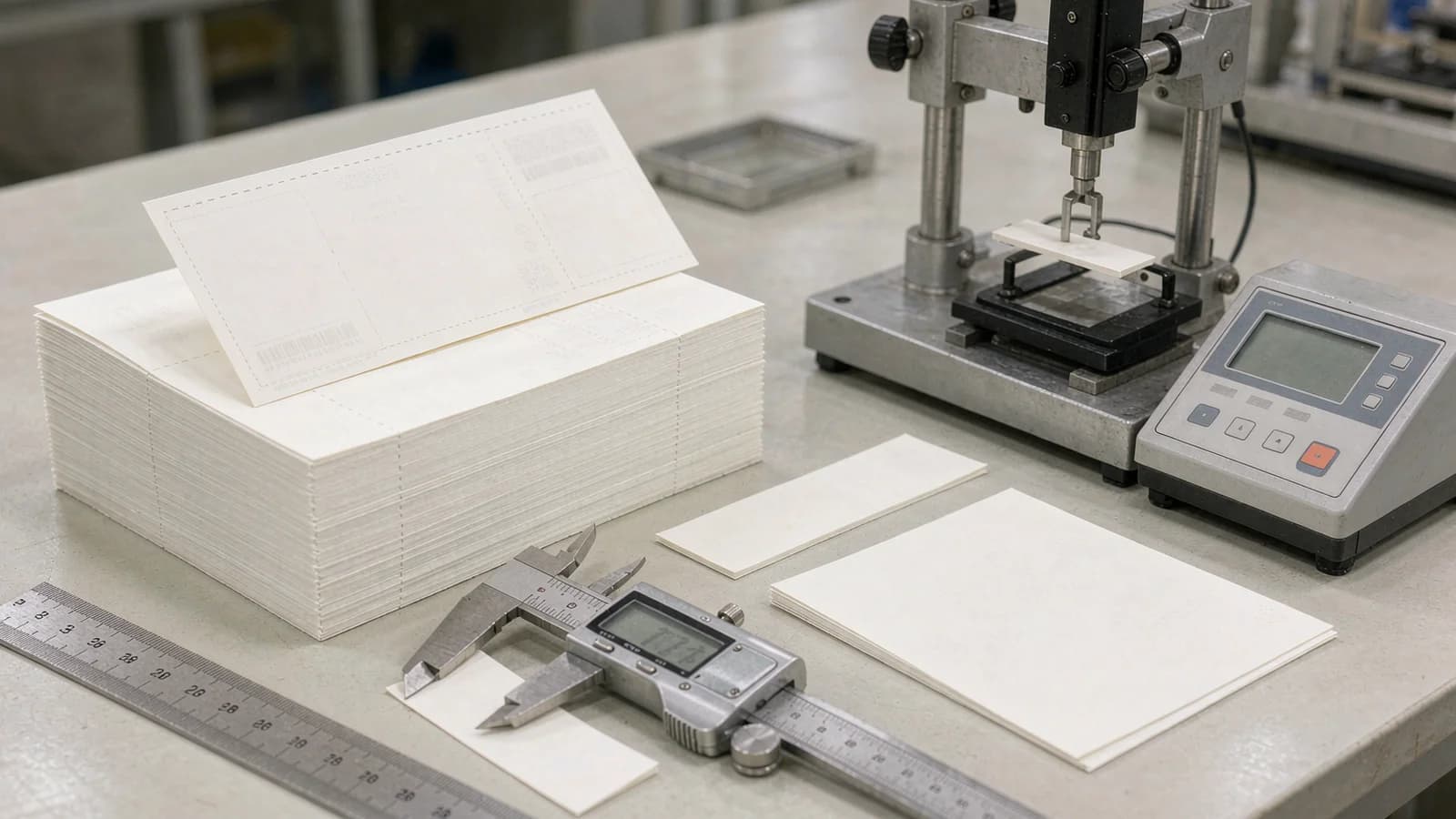
Heavyweight thermal paper means stock at roughly 65–80 gsm and above, against a receipt-paper mainstream of 48–60 gsm. The extra grammage buys stiffness and caliper: the sheet feeds reliably through unattended machines, survives repeated handling, feels substantial in the hand, and carries print for documents meant to last — tickets, boarding passes, kiosk journals, parking and transport receipts, banking records. It costs more per square metre and yields fewer metres per tonne, and it will not feed in mechanisms designed for thin stock. Specify it as grammage plus stiffness (mN·m) plus caliper, with image-life class — not as the word 'heavy'.
Thermal paper purchasing conversations are dominated by the thin end of the range — 48, 55 and 60 gsm — because receipt volume is enormous and every gram per square metre is visible in the price per roll. The top end of the grammage range gets less attention, yet it is where some of the most demanding applications live: boarding passes folded and refolded through a journey, parking tickets issued in wind and rain, kiosk journals read hours later, bank documents that must still be legible years on.
For these jobs the paper is not consumable packaging for a transaction — it is the product's interface. A 55 gsm receipt that curls feels normal; a boarding pass that flops feels defective. Stiffness, not print quality, is usually what separates a successful ticket stock from a returned container, and stiffness comes from grammage and fibre, not from the thermal coating.
This guide defines what heavyweight thermal paper means in practice, explains the physics of how grammage converts into stiffness and handling behaviour, sets out the applications where heavyweight grades genuinely earn their premium and the ones where they are money wasted, and closes with a specification template for buyers who need the heavier stock quoted and verified properly.
Where a programme needs several formats from one supplier, our thermal paper jumbo rolls covers width, core, roll diameter and developer class in a single specification sheet.
- Heavyweight thermal paper is a working band of roughly 65–80 gsm and above; standard receipt stock sits at 48–60 gsm.
- Stiffness rises roughly with the cube of caliper, so small grammage increases produce large handling improvements — this is the real reason tickets need heavier stock.
- The heavyweight premium buys machine feed reliability, handling durability, opacity and perceived quality — not darker print.
- The costs are fewer metres per tonne, higher freight per roll and possible feed problems in mechanisms designed for thin paper.
- Specify grammage, caliper, stiffness (mN·m), image-life class and maximum roll diameter together — heavyweight stock's extra thickness changes roll yields and feeder fit.
What counts as heavyweight — and what the extra grams buy
The thermal paper range runs from about 48 gsm economy receipt stock to 80 gsm and slightly above for specialist ticket and document grades. The working definition of heavyweight is 65 gsm upward: at that point the extra fibre and coating produce handling behaviour that users can feel, not just measure. Between 48 and 60 gsm the choice is an economy calculation — cost per receipt, yield per roll — while above 65 gsm the choice is functional: the sheet must do a mechanical job that thin stock cannot.
The physics is unforgiving and helpful at once. Paper stiffness rises approximately with the cube of its caliper, and caliper rises with grammage. Moving from 55 to 75 gsm increases thickness by roughly a third — and bending stiffness by something closer to double. That is why a 75 gsm ticket resists folding in a pocket and stands up in a machine's presentation slot, while a 55 gsm equivalent wilts. No coating chemistry can substitute for this; stiffness is bought at the fibre stage.
The heavier sheet also brings side benefits that matter in specific applications: higher opacity for two-sided-looking documents, better resistance to curl when laminated or handled in humidity swings, and a surface that survives multi-touch handling — ticket inspections, stamping, stapling — with less fibre disruption to the image layer. What it does not bring is print quality: image density is a coating property, and a well-made 55 gsm stock prints exactly as dark as a 75 gsm one from the same chemistry family.
| Band | Typical grades | Mechanical character | Natural applications |
|---|---|---|---|
| 48–55 gsm | Economy receipt | Flexible, high yield per tonne | High-volume retail and hospitality receipts |
| 55–60 gsm | Standard receipt | Balanced feel, good print | General POS, mobile terminals |
| 65–70 gsm | Mid-heavy | Noticeably stiffer, better opacity | Kiosk slips, transport tickets, labels needing body |
| 75–80 gsm+ | Heavyweight | Card-like stiffness, durable handling | Boarding passes, parking, banking, event and lottery tickets |
Applications where heavyweight earns its premium
Unattended and semi-attended machines are the first and strongest case. Kiosks, ATMs, pay stations and self-checkout terminals present the document to a user who pulls it, sometimes at an angle, often with one hand. Thin stock can fail to present, curl back into the slot, or be dropped by the exit rollers. Heavyweight stock feeds positively, presents flat and tears cleanly at the serration. For these machines the grammage premium is trivial against the cost of a service call — and the same logic drives transport and parking operators to ticket-grade stock as standard.
Documents that live a handling life are the second case. A boarding pass is folded into a passport, passed across counters, scanned three times and kept as a record; an event ticket is gripped, bent and stored in a wallet. Thermal paper for boarding passes and similar documents is specified heavyweight because the failure mode is mechanical, not chemical: the print survives, but a flopping, curled sheet is rejected by users and by gate readers alike. Weight, stiffness and a top-coated image layer together define the document class.
Retention-grade documents are the third case. Banking records, archival slips and medical or laboratory documents that must remain legible for years pair heavyweight grammage with long-life chemistry. Here the weight serves storage behaviour — heavier stock resists curl in filing, withstands being handled during audits, and reads as an 'original' document — while the extended image life comes from the coating system. The two are usually specified together, but they are separate decisions, and a buyer who only needs retention can get it on lighter stock.
Buyers comparing these specifications can review our 48 gsm lightweight thermal paper, where basis weight, coating construction and packing are documented per grade before an order is placed.
- Unattended machines (kiosk, ATM, pay station): feed reliability and flat presentation justify heavyweight by default.
- Handled documents (boarding passes, event and parking tickets): stiffness and fold resistance are the product.
- Retention documents: pair weight with long-life chemistry only if handling also demands it.
- Wrong cases: high-volume counter receipts, mobile terminal rolls and any mechanism specced for thin stock — weight here adds freight and jam risk, not value.
Heavyweight vs standard: the full cost picture
The visible cost is price per square metre, which rises with grammage. The hidden cost is yield: fewer metres per tonne and, for the same roll diameter, fewer metres per roll. A 57 mm x 40 mm roll on 55 gsm holds noticeably more length than the same shell on 75 gsm — because the sheet is thicker, each revolution consumes more length. Buyers converting a receipt program to heavyweight for a premium counter, for example, should re-run the rolls-per-carton and receipts-per-roll arithmetic before accepting the change; the grammage premium understates the true cost increase.
Freight follows the same logic. Heavyweight rolls weigh more for the same printed output, so cost per delivered document rises on both paper and transport. Against this, heavyweight rolls in the same outer diameter can mean fewer changeovers if the application consumes fewer metres — in ticket machines a thicker roll that lasts the same number of transactions is actually operationally neutral. The correct comparison is total cost per usable document, not price per tonne.
There is also a machine-compatibility gate that thin-paper buyers never think about. Feed paths, printhead pressure and platen settings on receipt mechanisms are tuned for the caliper of standard stock. Heavyweight paper in a mechanism designed for 55 gsm can produce misfeeds, elevated printhead wear and drag on the drive system — the reverse of the reliability the weight was bought for. Conversely, mechanisms specced for ticket stock often cannot grip thin paper at all. Heavyweight vs standard is therefore partly a hardware decision: match the grade to the machine fleet, or budget for the fleet that matches the grade.
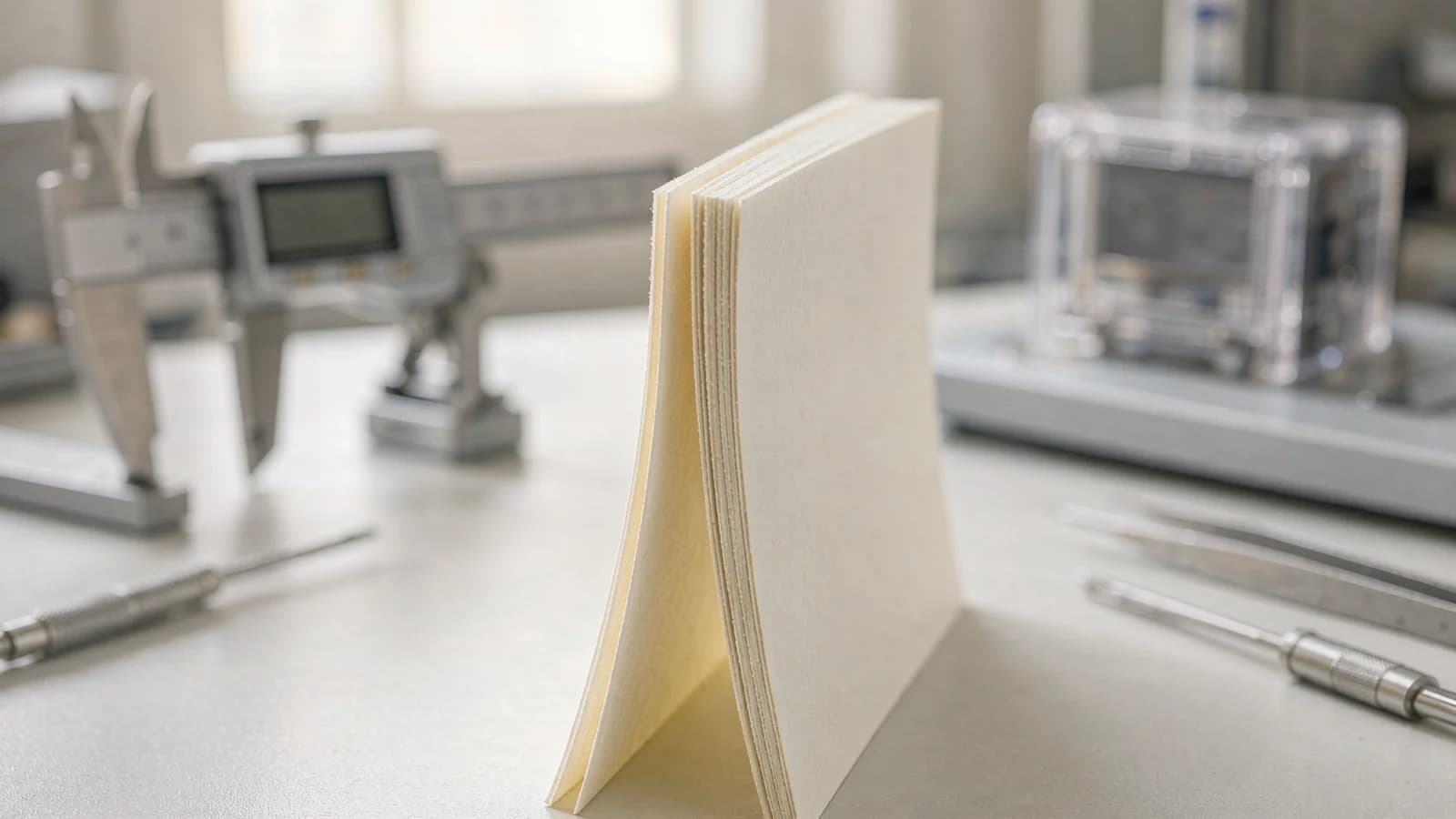
Rule of thumb: if the document is pulled from a machine by a user, or survives a pocket, specify heavyweight. If it prints and disappears into a till drawer, you are paying for stiffness nobody uses.
How to specify heavyweight thermal paper so quotes are comparable
A heavyweight specification has five lines. Grammage and tolerance: for example 75 gsm ±5%. Caliper in micrometres, because feed behaviour follows thickness and two 75 gsm stocks from different fibre bases can differ in caliper. Stiffness in mN·m on a defined test (Taber-type or similar), in machine and cross direction — this single number predicts most of the field behaviour the weight is being bought for. Image class: standard or top-coated, with the image-life class the application requires. And the geometry package: roll width, core, and a maximum outer diameter if the mechanism constrains it — remember the same OD holds fewer metres at 75 gsm than at 55.
Send that five-line spec, not the word 'heavy', when requesting quotations. Two mills' 'heavyweight' can differ by 10 gsm and a stiffness class, and the quotes will look 15% apart while describing different products. With the spec on the table, differences in price become differences in paper, and the golden-sample method — approve a pre-production lot, archive it, and compare each delivery against it on the same machine — keeps the grade honest across the contract's life.
Finally, ask the mill for the stiffness data rather than assuming grammage implies it. Reputable producers of ticket-grade thermal stock publish stiffness and caliper per grade because their customers' machine fleets depend on it. A supplier who cannot produce a stiffness figure for a 75 gsm ticket stock is telling you something about how often that question has been asked before — which is itself useful due-diligence data.
Where image life is the deciding factor, our top-coated vs non top-coated guide compares the two constructions on retention, cost and machine behaviour.
| Parameter | Example requirement | Why it is specified |
|---|---|---|
| Grammage | 75 gsm ±5% | Base of the grade; drives yield and freight |
| Caliper | ≥ 95 μm | Feed behaviour and roll yield arithmetic |
| Stiffness | ≥ stated mN·m, MD and CD, Taber-type | Predicts presentation, fold and handling |
| Image class | Top-coated, retention class per application | Print durability through handling |
| Geometry | Width / core / max OD | Machine fit; OD governs metres per roll |
Frequently asked questions
What grammage is considered heavyweight for thermal paper?
Roughly 65–80 gsm and above, against a receipt mainstream of 48–60 gsm. The 75 gsm class is the most common heavyweight ticket and document grade. The band matters more than any single number: the point at which stiffness becomes noticeable in handling and machine presentation.
Is heavier thermal paper better quality?
It is differently purposed, not better. Weight buys stiffness, opacity and handling durability; it does not buy darker print, which is a coating property. For high-volume receipts, heavyweight stock simply increases cost per document. For tickets, boarding passes and unattended machines, it is the correct engineering choice.
Why do heavyweight rolls contain fewer metres at the same diameter?
Because the sheet is thicker, each turn of the roll consumes more length. A 75 gsm roll and a 55 gsm roll of identical outer diameter and core differ materially in length — typically 15–25% less on the heavier stock. Re-run your metres-per-roll and rolls-per-carton arithmetic whenever the grammage changes.
Can I use heavyweight paper in a receipt machine designed for thin stock?
Check the mechanism first. Feed paths, head pressure and platen settings tuned for 55 gsm can misfeed or wear prematurely on 75 gsm stock. Machine datasheets usually state a supported grammage range. If the fleet was bought for thin paper, heavyweight stock belongs in the machines specced for it, not across the estate.
How do I specify heavyweight thermal paper in an RFQ?
Five lines: grammage with tolerance (e.g. 75 gsm ±5%), minimum caliper in micrometres, stiffness in mN·m in both directions on a named test, image class and retention requirement, and the roll geometry (width, core, maximum outer diameter). Ask for a pre-production sample and approve it as the golden sample against which shipments are compared.