
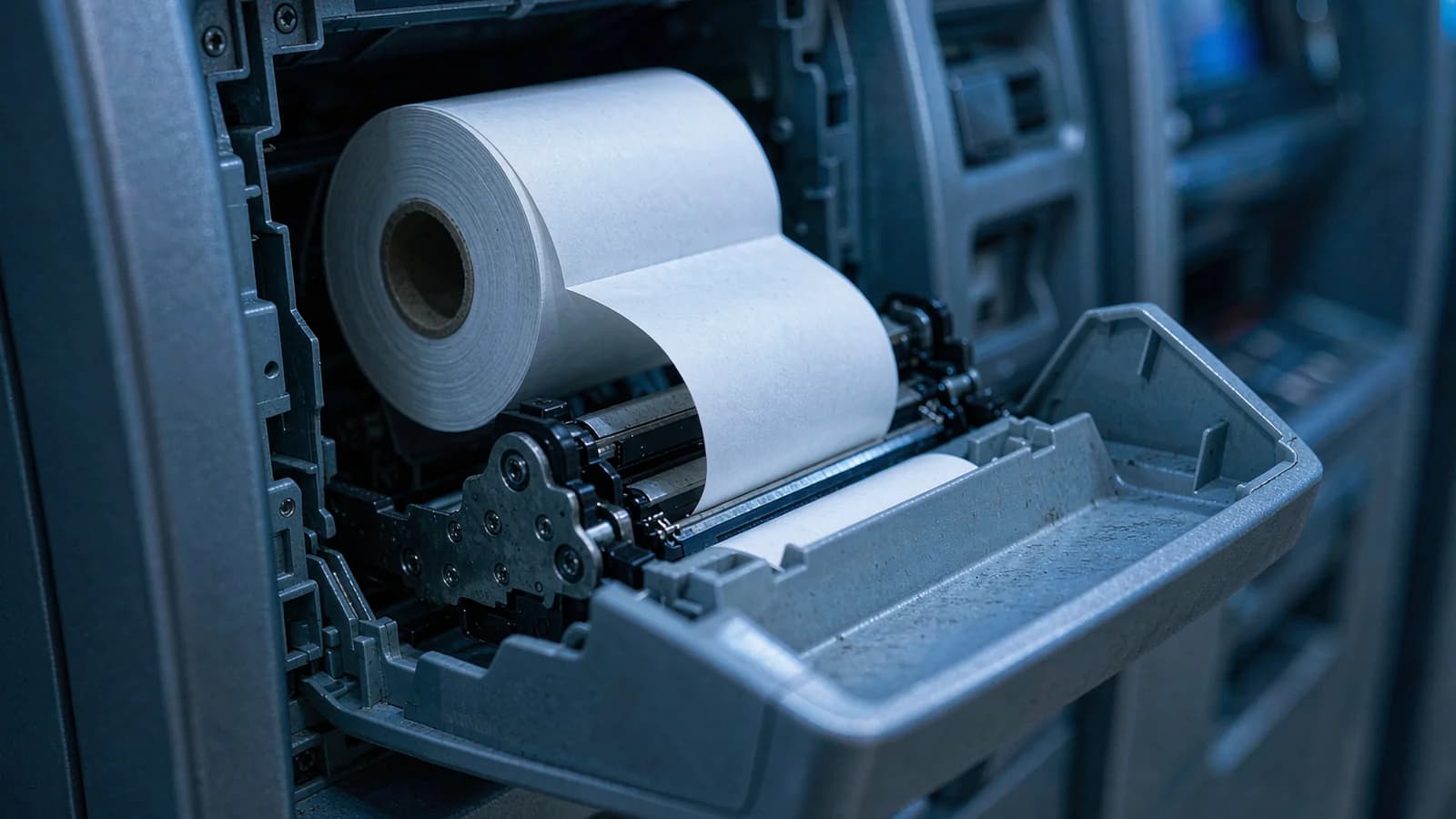
ATM thermal paper is specified per mechanism model: 80mm width with roll diameters from roughly 80 to 180mm, model-specific cores and end finishes, black-mark geometry verified in sampling, controlled-tension winding and clean-trimmed edges to prevent jams, grades rated for multi-year image retention on settlement receipts, and a documentation set — batch COA, SDS, compliance declarations and traceability — contracted as part of the supply, not requested after it.
An ATM is an unforgiving print environment: a thermal mechanism inside a kiosk, printing customer and settlement receipts around the clock, unattended, in a machine that cannot be cleared by a member of staff between transactions. Paper that would pass unnoticed in a retail printer becomes a service call in an ATM — which is why ATM thermal paper is specified, documented and bought differently from till rolls.
This guide sets out the ATM paper programme the way a bank procurement or cash-in-transit buyer would build it: the 80mm formats and core specifications, black-mark variants and sensor alignment, the winding and tension quality that prevents jams, image-retention requirements for settlement records, and the documentation and tender structure that banking buyers require.
For production volumes, the same construction logic applies to our 48 gsm lightweight thermal paper, quoted per jumbo roll, slit reel or finished ATM format.
The sections follow the tender sequence: specification first, quality systems second, commercial structure last.
- ATM paper is specified per mechanism model — width, diameter, core, end finish and black-mark geometry are quoted from a fit sheet, not assumed.
- Black-mark variants are mechanism-specific: mark width, position and density belong on the specification and are verified in sampling.
- Jam prevention is winding quality — controlled tension, clean-trimmed edges, correct core fit and a finished outer end.
- Image retention is a contractual requirement for settlement receipts and is validated under real storage conditions, not catalogue figures.
- Banking tenders buy documentation as well as paper: batch COA, SDS, compliance declarations and traceability to coating run.
Why ATM paper is a separate specification
ATM receipt printing differs from retail printing in three ways that change the paper. The print mechanism is embedded and jam-clearing requires a service visit, so feed reliability carries a direct cost. Receipts are often the customer's only transaction record, so image life is a contractual matter, not a preference. And replenishment is scheduled through CIT routes and maintenance windows, so roll length and fit must be exact — a roll a few millimetres too wide, or a core that slips on the spindle, becomes a missed replenishment.
The consequence is that ATM paper is bought against a written specification with batch traceability, rather than against a case price. The specification covers the format and core, the sensitivity class matched to the mechanism, black-mark placement where the model requires it, winding quality, and the documentation set that travels with every batch.
The buying implication is worth stating plainly. Receipt paper selected on price alone will almost certainly work in a good retail printer, and will almost as certainly generate avoidable faults across an ATM fleet — a skew feed here, a faint black mark there, a cassette that reloads short. Banking buyers therefore start from the mechanism, not the market: which models are in the fleet, what each one takes, and what documentation the auditor will ask for. The rest of this guide follows that logic.
80mm formats, cores and roll geometry
Most ATM mechanisms print on 80mm-wide paper, but the family resemblance ends there. Roll diameter is dictated by the cassette — common diameters range from around 80mm up to 180mm in high-capacity cassettes — and core specifications vary by mechanism family, with plastic, fibre and paper cores in different inner diameters. Roll length follows from diameter, gsm and cassette depth, and the outer end is finished plain, tabbed or glue-tacked depending on the reload design.
The geometry must be quoted per mechanism model, not assumed: two machines of the same brand and generation can take different diameters or end finishes. Programme buyers keep a per-model fit sheet — width, diameter, core, length, end finish — and re-verify it whenever the fleet changes or a mechanism is replaced.
| Parameter | Typical range | Set by |
|---|---|---|
| Width | 80 mm (some mechanisms 76–82 mm) | Mechanism paper path |
| Roll diameter | 80–180 mm | Cassette capacity |
| Core | Plastic, fibre or paper; diameter per mechanism family | Spindle and clutch design |
| Length | 60–300 m per roll | Diameter, gsm and cassette depth |
| End finish | Plain, tabbed or glue-tacked | Reload design and dust control |
Black-mark variants and sensor alignment
Many ATM mechanisms use a black mark — a printed stripe on the reverse of the paper — as a position reference for cut and eject. Mark width, position relative to the leading edge and print density are all mechanism-specific, and a mark that is faint or misplaced produces the classic symptoms: mis-cuts, receipts caught in the transport path, and wasted paper on every reload.
Black-mark paper is therefore ordered against the mechanism's drawing, with mark position tolerance and density stated on the specification and verified in sampling. Buyers converting from a plain-paper model to a black-mark model — or between mechanism generations — should treat it as a requalification: same width, same gsm, different paper.
Winding quality and jam prevention
The single most expensive paper fault in an ATM is the jam, and most jams trace to winding and tension quality rather than to the coating. A roll wound with uneven tension breathes and telescopes, letting the outer layers slip and feed skew; a roll wound too hard can block and feed with static; edge burrs shave coating dust into the transport path, where it accumulates on sensors until the mechanism reports a fault.
Professional ATM paper is slit and wound on controlled-tension equipment, edge-trimmed clean, and finished so the outer end does not unwind in the cassette. Arrival inspection is physical: square wind, clean edges, correct core fit, and a peel test of the outer end — four checks that take minutes and prevent the service calls that do not.
- Square wind — no telescoping or staggered layers across the roll face.
- Clean-trimmed edges — no fuzz and no coating dust on the rim.
- Core fit — no free play on the mechanism spindle; core specified per model.
- Outer-end finish — tab or glue point holding the roll closed until reload.
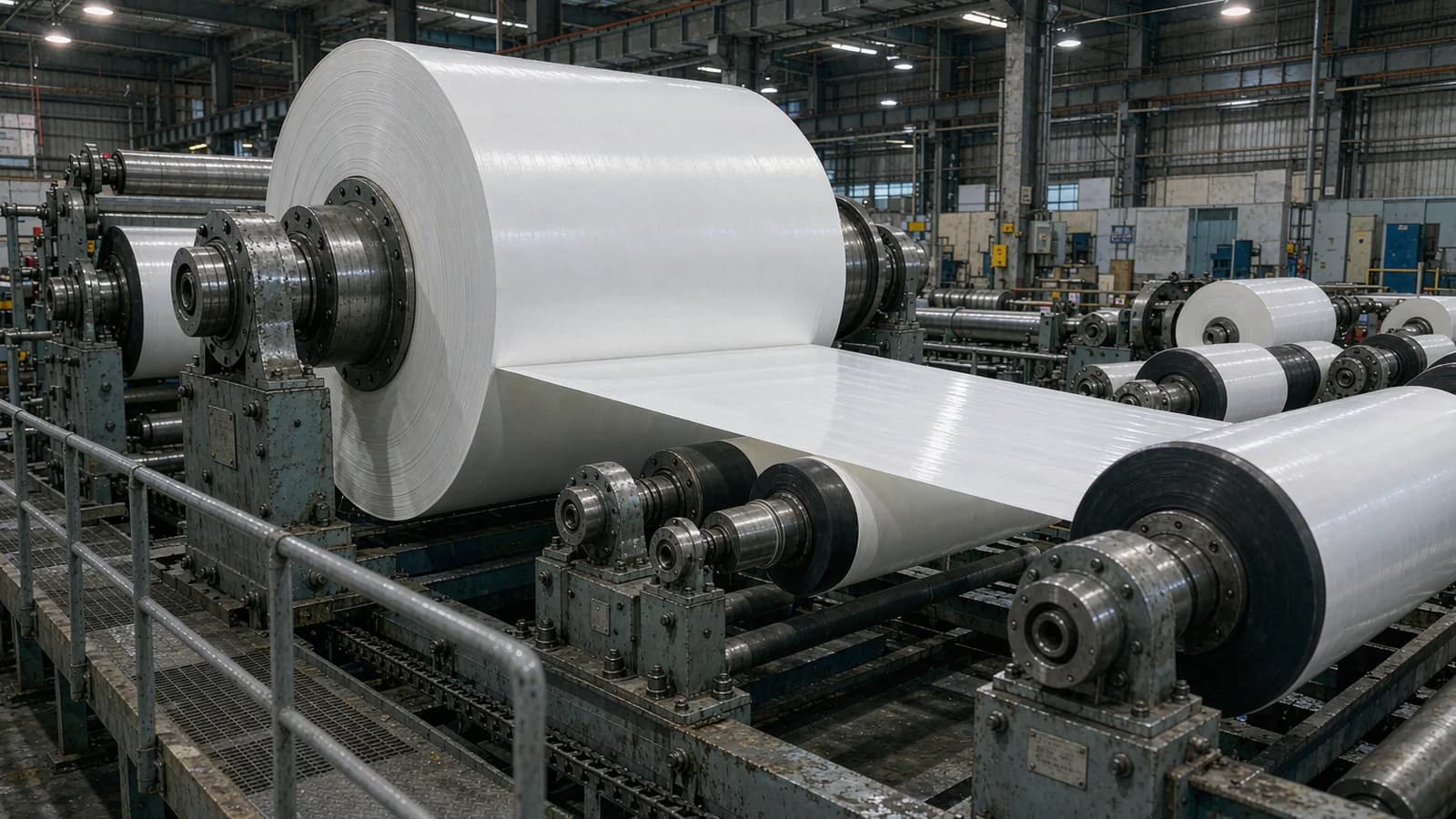
Image retention for settlement receipts
ATM receipts are frequently the only transaction evidence a customer holds, and settlement copies may be retained for dispute windows measured in years. Image retention is therefore specified, not assumed: the grade must keep a legible image for the retention period the bank promises, under the storage conditions receipts actually experience — wallets, car consoles, filing cabinets.
Two levers control retention. Grade selection: standard dynamic grades suit short-life retail receipts, while ATM programmes typically specify grades — often with a protective top coat — rated for multi-year image life. Storage discipline: printed receipts degrade fastest under heat, humidity and contact with plasticisers, so archival guidance travels with the specification. Retention should be validated against destination conditions with a retained-sample test rather than accepted from a catalogue figure.
A practical retention test is simple to run and worth contracting: print a defined test image on the delivered batch, store one set under ambient office conditions and one under the harshest condition the receipts will face, and read both at six and twelve months against the retained standard. The test converts a datasheet claim into evidence a bank can hold. Buyers inheriting an existing programme should run the same test on the incumbent grade before re-tendering — it establishes the baseline any challenger grade must beat.
Banking-grade documentation and tender buying
Banking buyers document paper the way they document any critical consumable. The standard set: a certificate of analysis per production batch, a current safety data sheet naming the developer chemistry, compliance declarations for the destination market, and traceability from finished roll back to coating run. Tender documents increasingly ask for these by name, alongside quality-system evidence from the manufacturing site.
Where developer compliance is part of the specification, our BPA-free vs phenol-free guide documents the chemistry, the regulations and the paperwork behind each class.
Volume tenders reward structure over headline price: a specification fixed per mechanism model in the fleet, batch documentation as a contractual deliverable, a sample ladder from lab print to field trial in a live ATM, and a review cadence that scores jam rates and image complaints against batch records. Paper is a small line in an ATM's operating cost and a large one in its service record — tenders that price the specification, not just the roll, capture that difference.
Where a programme needs several formats from one supplier, our custom thermal paper programme covers width, core, roll diameter and black-mark placement in a single specification sheet.
Programme shorthand: 'Fit sheet per mechanism model, black marks verified in sampling, winding checked at goods-in, retention validated under real storage, batch COA and SDS contracted with every supply.'
Frequently asked questions
What size paper do ATMs use?
Most ATM mechanisms print on 80mm-wide thermal paper, with roll diameters from roughly 80mm to 180mm depending on cassette capacity, and cores that vary by mechanism family. The exact fit — width, diameter, core and end finish — must be confirmed per model, since the same brand can use different formats across generations.
What is the black mark on ATM paper for?
It is a printed position reference on the reverse of the paper that the mechanism uses to control cut and eject. Mark width, position and density are specific to each mechanism, and incorrect marks cause mis-cuts, trapped receipts and jams.
How long must ATM receipts stay legible?
It depends on the bank's retention policy and local record rules; settlement copies are commonly retained for years, and customer receipts should remain legible through the dispute window. ATM programmes therefore specify grades rated for multi-year image life and validate them under realistic storage conditions.
What documentation comes with banking-grade thermal paper?
A batch certificate of analysis, a current safety data sheet naming the developer chemistry, market compliance declarations, and batch traceability to the coating run. Tender-grade supply adds quality-system evidence from the manufacturing site and retained reference samples.