

Thermal paper printer compatibility is decided by four spec groups, not brand names: roll geometry (width, outer diameter and core must fit the machine), print sensitivity (the coating must react within the head's energy), surface and curl behaviour, and chemistry requirements such as BPA/BPS policy and black marks. Get one wrong and the result is misfeeds, faint print or a rejected shipment. Measure the current roll, compare spec sheets, and trial a sample on the actual machines.
Every distributor eventually fields the same customer question: will this paper work in our machines? For thermal products the answer is spec-driven — a roll either matches the geometry, sensitivity and chemistry the application expects, or it does not — and a distributor who answers with numbers wins the order and avoids the returns.
Compatibility failures surface late: the container arrives, the rolls load fine, and then complaints start — faint print on one terminal, jams on another, a compliance rejection on a third. Almost all of it is preventable at the specification stage.
This guide breaks compatibility into the four spec groups that decide it and ends with a verification protocol that turns 'it should work' into a documented match.
Buyers comparing these specifications can review our custom thermal paper programme, where basis weight, coating construction and packing are documented per grade before an order is placed.
- Compatibility = roll geometry + print sensitivity + surface/curl behaviour + chemistry.
- Width, outer diameter and core are measured from the machine's current roll.
- Sensitivity must match the head's energy class, or print goes faint.
- Black-mark position, BPA/BPS policy and topcoat needs are compatibility items too.
- Trial a sample roll on the real machines before committing a container.
What actually has to match: the four spec groups
From the paper's point of view, thermal printing hardware is a fixed set of constraints: a compartment and spindle of given dimensions, a print head with a defined energy profile, a paper path with a tolerance for curl and stiffness, and, in regulated markets, a chemistry policy. Compatibility is matching the paper spec to that set.
The four groups cover every field complaint: geometry failures show up as jams or short rolls, sensitivity failures as faint print, surface failures as misfeeds and skew, and chemistry failures as compliance rejections — the costliest kind.
| Spec group | Key parameters | Typical failure |
|---|---|---|
| Roll geometry | Width, OD, core ID, wind direction | Jams, off-centre print, early end-of-roll |
| Print sensitivity | Dynamic sensitivity class, activation energy | Faint print, hotter head, shorter head life |
| Surface & curl | Smoothness, stiffness, moisture response | Misfeeds, skew, curl jams in curved paths |
| Chemistry & marks | BPA/BPS status, topcoat, black mark | Compliance rejection, no mark detection |
Roll geometry: measure the machine, not the catalogue
Geometry is where most compatibility errors happen, and they are all measurement errors. Take a roll that is known to run and measure width across the face, outer diameter, and core inner diameter. Width must sit within the machine's accepted band. Core diameter (12.7 or 25.4 mm for receipt rolls, 76.2 mm for jumbo) must fit the spindle, and wind direction must match how the machine draws the web.
Outer diameter decides whether the roll fits and how much paper it holds — the hidden variable in price comparisons, since rolls of the same paper at 79.5 mm and 83 mm OD carry different metres. Normalise quotes to metres per roll, and verify the slitting plan holds finished tolerances, not nominal widths.
Where a programme needs several formats from one supplier, our POS and receipt paper rolls covers width, core, roll diameter and developer class in a single specification sheet.
- Measure a known-good roll: width, OD, core ID, wind direction.
- Normalise quotations to metres per roll before comparing.
- Verify slitting plans hold finished tolerances, not nominal widths.
Print sensitivity: matching the coating to the head's energy
A thermal head heats dots to a target temperature within a fixed time window, and the coating must darken fully inside it. High-sensitivity coatings react at lower energy and suit compact mechanisms; standard grades need the full pulse the head was designed to deliver. When sensitivity is mismatched, print looks grey and thin at default density, and operators compensate by darkening the head, which shortens its life.
Sensitivity matching matters most when replacing an incumbent supply: compare dynamic sensitivity data, or run the trial protocol below. For mixed fleets — terminals, kiosks and label engines in one programme — a mid-sensitivity grade is usually the practical answer.
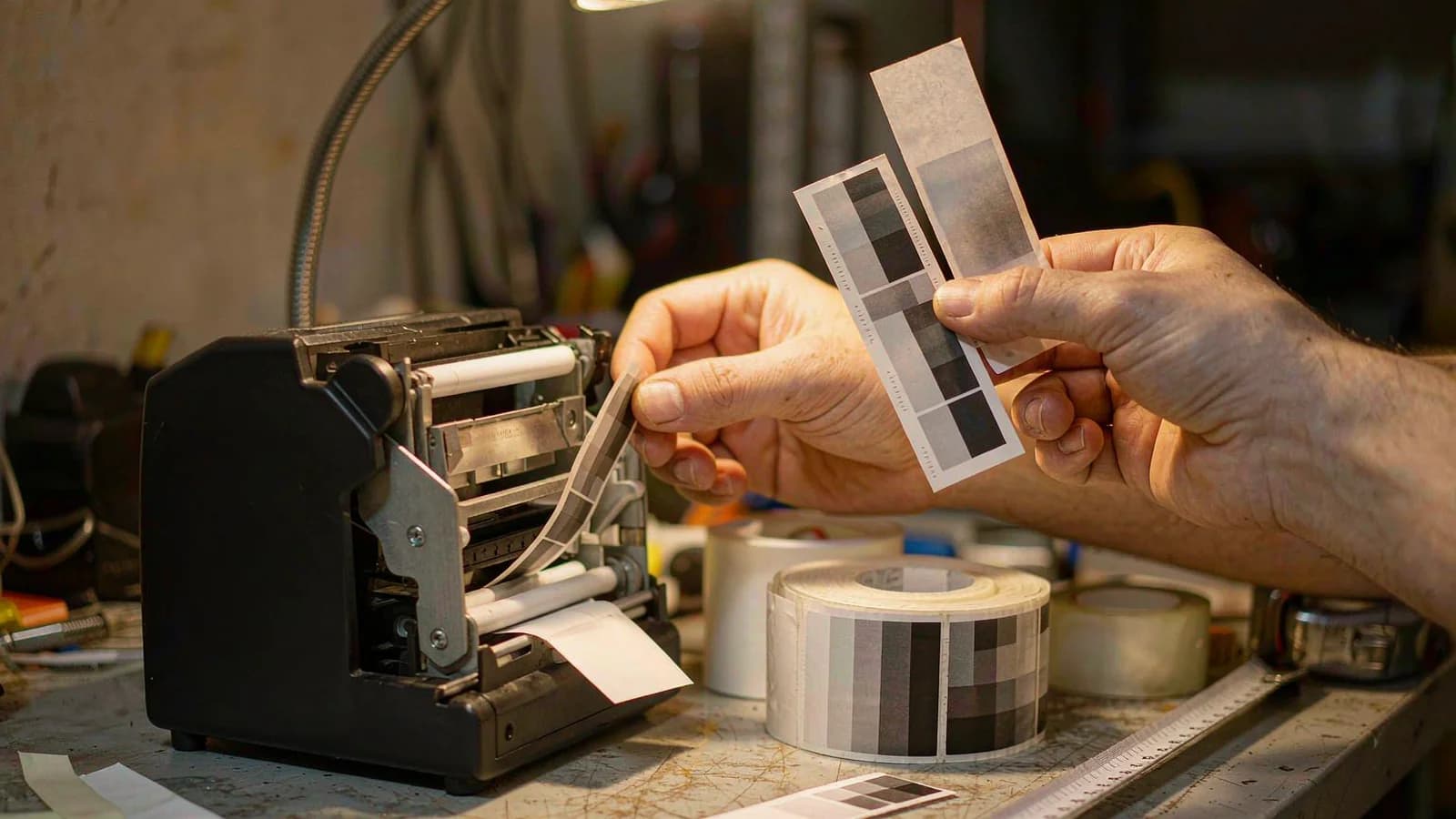
Surface behaviour, chemistry and black marks
Surface and curl decide how the sheet behaves in the paper path. Kiosk and ticket mechanisms with curved or long paths are sensitive to curl and stiffness, and a grade that feeds perfectly on a bench can jam in the field. Climate amplifies this, so condition samples at destination humidity first.
Chemistry is a compatibility item in two senses. Commercially, buyers increasingly require BPA-free or phenol-free grades, and a conventional grade shipped into a market with a stated policy is a rejection regardless of print quality. Functionally, mark-fed applications — parking tickets, queue tickets, some kiosks — need a black mark in the position the sensor expects; a mark outside the sensor window makes an otherwise perfect paper incompatible.
Verification protocol and the spec sheet to send
The minimum protocol that catches virtually every field problem: obtain a sample roll; condition it at destination humidity for a day; measure geometry against the known-good roll; run a print test at default density and compare with the incumbent side by side; then run a duty test, watching for misfeeds, curl and end-of-roll behaviour.
For the supplier, send numbers, not adjectives: width and tolerance, OD, core ID and wind direction; grammage and stiffness; sensitivity class or 'match grade X'; BPA/BPS/phenol-free status; topcoat yes/no; black mark size and position; plus the application and machine class — enough for a supplier to confirm fit or flag a conflict on the first reply.
Where developer compliance is part of the specification, our BPA-free vs phenol-free guide documents the chemistry, the regulations and the paperwork behind each class.
| Field | What to state |
|---|---|
| Roll geometry | Width + tolerance, OD, core ID, wind direction |
| Grammage / stiffness | Target gsm; minimum stiffness for curved paths |
| Sensitivity | Class, or 'match incumbent grade' with a sample |
| Chemistry | BPA-free / BPS-free / phenol-free requirement |
| Topcoat & black mark | Topcoat yes/no; mark width, position, sensor side |
| Application & machines | Environment, duty volume, mechanism type |
Frequently asked questions
How do I check if a thermal paper roll will fit my machine?
Measure a roll that currently runs well: width, outer diameter and core inner diameter. The candidate must match the width within tolerance, be no larger in OD than the compartment allows, and use a core that fits the spindle.
Can I use a different grade than the one the machine maker recommends?
Usually yes, provided the four spec groups match: geometry, sensitivity, surface behaviour and chemistry. What matters is the specification, not the name — compare spec sheets and print-test first.
Why does my print look faint even with a new roll?
Faint print usually means a sensitivity mismatch — the coating needs more energy than the head delivers. Retest at the default density setting; if print stays thin, the grade is under-sensitive for that mechanism.
Does BPA-free thermal paper work in the same machines?
Yes. BPA status is a coating chemistry attribute, not a mechanical one — the same geometry and sensitivity run in the same machines. Re-verify print density, since alternative developers can differ slightly.
What is a black mark and when does it matter?
A black mark is a printed bar the sensor uses to find the start of each receipt or ticket. It matters in mark-fed applications such as parking and queue tickets: the mark's width, position from the leading edge and side of the web must match the sensor.