
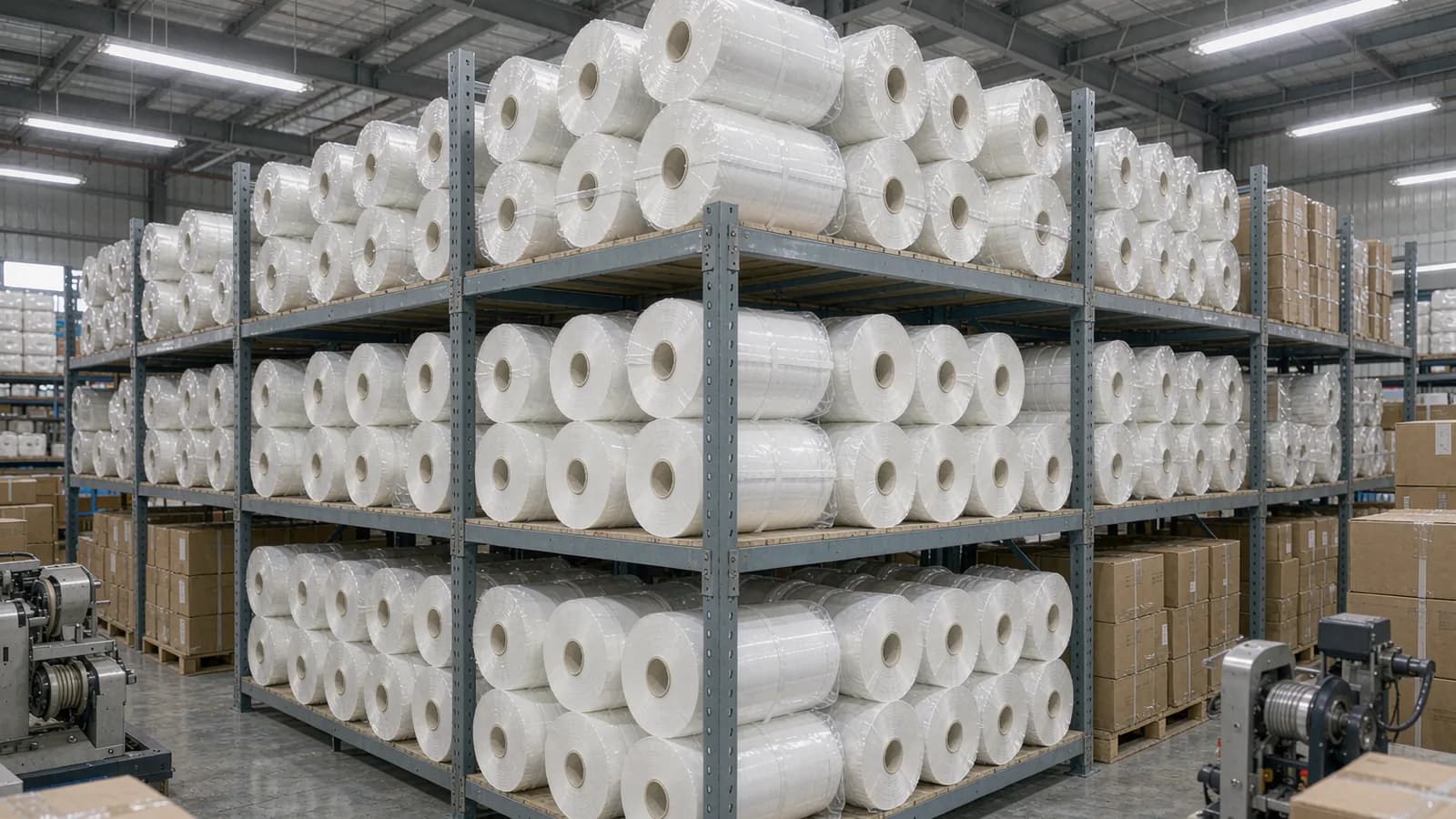
Lottery thermal paper is the ticket stock used inside lottery terminals, self-service gaming kiosks and voucher machines. It differs from ordinary receipt rolls on four counts: heavier basis weight (typically 65-80 gsm) for stiffness so tickets feed and present cleanly, top-coated construction for dense, scannable barcodes and validation codes, controlled curl and abrasion behaviour so tickets survive handling and ticket Validators, and a documented, low-phenol chemistry profile because the public touches the printed output.
Lottery and gaming terminals are the most demanding receipt environment in mainstream retail. A ticket is printed, torn, presented, scanned, sometimes stored for months as a claim record, and handled by thousands of members of the public along the way. A faint barcode or a curling ticket costs more than a reprint — it costs a disputed claim and a service call.
That is why lottery thermal paper is specified as its own stock class rather than bought as generic till roll. Operators and terminal distributors write stiffness, density and image-life requirements into tender documents, and paper that prints acceptably in a café receipt machine can fail those tests outright.
Procurement teams standardising on one supplier can review our 75 gsm heavyweight thermal paper alongside the comparisons in this guide — the heavyweight class most lottery ticket formats sit in.
This guide covers the four specification pillars — construction, print performance, public-handling chemistry, and supply formats — and how to qualify a stock before it enters a terminal network.
- Lottery ticket stock lives in the 65-80 gsm heavyweight class: stiffness is a functional requirement, not a feel preference, because tickets must feed, present and tear cleanly in terminal mechanisms.
- Top-coated constructions are the default for lottery tickets — validation barcodes and play symbols need high optical density and abrasion resistance through validators and pockets.
- Curl control and image retention under friction decide real-world acceptability; both are tested against the terminal model and the claim-storage period, not against a datasheet alone.
- Because the public handles printed tickets, developer chemistry and its documentation (BPA-free or phenol-free class, SDS per batch) belong in the tender from the start.
- Roll formats, core sizes and security preprint are standardised per terminal fleet; a supplier who holds the specification sheet per machine type prevents fleet-wide misloads.
Why gaming terminals demand their own stock class
A lottery terminal is a high-duty mechanism with a paper path engineered around a specific caliper and stiffness band. Tickets must emerge flat enough for the customer to read immediately, stiff enough for the presenter belt to grip, and strong enough to tear on the serration without leaving the next ticket's leading edge damaged. Lightweight receipt stock, excellent in its own arena, too often jams or telescopes here.
Duty cycle raises the bar further. A terminal at a busy lottery retailer prints hundreds of tickets a day in bursts; heat buildup in the print head zone, plus the friction of repeated platen passes, punishes coatings that were never designed for it. Stock that images beautifully on ticket one but fades by ticket five hundred of a continuous run fails the operational test.
Finally, the ticket is a financial document. Barcodes, serials and validation codes must scan first time at the retailer, and survive weeks or months in a customer's wallet before a claim. Image life is therefore specified in months under defined storage conditions — a materially tougher requirement than a discardable receipt.
Construction: heavyweight, top-coated, curl-controlled
The construction conversation starts with basis weight. Most lottery and gaming ticket formats sit between 65 and 80 gsm, with heavyweight stock around 75 gsm the common centre of gravity. The extra mass buys caliper, and caliper buys stiffness — the property that keeps a short, wide ticket travelling straight through a paper path designed for exactly that geometry.
Over the base paper sits the coating system. A thermal-sensitive layer carries the image; a top coat over it resists abrasion, moisture and fingerprint oils, which is what keeps a validation barcode scannable after the ticket has ridden in a pocket for a fortnight. For lottery stock, the top coat is not an upgrade — it is the baseline, and tenders usually say so explicitly.
Curl and dimensional stability close the construction brief. Coated papers curl when one side gains or loses moisture faster than the other; mill-level moisture conditioning and symmetric coating architecture keep a ticket flat through humid retail summers and dry, heated winters alike. The buyer's verification is simple: store sample tickets in both conditions for a week and look at them.
Where image life is the deciding factor between constructions, our top-coated thermal label stock documents how coating construction and stiffness are specified per grade — the same two variables that dominate lottery ticket performance.
| Property | Lottery / gaming ticket stock | Ordinary receipt roll |
|---|---|---|
| Basis weight | 65-80 gsm, stiffness specified | 48-60 gsm typical |
| Coating | Top-coated as baseline | Top coat optional |
| Optical density | High — barcodes and validation codes | Text-grade density sufficient |
| Image life | Months, defined storage conditions | Days to weeks |
| Curl | Tightly controlled both climates | Looser tolerance |
| Documentation | COA + SDS per batch in tender | SDS on request |
Print performance: density, abrasion, validation
Barcode scannability is a density story. Thermal printing grades its output in optical density — how black the mark reads to a scanner's eye — and validation barcodes printed at low density become intermittent scanners, the kind of fault that appears at one retailer and not another. Lottery-grade stock specifies a minimum density at a defined print energy, measured per batch, not per brochure.
Abrasion resistance is the second pillar. A ticket passes platen rollers, validator belts, and finally human pockets; a coating that sheds under that traffic takes the serial number with it. Top-coated constructions earn their cost here, and the standard test is mechanical: a defined number of rub cycles against the printed surface, then re-scan.
The qualification sequence mirrors how the stock will live: print on the actual terminal model at retail duty, scan the validation codes immediately and after defined storage intervals, rub and fold sample tickets, and archive a signed reference ticket as the standard for future deliveries. Terminal fleets are rarely homogeneous, so the trial matrix should cover each terminal generation in the network.
Public-handled output: chemistry and compliance
Lottery tickets pass through more hands than almost any other printed thermal product — retailers, players, validators, claim clerks. That exposure puts the developer chemistry on the compliance agenda in a way ordinary back-office printing never does. Regulators and retail groups in several markets have moved thermal specifications toward BPA-free and, increasingly, phenol-free developer systems, and lottery tenders have followed.
The buyer's protection is documentary. Every batch should ship with a certificate of analysis and a safety data sheet that names the developer system actually used, so the compliance claim travels with the goods rather than living in a marketing deck. Where a market regulates explicitly, the documentation set should map to that regulation by name.
Where developer compliance is part of the specification, our BPA-free vs phenol-free guide documents the chemistry, the regulations and the paperwork behind each class — the reference most lottery procurement teams start from.
Roll formats, preprint and supply at network scale
Format discipline keeps a fleet loaded. Each terminal family specifies width, core and roll diameter; a network running two or three terminal generations needs the mapping documented per model so a distributor's replacement order never misloads a machine. Cores and end-of-roll marks matter here too — a ticket stock that runs out unannounced mid-shift creates a service queue no operator wants.
Preprint is common in lottery programmes: operator branding, play instructions, back-of-ticket terms and security features printed before the thermal layer does its work. Preprinting demands ink and process compatibility with the thermal coating, agreed plates, and minimum order quantities that reflect the setup — all of which belong in the specification conversation, not discovered after artwork is final.
Packaging and replenishment close the loop at network scale. Cartons sized to the terminal back-room, moisture-barrier wrapping for humid climates, batch numbering traceable to the mill run, and a rolling schedule aligned to the retailer base's consumption are what turn a good ticket stock into a dependable supply programme.
Requests that combine several formats can be quoted together; see our POS and receipt paper rolls for the finished-format options behind each terminal family — ticket stock and till rolls frequently ship in the same container for lottery retailers.
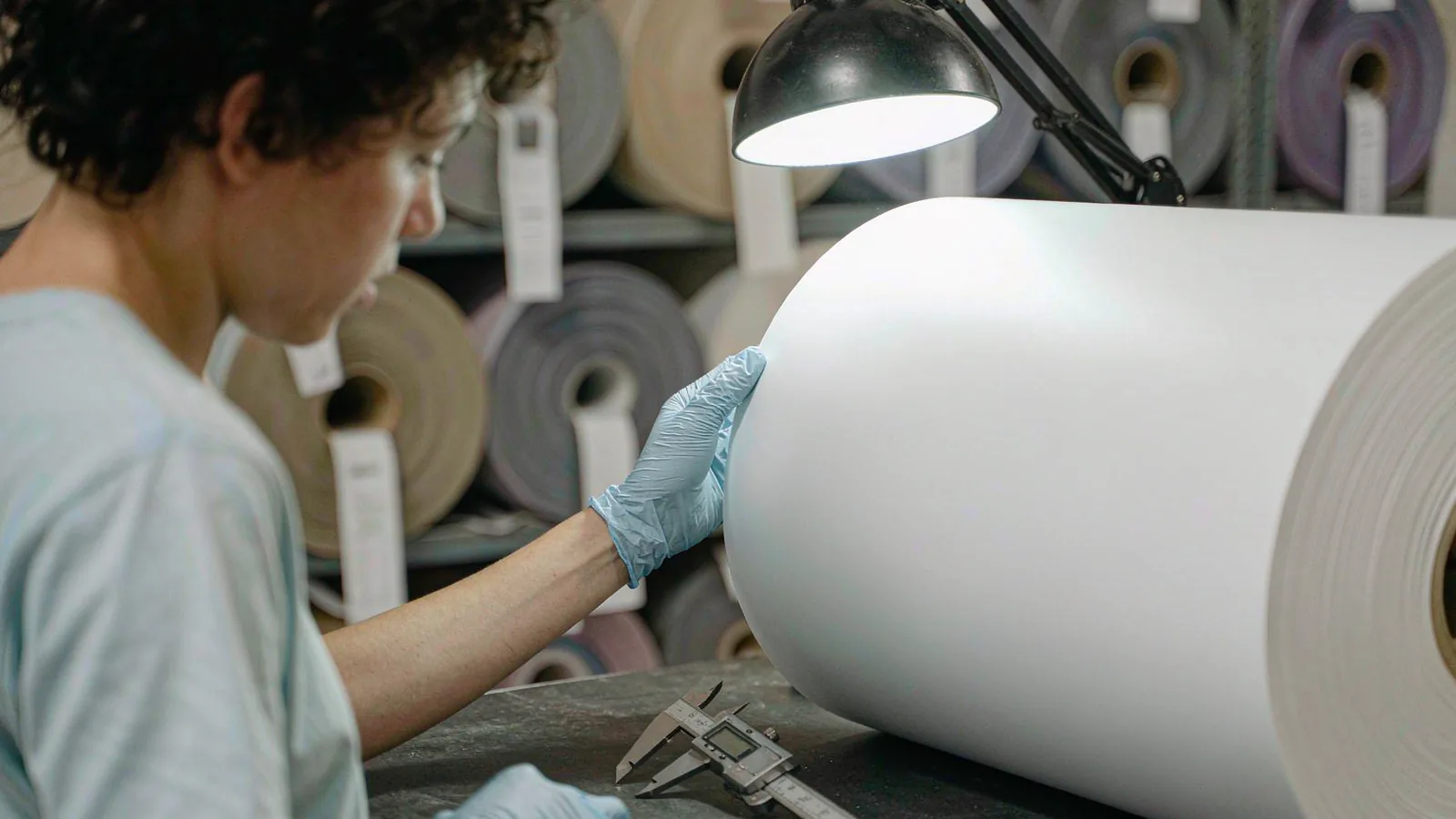
Tender shorthand: '65-80 gsm, top-coated, density and rub tests per batch, curl verified both climates, COA + SDS shipped per batch, format map per terminal model.'
Frequently asked questions
What gsm is lottery thermal paper?
Most lottery and gaming ticket stock sits between 65 and 80 gsm, with 75 gsm a common specification. The heavier basis weight provides the stiffness terminal mechanisms need for clean feeding, presenting and tearing — properties ordinary receipt rolls at 48-60 gsm do not guarantee.
Why do lottery tickets need top-coated thermal paper?
The top coat resists abrasion, moisture and skin oils, keeping validation barcodes and play symbols dense and scannable through validators, belts and weeks in a wallet. On lottery stock the top coat is a baseline requirement in most tenders, not an optional upgrade.
How long must a lottery ticket image last?
Long enough to cover the claim window — typically months under defined storage conditions. Stock is qualified by scanning validation codes immediately after printing and again after storage intervals in both humid and dry conditions, with a signed reference ticket kept as the standard.
Can lottery ticket rolls be preprinted with operator branding?
Yes. Branding, play instructions, back-of-ticket terms and security features are printed before the thermal layer is applied or after it, depending on the process. Preprinting requires ink compatibility with the thermal coating, artwork plates and minimum order quantities, all agreed during specification.
What documentation should ship with each batch of lottery thermal paper?
A certificate of analysis covering density and sensitivity results, and a safety data sheet naming the developer system used. Because the public handles the tickets, BPA-free or phenol-free class declarations and their supporting documents belong in the tender and in every shipment.