
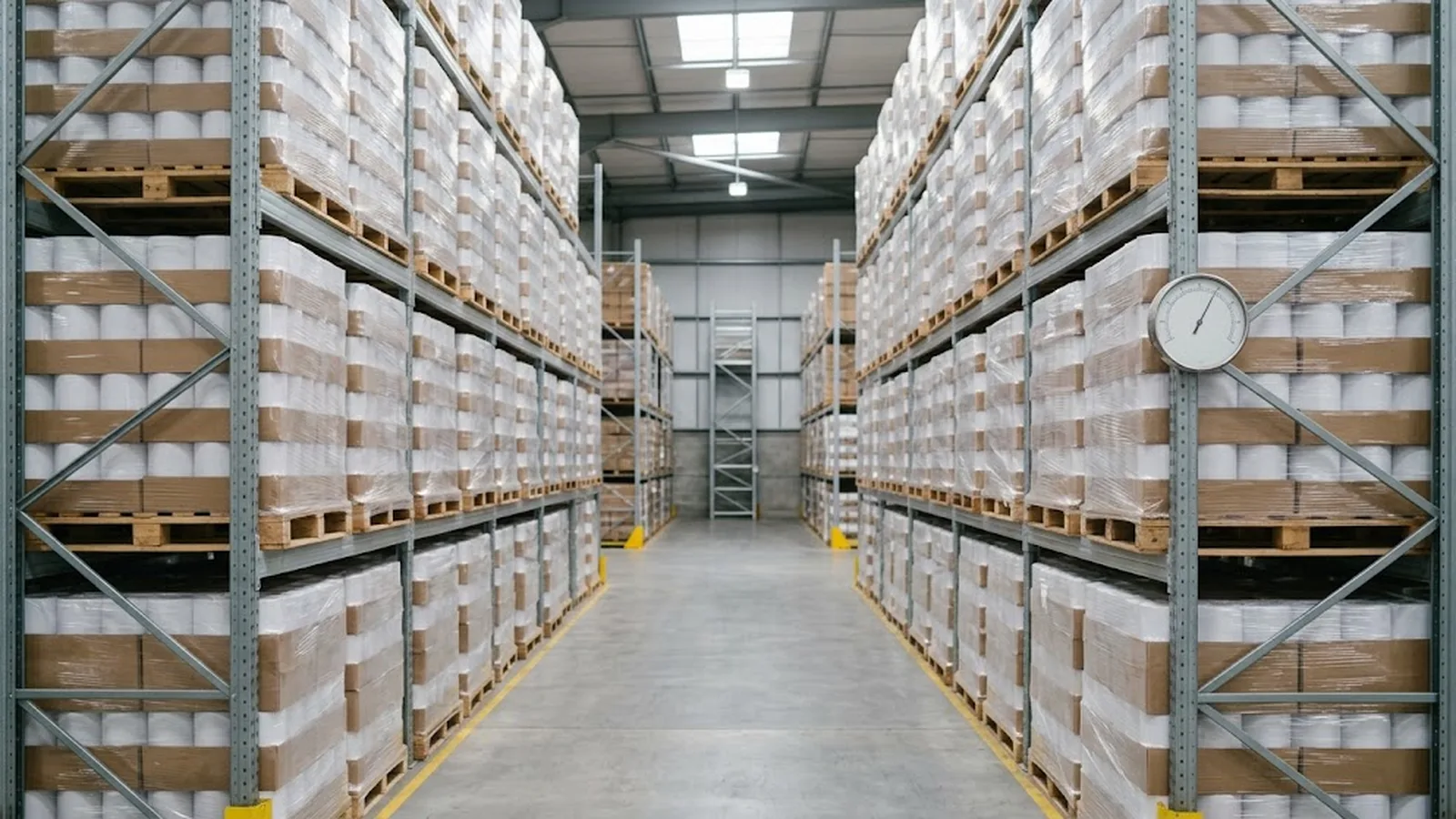
Store thermal paper rolls in a cool, dark and dry place: ideally 18 to 25 degrees Celsius with relative humidity between 45 and 65 percent, away from direct sunlight, heat sources, solvents and plasticizers. Keep rolls in their original wrapping until use, store cartons off the floor and away from exterior walls, and rotate stock first-in-first-out. Unprinted rolls kept this way typically last two to three years; printed documents should be filed in dark folders at moderate humidity to preserve the image.
Thermal paper is a finished product, not just packaging material. The heat-sensitive chemistry that makes it print without ink also keeps reacting — slowly — to heat, light, humidity and airborne contaminants for as long as the roll exists. Storage conditions therefore decide whether your last pallet prints as crisply as your first, and whether printed receipts and labels stay legible for the years your records require.
For distributors, converters and procurement teams buying in container volumes, storage is also a commercial issue. Poorly stored stock fades before it ships, jams converting equipment as edges curl, and generates claims that are difficult to attribute. Most of these losses are preventable with a few warehouse disciplines.
This guide sets out the storage conditions we recommend for unprinted jumbo and finished rolls, the transit measures that protect goods between our factory and your warehouse, and the filing practices that keep printed documents readable. It is written for B2B buyers who hold inventory for weeks or months before use.
- Target 18–25 °C and 45–65% relative humidity for both unprinted rolls and printed documents.
- Keep rolls in original packaging until point of use; the wrap is part of the product specification.
- Thermal paper degrades fastest under heat, UV light, humidity swings, solvents and plasticizers — rank your storage risks in that order.
- Unprinted rolls stored correctly typically carry a two- to three-year usable life; verify shelf life against the grade you buy.
- Rotate stock first-in-first-out and date every pallet when it enters the warehouse.
Why thermal paper needs different storage than plain paper
Plain paper mainly worries about moisture and mould. Thermal paper carries an active chemistry: a leuco dye and a developer held together in a coating that melts at print-head temperature. That chemistry is deliberately sensitive, so everything that nudges it gently — warm warehouses, summer containers, sunlight through a window — advances the reaction a little without a print head ever touching the roll.
The visible symptoms of bad storage are predictable. Background greying means the chemistry has started to develop across the whole surface. Edge curl means moisture has been absorbed or lost unevenly. Faded or patchy print on rolls that printed fine when received points to image degradation after printing. Each symptom traces back to a specific environmental cause, which makes storage faults diagnosable and fixable.
The good news is that thermal paper is stable within ordinary warehouse conditions. It does not need air conditioning or archival vaults — it needs consistency, darkness and reasonable distance from heat and chemicals.
Recommended temperature and humidity ranges
For unprinted rolls, we recommend storing at 18 to 25 degrees Celsius with relative humidity between 45 and 65 percent. Within this band the coating chemistry is essentially dormant and the paper keeps its dimensional stability. Below about 40 percent humidity the sheet dries and edges can curl; above about 70 percent, moisture accelerates background development and softens roll edges enough to affect tracking in printers.
Temperature stability matters more than the exact number. A warehouse that swings from 10 degrees at night to 32 degrees in the afternoon damages stock faster than a steady 28 degrees, because repeated condensation cycles push moisture into and out of the roll edges. Avoid stacking cartons directly against exterior walls, under roof peaks, or in front of loading doors where the weather comes in.
Never store rolls near heat sources: radiators, ovens, boiler rooms, or the top of a container exposed to sun. Localized warmth is the single fastest cause of background greying.
- Ideal: 18–25 °C, 45–65% RH, stable day and night.
- Acceptable: up to 30 °C for short periods if humidity stays in range.
- Avoid: below 0 °C (let cartons acclimate 24 hours before opening), above 40 °C for any length of time.
- Keep at least a metre away from heaters, machinery exhaust and dock doors.
Light, chemicals and cross-contamination risks
Direct sunlight and strong UV degrade both the coating and any developed image, so keep cartons closed and off open racking near windows. Daylight through clear roof panels is enough to yellow exposed carton faces over a season; the rolls inside the wrapped bundles are protected, but anything unwrapped is not.
Chemical exposure is the underrated risk. Solvent vapours — from cleaning agents, inks, adhesives, fuels and some floor treatments — can develop or bleach the image chemistry. Plasticizers released by PVC films, vinyl curtains and some stretch wraps migrate into thermal coatings and cause image loss on printed documents stored in contact with them. Never file printed thermal documents in PVC sleeves; use paper folders or polyester films.
Carbonless paper deserves a special mention. It uses a different but chemically compatible developing system, and direct contact between thermal and carbonless sheets can mark both. Store the two products on separate pallets.
Packaging: keep rolls wrapped until point of use
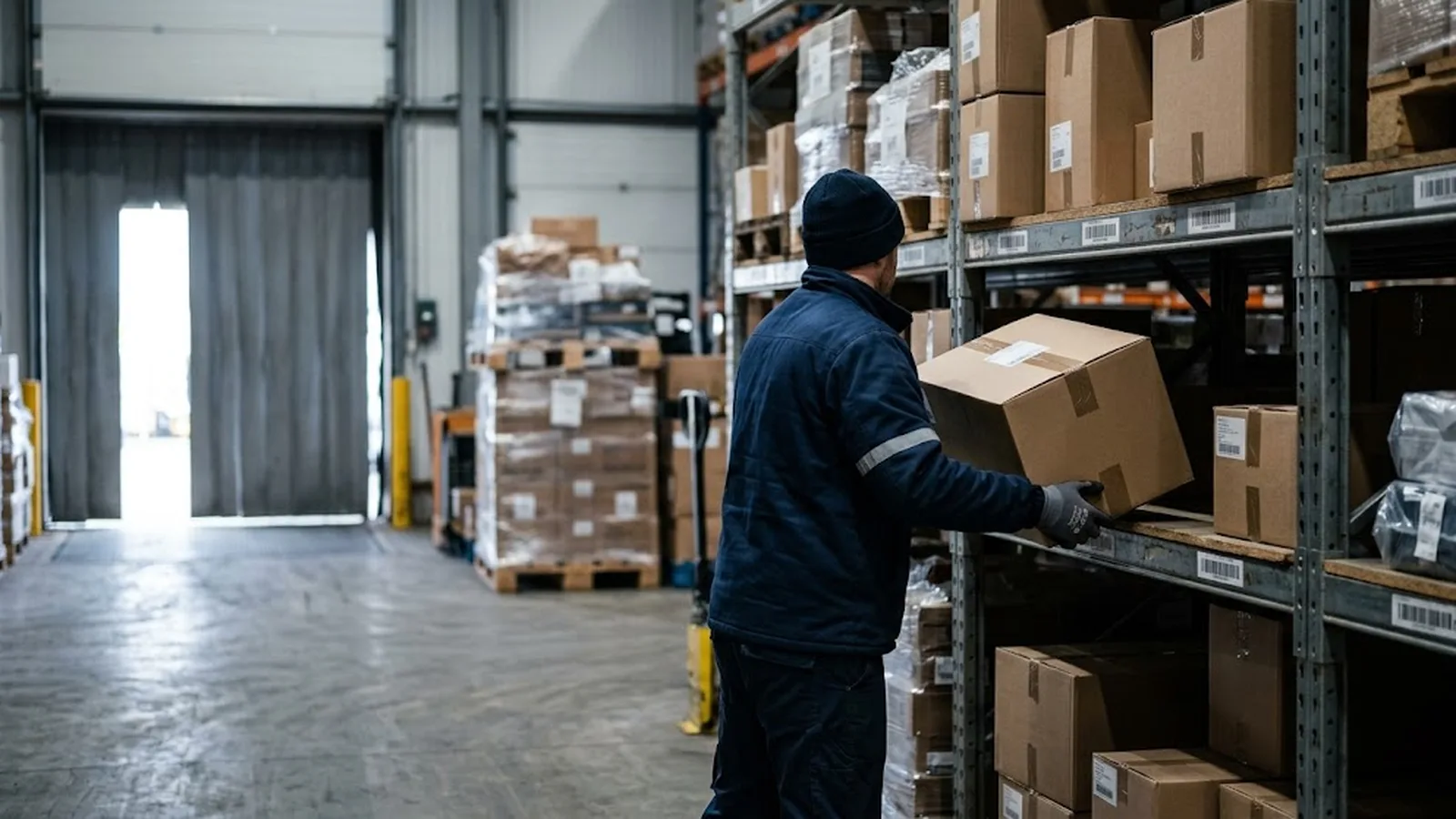
The wrapping around each roll or bundle is a functional barrier, not presentation packaging. Wrapped rolls are protected against light, dust and modest humidity swings; unwrapped rolls on an open shelf lose usable life from the day they are exposed. Leave every roll in its wrap until it is loaded into the machine.
For export shipments, rolls travel in moisture-barrier-lined cartons on stretch-wrapped pallets, often with desiccant added for ocean containers. When you receive goods, inspect pallets for water staining or container damage before signing, open only the cartons you need, and reseal partly used cartons with the original liner.
Handling discipline also protects storage life. Drops and edge knocks create hard spots and core damage that show up as blank bands or jams weeks later, long after anyone connects the two events. Train fork-lift and picking staff that paper rolls bruise like fruit.
How long thermal paper lasts in storage
Unprinted rolls from a reputable mill, stored in the recommended conditions, are normally usable for two to three years from production date. Premium top coated grades hold their full performance toward the long end of that range; economy grades are best consumed within eighteen months to two years. The printed image has its own clock: standard receipt paper stays legible for a few years under good filing conditions, while top coated grades are specified for seven years or more when kept dark, dry and away from plastics.
Shelf life is a specification question, not a universal constant, so ask your supplier to state it per grade and confirm it on the certificate of analysis. Date-code every incoming pallet, store newest stock behind or below oldest stock, and set an internal review point — for example, flagging any roll older than eighteen months for priority use or sample testing.
| Risk | Common source | Effect on paper or image |
|---|---|---|
| Heat | Radiators, sun-exposed walls, hot containers | Background greying; faded print |
| UV light | Windows, skylights, open shelving near light | Yellowing; image fading |
| High humidity | Coastal warehouses, condensation cycles | Edge curl; damp edges; premature development |
| Solvent vapours | Cleaning agents, inks, fuels, adhesives | Blank or blotched areas |
| Plasticizers | PVC films, vinyl sleeves, some stretch wrap | Image loss on stored printed documents |
| Physical damage | Drops, rough pallet handling | Blank bands, core damage, machine jams |
When in doubt, print-test a roll from the oldest pallet — one roll tells you more about your warehouse than any datasheet.
Storing printed documents: receipts and records
For end users who must retain printed receipts, tickets or logistics documents, the filing environment matters as much as the roll's original quality. File documents in dark cabinets or boxes at room temperature and moderate humidity. Darkness is the single most effective preserver — a receipt in a closed drawer will outlast the same receipt taped to a window-lit wall by years.
Avoid the classic killers: PVC sheet protectors, self-adhesive tapes in contact with the image, rubber bands, and storage on top of warm equipment. Where long retention is contractual — logistics PODs, warranty records, banking archives — specify a top coated grade at purchase so the document is engineered for the retention period, and state the retention requirement to your supplier in writing.
A practical warehouse checklist
Storage quality comes from routine, not from one-off effort. These are the disciplines we see in the best-run distribution warehouses:
- Log temperature and humidity in the paper zone and review weekly.
- Keep all rolls wrapped; reseal opened cartons.
- Date-code pallets on arrival and rotate strict first-in-first-out.
- Store paper away from exterior walls, heat, solvents and carbonless stock.
- Acclimate cold cartons 24 hours before opening to avoid condensation on rolls.
- Print-test the oldest pallet quarterly and record the result.
- State shelf-life and image-retention requirements on every purchase order.
Frequently asked questions
What is the best temperature for storing thermal paper rolls?
Between 18 and 25 degrees Celsius with 45 to 65 percent relative humidity. Stability matters more than the exact value — avoid swings, local heat sources and direct sun. Let cartons that arrived from cold transit acclimate a day before opening.
How long do unprinted thermal paper rolls last in storage?
Typically two to three years when stored correctly, with premium top coated grades toward the long end. Confirm shelf life for the specific grade with your supplier and rotate stock first-in-first-out so no roll exceeds the stated period.
Why did my printed receipts fade after filing?
The most common causes are heat, UV exposure, humidity, solvent vapours and contact with plastics such as PVC sleeves, whose plasticizers attack the developed image. Store printed documents dark, dry, at room temperature, in paper folders or polyester films.
Can I store thermal paper in a regular warehouse without air conditioning?
Usually yes. Consistent shade, no nearby heat sources, closed cartons and reasonable ventilation are enough in most climates. In hot and humid regions, prioritize a shaded internal room and desiccant-lined export cartons, and consume stock faster.
Should jumbo rolls be stored differently from finished rolls?
The environment is identical, but jumbos are heavier and more valuable per unit, so edge protection and wrap integrity matter even more. Keep jumbos on their wraps and cradles, avoid any floor contact, and slit them with equipment that will not heat the edge.