
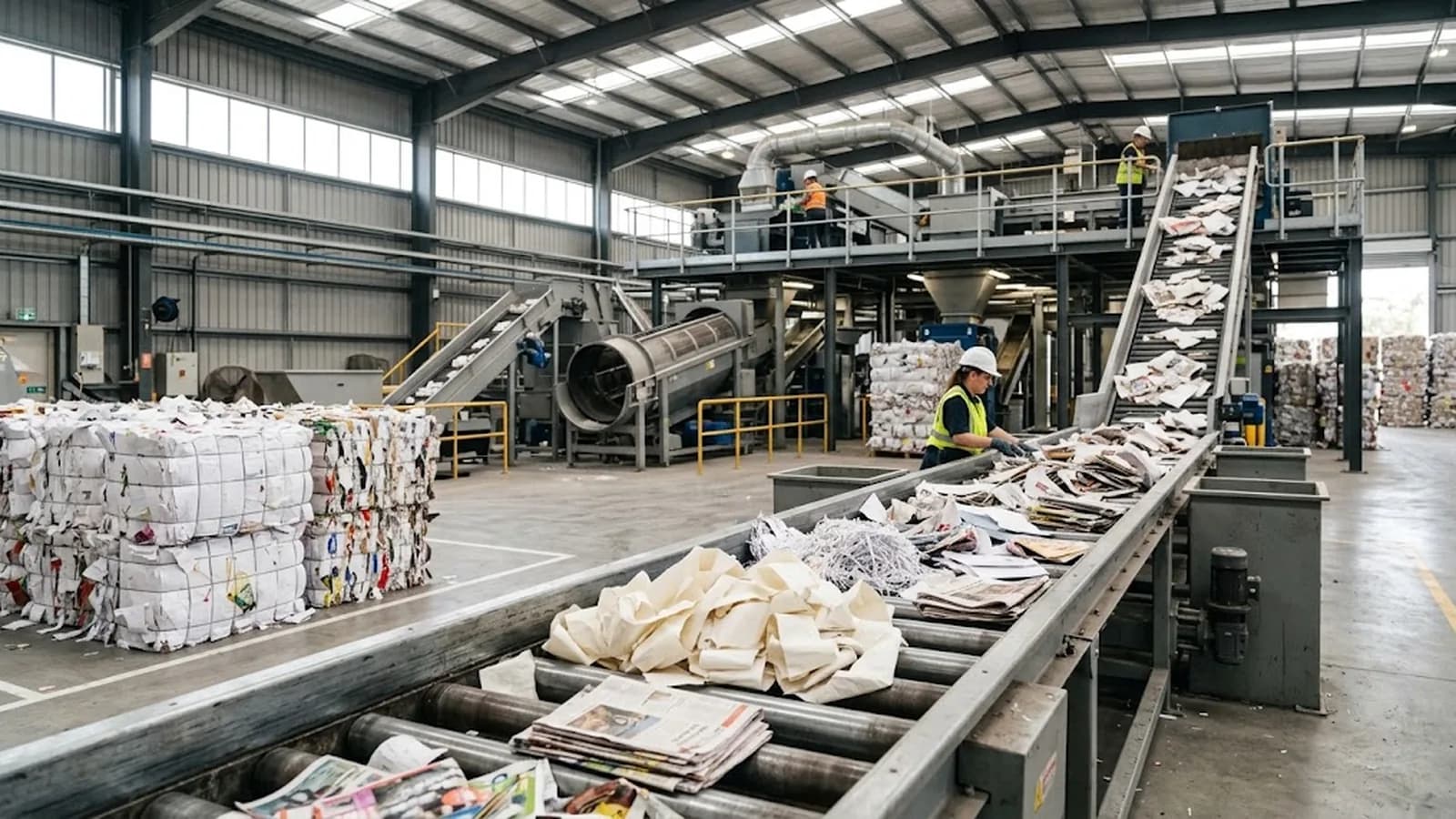
Yes, modern thermal paper is technically recyclable — the fibre is high quality and repulping processes can handle the thermal coating — but acceptance depends on the developer chemistry and the local recycling stream. Thermal paper made with bisphenol-free (phenol-free) developers is widely accepted by paper recyclers, while older BPA-based and some BPS-based grades are increasingly excluded because the bisphenol contaminates the recycled fibre stream. B2B buyers should treat recyclability as a specification item: ask suppliers for the developer system in writing, request mill statements or test reports, and match the grade to the waste-management requirements of your market.
Sustainability questions now appear in most B2B tenders for paper products, and thermal paper attracts more scrutiny than most. Receipts and labels are produced in enormous volumes, they pass through millions of hands, and for years the headline concern was bisphenol A. Buyers reasonably ask the next question: after the receipt has done its job, can the paper actually be recycled?
The honest answer is 'yes, with conditions'. Thermal paper is a coated fine paper whose fibre is well worth recovering, and modern repulping technology processes it routinely — but the chemistry carried on that fibre decides whether recyclers want it. A receipt printed on a bisphenol-free grade is a clean fibre source; one printed on a legacy BPA grade is a contaminant.
This guide explains how thermal paper behaves in the recycling stream, which developer chemistries are accepted and which are being phased out, what the regulatory picture looks like, and how procurement teams should specify and document recyclability when sourcing from manufacturers. It is written for B2B buyers who need defensible answers, not slogans.
- Thermal paper's fibre is fully recoverable; the deciding factor for recyclability is the developer chemistry in the coating.
- Phenol-free and vitamin C (ascorbic-acid) developer grades are the accepted choice for recycling streams.
- BPA has been banned in thermal paper in the EU since 2020 and is restricted in a growing list of markets; BPS is under increasing review.
- Practical recycling advice for consumers — keep receipts out of household recycling if unsure — does not reflect what industrial repulpers can do with clean, modern grades.
- Put recyclability on the specification: developer system, compliance statements and test reports belong in the supplier file.
What thermal paper is made of, from a recycler's view
To a paper recycler, thermal paper looks like a high-grade coated fine paper: strong short fibres, a mineral-heavy coating, and a thin heat-sensitive layer containing a leuco dye and a developer. Repulping breaks the sheet into fibres and the coating materials separate into the sludge or filler fractions, which is exactly what happens with other coated grades such as catalogues and magazines.
The complication is not the coating but what dissolves out of it. Early thermal chemistry used bisphenol A as the developer. During repulping, BPA transfers into the process water and the recycled fibre, meaning a small share of BPA-coated paper can raise the bisphenol content of an entire recycled batch. Paper mills therefore treat BPA-bearing thermal paper as a contaminant to be kept out, not a fibre source to be recovered.
This is why the industry's move to phenol-free developers — including ascorbic acid (vitamin C), urea-based and other bisphenol-free systems — matters beyond health regulation. A receipt on a modern phenol-free grade is chemically closer to ordinary office paper than to a hazardous waste question, and recyclers accept it accordingly.
Developer chemistry decides acceptance
The current hierarchy is straightforward. Grades using BPA are effectively unrecyclable in practice: banned in the EU since January 2020 under the REACH restriction on bisphenol A in thermal paper, and increasingly restricted elsewhere. Grades using BPS were the common substitute, but BPS is now under regulatory review in several jurisdictions and some recycling and retail chains have moved to exclude it as a precaution.
Phenol-free systems are where the market has settled. Ascorbic-acid developers image reliably, are free of bisphenols entirely, and are the grades most mill certification and recycling guidance points to. For a buyer, the practical rule is simple: if recyclability or sustainability is part of your requirement, specify 'phenol-free developer, BPA and BPS free' and demand it in writing on the datasheet and the certificate of analysis.
One honest caveat: 'recyclable' describes the material, not your local bin. Consumer-facing guidance in many regions still tells households to keep receipts out of mixed recycling because sorting plants cannot guarantee what chemistry arrives. Industrial and commercial volumes are different — businesses that collect their own clean, known-chemistry thermal waste can channel it to recyclers who accept it. The chemistry specification is what makes that possible.
- BPA developer: banned in EU thermal paper since 2020; treat as non-recyclable and non-compliant for EU supply.
- BPS developer: legal in most markets but under review; increasingly excluded by sustainability programmes.
- Phenol-free (ascorbic acid, urea-based) developer: the accepted choice for recycling streams and green procurement.
- Top coated grades: the topcoat itself does not prevent recycling; the developer system remains the deciding factor.
What regulations and standards say
In the European Union, the REACH restriction (EU 2016/593) has prohibited thermal paper with BPA at 0.02% or more since 2 January 2020, which effectively removed BPA grades from EU supply chains. France went further with earlier national restrictions on bisphenols in receipts. In the United States there is no federal ban, but several states restrict or require disclosure of bisphenols in receipt paper, and major retail chains have converted their programmes to phenol-free stock.
Beyond bisphenols, buyers working with FSC-certified programmes should note that chain-of-custody certification applies to the fibre, independently of the coating chemistry — a grade can be FSC certified and phenol-free at the same time, and both attributes can be documented. Some suppliers also provide SGS or equivalent third-party test reports confirming the absence of BPA and BPS, which is the document most tenders actually ask for.
The direction of travel is unmistakable: regulators are widening the list of restricted substances and buyers are widening their questionnaires. Specifying phenol-free chemistry today is the cheapest way to keep a supply qualified as requirements tighten tomorrow.
| Developer system | Recycling acceptance | Regulatory status |
|---|---|---|
| BPA (legacy) | Excluded as a contaminant | EU banned since 2020; restricted in several US states |
| BPS (first substitute) | Increasingly excluded | Under review in multiple jurisdictions |
| Ascorbic acid (vitamin C) | Widely accepted | No bisphenol restrictions apply |
| Urea-based / other phenol-free | Widely accepted | No bisphenol restrictions apply |
Ask for the developer system by name on the datasheet — 'BPA free' alone does not tell you whether the grade uses BPS.
How buyers should specify and document recyclability
Recyclability becomes real at specification time. State on the enquiry: phenol-free developer (BPA and BPS free), fibre certification if required (FSC or equivalent), and the destination market's compliance requirements. A manufacturer with its own coating line can confirm the chemistry at source and issue the supporting documents with each production lot — which is exactly what an auditor or a tender committee will ask to see.
Build a small supplier file rather than relying on marketing claims: the grade datasheet naming the developer system, a third-party test report for bisphenols, the certificate of analysis per lot, and any fibre chain-of-custody certificate. These four documents answer most sustainability questionnaires and cost nothing to request at order time.
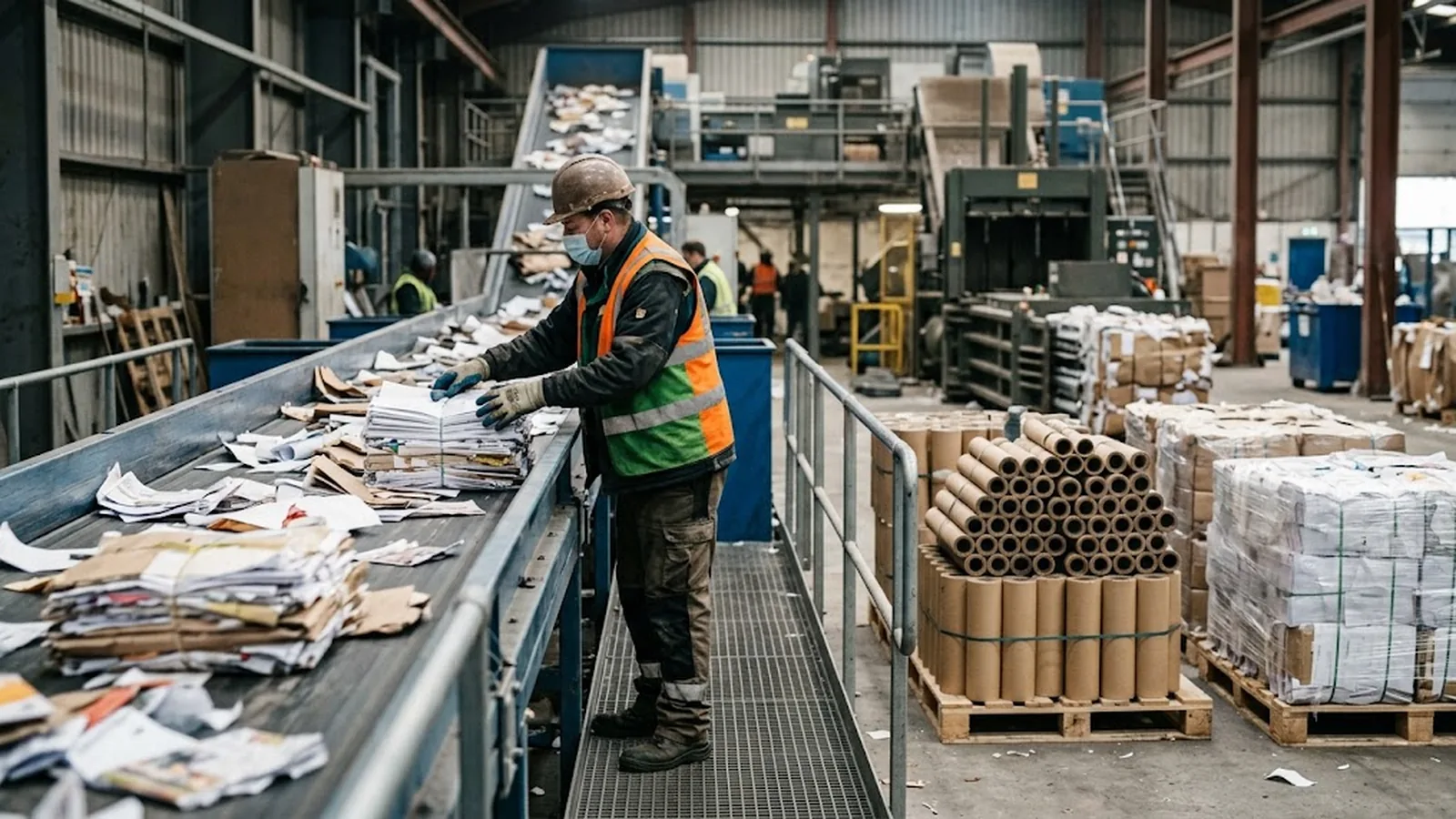
Finally, think about the volume you actually control. Businesses that generate clean, sorted thermal waste — distribution centres, logistics hubs, ticketing operators — can work with waste contractors to route known-chemistry paper to recyclers, and the specification above is what makes that stream acceptable. For mixed consumer waste, the responsible advice is unchanged: reduce unnecessary receipts, and choose phenol-free grades so the paper that does circulate is the kind recyclers want.
Frequently asked questions
Can thermal paper receipts go in household recycling?
In most regions, household guidance says no — sorting facilities cannot verify what developer chemistry arrives in the mixed bin, so receipts are treated as contamination. For businesses handling clean, known-chemistry thermal waste, industrial recyclers can accept modern phenol-free grades. The chemistry specification is what separates the two situations.
Is BPA-free thermal paper automatically recyclable?
Not necessarily. Some BPA-free grades use BPS, which is increasingly excluded by recycling and sustainability programmes. For genuine recyclability, specify phenol-free chemistry — BPA and BPS free — and confirm it on the datasheet.
Does the thermal coating stop paper being repulped?
No. Repulping equipment handles coated fine papers routinely, and the coating materials separate with the sludge or filler fractions. The fibre in thermal paper is high quality and well worth recovering — the only real barrier is unwanted chemistry dissolving into the recycled stream.
What documents should I ask a supplier for to prove recyclability?
A grade datasheet naming the developer system, a third-party bisphenol test report (SGS or equivalent), the per-lot certificate of analysis, and fibre chain-of-custody certification if your programme requires it. Together these answer most tender and audit questionnaires.
Is thermal paper with BPA still legal to sell?
Not in the EU, where thermal paper containing BPA at 0.02% or more has been banned since January 2020 under REACH. Several US states restrict or require disclosure of bisphenols in receipt paper. For export supply, phenol-free grades avoid the entire question.