
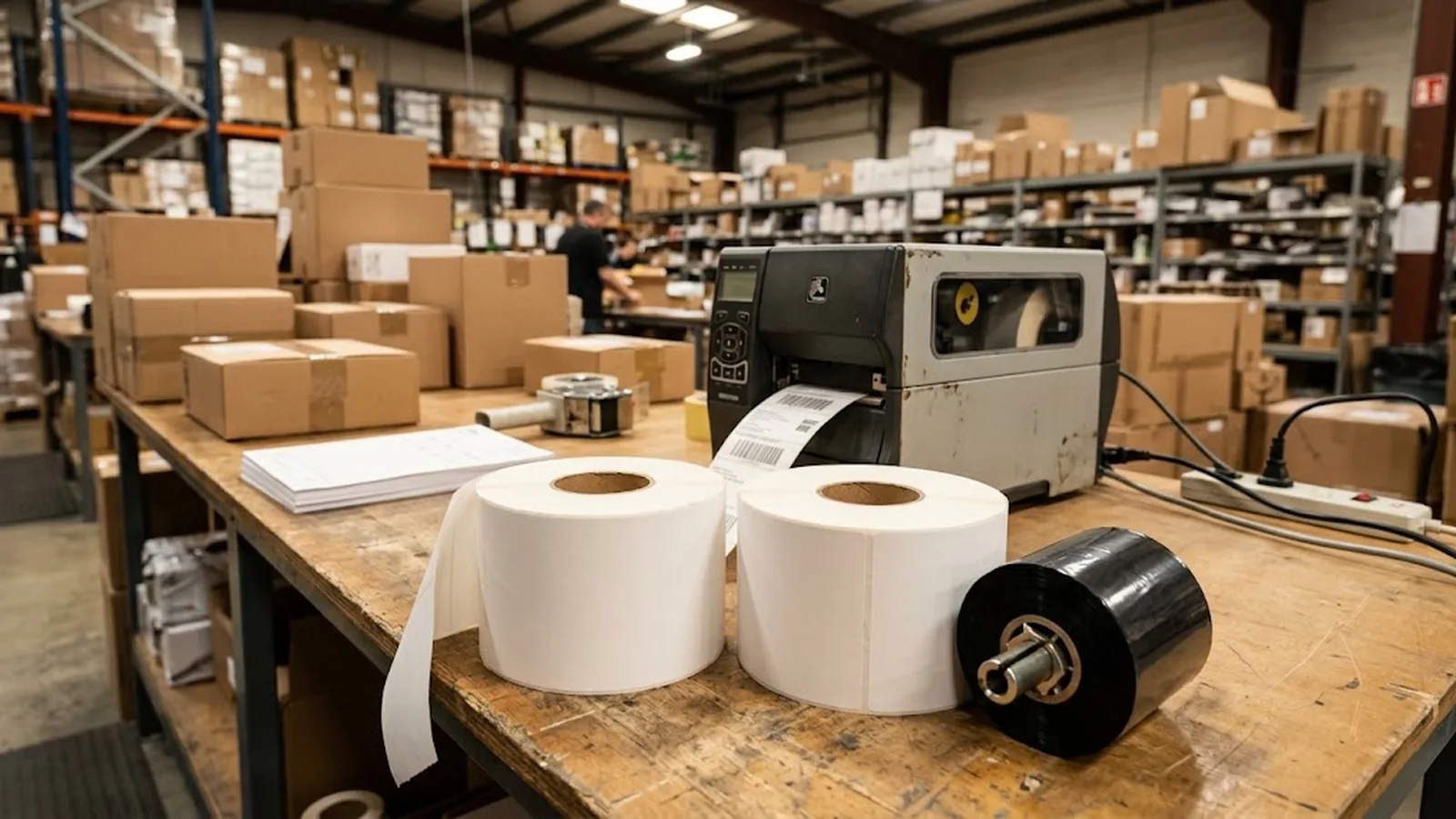
Direct thermal printing images a heat-sensitive label directly with the print head and needs no ribbon, which makes it simpler and cheaper for short-life labels such as shipping, receipt and queue labels. Thermal transfer uses a ribbon to transfer ink onto the label, producing a more durable, heat- and light-resistant image suited to long-life, outdoor or chemical-exposed identification. Choose direct thermal for short-life, high-volume labels and thermal transfer when the image must survive heat, sunlight, abrasion or years of storage.
Choosing between direct thermal and thermal transfer is one of the most consequential decisions in a labelling program. It determines printer configuration, consumable cost, how long the printed image lasts and how the label behaves once it leaves the packing bench.
Both methods use heat and a thermal print head. The difference is what carries the image: in direct thermal, the label surface itself reacts to heat; in thermal transfer, a ribbon releases ink onto the label face. That single difference drives almost every trade-off below.
This guide compares the two methods on cost, durability, print quality and operational fit, then gives a short decision checklist you can apply to your own shipment, warehouse or retail identification workflow.
- Direct thermal has no ribbon — fewer consumables, simpler operation, lower media count per print.
- Thermal transfer prints through a ribbon, producing a more durable image that resists heat, light and abrasion.
- Direct thermal images can darken with heat exposure and fade with light; match it to the label's actual life.
- Thermal transfer supports more facestock options, including synthetic materials and long-life adhesives.
- The cheapest method per label is often not the cheapest per successful scan over the label's life.
How each method forms an image
In direct thermal printing, the label or receipt paper is coated with a heat-sensitive layer. When the print head applies heat in a controlled pattern, the coating darkens where it is heated. There is no ink, toner or ribbon involved, which is why direct thermal printers have only one consumable: the media.
In thermal transfer printing, the print head heats a ribbon coated with wax, wax-resin or resin. The heated coating transfers onto the label surface, where it cools and bonds. The ribbon is a second consumable, and the label itself does not need to be heat-sensitive.
Because the image in direct thermal is produced by a chemical reaction in the coating, it remains reactive after printing. In thermal transfer, the image is a transferred solid layer, which is inherently more stable once cooled.
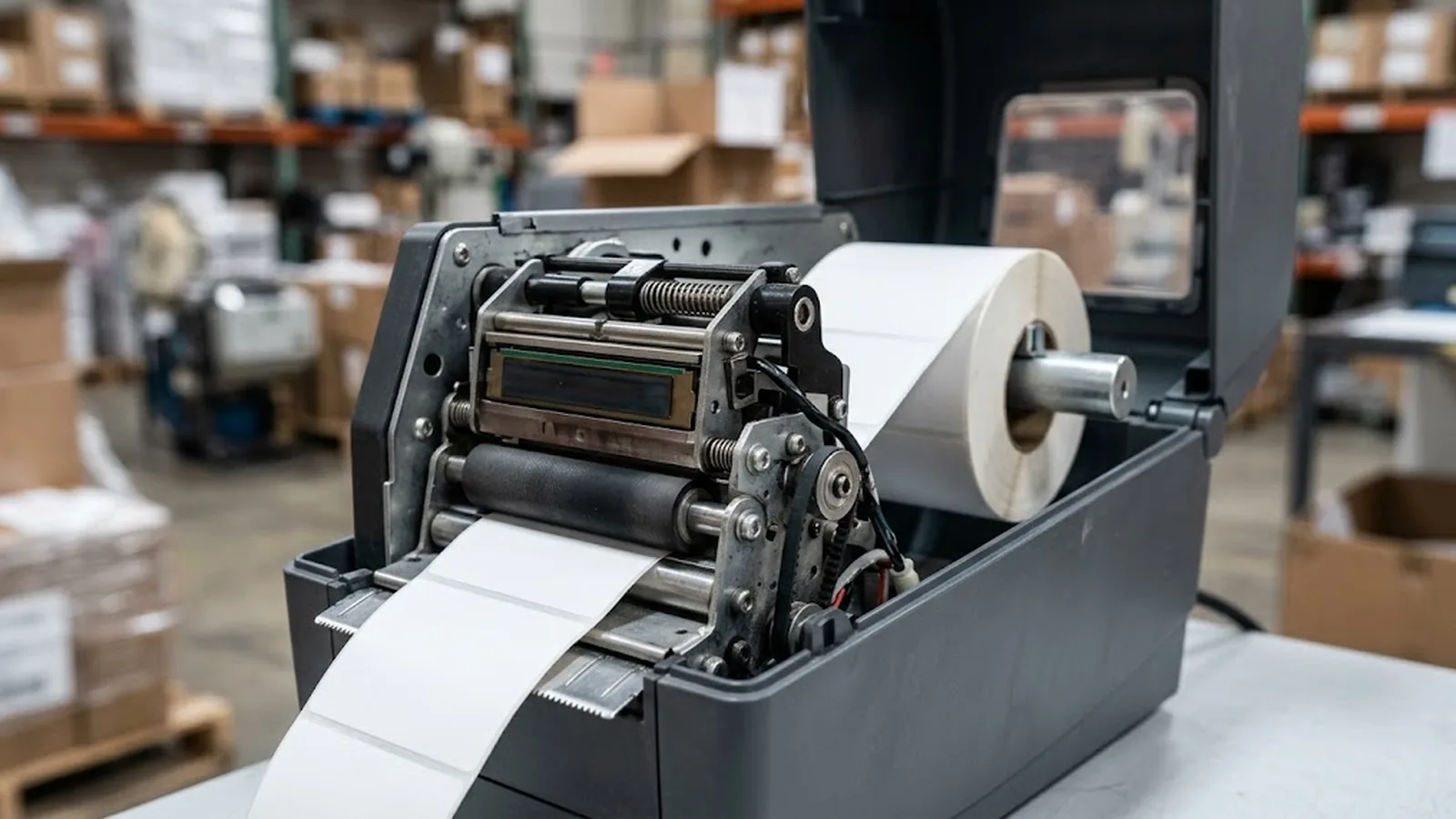
Side-by-side comparison
The table below compares the factors buyers ask about most often. Use it as a first filter, then validate on your own printer and in your own handling conditions.
| Factor | Direct thermal | Thermal transfer |
|---|---|---|
| Consumables | Label media only | Label media plus ribbon |
| Printer complexity | Simpler; no ribbon path to load | Ribbon loading and ribbon/media matching required |
| Image durability | Sensitive to heat, light, friction and some plastics | Resistant to heat, light, abrasion and many chemicals |
| Typical life | Short to medium — days to months | Medium to long — months to years |
| Facestock choice | Direct thermal papers and some films | Wider choice including synthetics and durable films |
| Print speed | Fast for barcode and shipping labels | Fast, with speed limited by ribbon transfer |
| Operating cost | Lowest where labels are short-lived | Higher media cost, justified for long-life labels |
| Typical uses | Shipping labels, receipts, queue tickets, shelf labels | Asset tags, outdoor labels, chemical drums, long-term records |
Where direct thermal is the better choice
Direct thermal is the default for high-volume, short-life labels. If a label is printed, applied, scanned and discarded within days or weeks, paying for ribbon durability is usually unnecessary cost and extra handling.
- E-commerce and parcel shipping labels, including 4 × 6 in (100 × 150 mm) formats.
- Warehouse carton and dispatch labels that are scanned within the supply chain.
- Queue tickets, weigh-scale labels and price or shelf labels with a short display life.
- Receipts and transaction records printed at the point of sale.
- Operations that value fewer consumables and faster operator training.
If your parcels may sit in a hot container or a sunny window for weeks, test the label before committing. Heat and light are the two conditions that most affect direct thermal images.
Where thermal transfer earns its cost
Thermal transfer is the better choice whenever the printed image must outlive the label's immediate journey, or when the label faces conditions that attack a heat-sensitive coating.
- Asset and equipment identification that must remain readable for years.
- Outdoor or yard labels exposed to sunlight and weather.
- Chemical, pharmaceutical and industrial drums where contact with solvents is likely.
- Laboratory and specimen labels that may be frozen or autoclaved.
- Compliance or warranty labels where a faded code creates a real business cost.
Understanding the real cost per label
Direct thermal usually wins on consumable count: one roll instead of two, and no ribbon change downtime. That advantage is real, but it should be weighed against the cost of a label that fails after the fact.
A useful way to compare is cost per successful scan over the label's required life. If a shipping label only has to survive a two-week delivery, direct thermal almost always wins. If a warehouse rack label has to be scanned reliably for two years, thermal transfer is usually cheaper once re-labelling labour is included.
Printer fleet matters too. If your operation already runs mixed fleets, standardising each workflow on the method that suits it — rather than forcing one method everywhere — tends to produce the lowest total cost.
Print quality, barcode scanning and verification
Both methods can produce high-contrast, scanner-readable barcodes when the media, printer energy and print speed are matched. Most scanning failures come from mismatch rather than from the printing method itself.
Practical checks include verifying contrast and edge definition after printing, confirming barcode grade with a verifier where the workflow demands it, and re-checking after the label has been through its real handling conditions. For logistics, a quick scan test after a simulated transit is more informative than a lab-only result.
A short decision checklist
Answer these five questions before specifying media, and the method usually becomes obvious.
- How long must the printed image remain readable — days, months or years?
- Will the label be exposed to heat, direct sunlight, moisture or chemicals?
- What facestock and adhesive does the surface require — paper, synthetic, removable or permanent?
- What printers are already installed, and can they run both modes?
- What does a failed or faded label actually cost in your process?
Frequently asked questions
Can one printer do both direct thermal and thermal transfer?
Many desktop and industrial label printers support both modes, but they must be configured for the media and, for thermal transfer, loaded with the correct ribbon. Check the printer specification before assuming dual-mode capability.
Do direct thermal labels fade?
They can. The image is produced by a heat-sensitive coating that remains reactive after printing, so prolonged exposure to heat, strong light, friction or certain plastics and solvents can darken the background or reduce contrast. For short-life labels this is usually acceptable.
Are 4x6 shipping labels direct thermal or thermal transfer?
Most e-commerce and parcel shipping labels use direct thermal because the label only needs to survive the delivery journey. Where a parcel may sit in heat or sunlight for extended periods, a thermal transfer label is worth testing.
Which ribbon should I use for thermal transfer?
Wax ribbons suit paper labels and general use, wax-resin offers better abrasion and moderate chemical resistance, and resin is used for synthetic labels and demanding environments. Match the ribbon to the facestock and the exposure conditions.
Can you supply direct thermal label stock?
Yes. Direct thermal label paper and label stock can be supplied in jumbo roll or finished-label formats, with size, adhesive, liner, core and roll OD confirmed against your printer and application.
Is thermal transfer print slower?
Thermal transfer can run at high speeds, but the achievable speed depends on the ribbon formulation, facestock and printer settings. Where speed is critical, validate the exact media and ribbon combination on your printer.