
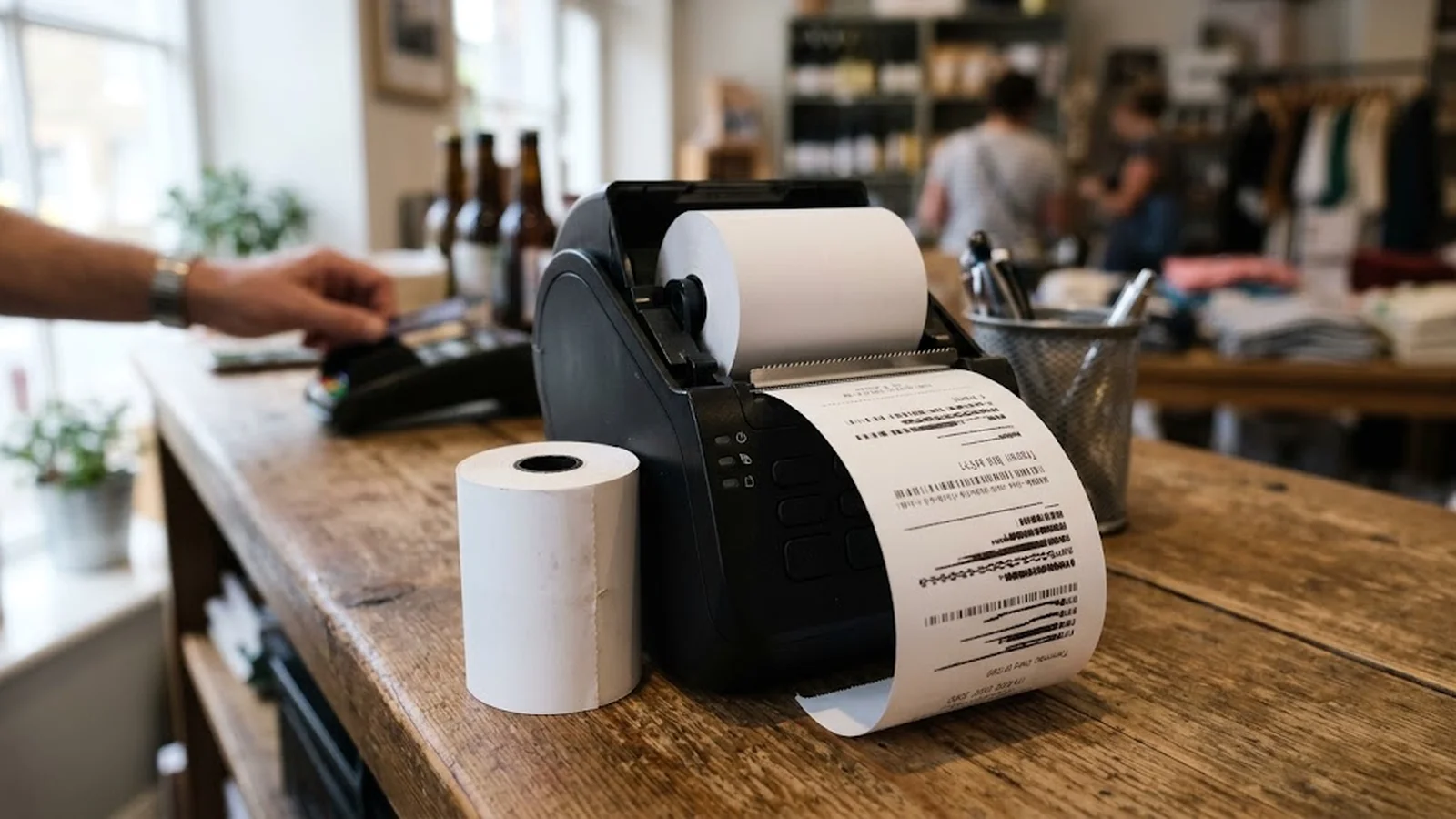
A 57x50 thermal paper roll is a 57mm-wide receipt roll wound to a 50mm outside diameter — the mid-length format of the 57mm family. The width feeds the same compact mechanisms as every other 57mm roll; what the larger diameter changes is capacity. On a 12.7mm core, a 57x50 roll carries roughly 20-24 metres of 55-60 gsm stock, against roughly 12-15 metres on the common 57x40 class — so it roughly doubles the receipts per load and halves the change frequency in card terminals, kitchen printers and other compact hardware. That extra capacity is exactly why the format rewards careful buying: fewer roll changes means each roll's geometry, curl behaviour and sensitivity are exercised for longer stretches of unattended service, and a marginal specification shows up as jams or faint receipts across more transactions before anyone opens the printer. Buy 57x50 stock with width, diameter and core tolerances matched to the machine, a grade class matched to the duty and retention requirement, and per-batch documentation from the manufacturer.
The 57mm width is the workhorse of compact thermal printing: card terminals, portable receipt printers, kitchen stations and pocket-sized POS units almost all feed 57 or 58mm stock. Within that width, buyers meet a family of diameters — 57x30, 57x38, 57x40, 57x50 and taller — and the differences look trivial on a purchase order. They are not. Diameter decides how many metres of paper sit behind the print head, and therefore how often somebody must open the machine, drop in a fresh roll and restart service.
The 57x50 thermal paper roll occupies the middle of that family. It fits the same paper bays as the short rolls in most compact mechanisms while carrying roughly half again to twice the stock of the 57x40 class, which makes it the default choice for operators who want fewer interruptions without stepping up to 80mm hardware. The buying logic that follows is precise: because the roll serves longer between changes, every property it carries is exercised for longer, and small specification gaps compound quietly.
Buyers comparing these formats can review our POS and receipt paper rolls, where width, diameter, core and grade are documented per size class before an order is placed.
This guide maps where 57x50 sits in the family, works through the length and stocking arithmetic, and closes with the specification checklist for ordering by the carton or the container.
- 57x50 is a capacity upgrade inside the 57mm family: same width as 57x38/57x40 stock, wound to a 50mm outside diameter for machines with room for a taller roll.
- Expect roughly 20-24 metres per roll on a 12.7mm core at 55-60 gsm — versus roughly 12-15 metres on 57x40 — so plan carton counts and change schedules around the duty cycle.
- Longer runs between changes raise the bar on geometry: width and diameter tolerance, curl control and wind direction decide whether the extra capacity prints cleanly or feeds badly.
- Grade class sits at 55-60 gsm for terminal duty; sensitivity class must match the print head's energy window, because compact mechanisms run lower-energy heads.
- Verify with a trial carton in the actual fleet and buy with written tolerances and per-batch documentation before committing to container volumes.
Where 57x50 sits in the 57mm family
Width is the constant; diameter is the variable. Every roll in the 57mm family feeds the same 57-58mm print mechanisms, but the paper bay in each machine limits the outside diameter it can accept. Short-format rolls — 57x30, 57x38, 57x40 — serve slim card terminals and pocket printers whose housings leave little room. The 57x50 class fits a broad band of countertop terminals, kitchen printers and portable units whose bays accept a 50-52mm diameter, and taller variants serve machines designed for maximum capacity. Machine makers publish the maximum roll diameter in each manual, and the first buying step is simply confirming which diameter the fleet accepts.
The economics follow the cavity. A 57x50 roll carries roughly 20-24 metres of 55-60 gsm stock against the 57x40 class's roughly 12-15 metres, so it prints roughly 1.5 to 2 times the receipts per load — a meaningful difference at a card terminal printing a few hundred slips a day. Fewer changes mean fewer interrupted transactions, fewer printer openings and less packaging waste per metre of paper sold. For distributors, the format also differentiates: offering the mid-length roll beside the short classes lets customers trade up within the same width rather than redesigning their hardware.
Substitution logic runs the same way as elsewhere in the family. A 57x50 roll will not fit a bay limited to 40mm diameters, and forcing it risks jamming the cover mechanism; a 57x40 roll in a 57x50-spec machine works but restores the change frequency the operator was trying to escape. Mixed fleets should therefore be stocked per model with a fit chart naming each terminal against its maximum diameter, which is the cheapest misorder insurance available in this category.
Length, yield and stocking arithmetic
Roll length is a function of diameter, core and stock thickness, and buyers who internalise the arithmetic compare suppliers correctly. On a 12.7mm core at a 50mm outside diameter, a 55-60 gsm grade winds to roughly 20-24 metres depending on the stock's caliper and wind density. A carton of one hundred 57x50 rolls therefore carries roughly 2,000-2,400 metres of stock — against roughly 1,200-1,500 metres for the same carton count in 57x40. Distributors quoting per carton should convert to metres per carton when comparing offers, because unit prices across different diameters are not directly comparable.
Duty-cycle arithmetic then sets the stocking plan. A terminal printing 200 slips a day at a 90mm average slip length consumes roughly 18 metres a day, so a 22-metre 57x50 roll lasts a little over one working day; a month of supply per terminal is roughly 30 rolls, which sets the buffer stock per site. Operators running the short 57x40 class on the same duty change rolls almost twice as often — the operational cost that the mid-length format exists to reduce.
| Format | Width | Outside diameter | Approx. length per roll | Typical duty |
|---|---|---|---|---|
| 57x38 | 57 mm | 38 mm | 8-11 m | Pocket terminals, short-life slips |
| 57x40 | 57 mm | 40 mm | 12-15 m | Card terminals, portable printers |
| 57x50 | 57 mm | 50 mm | 20-24 m | Countertop terminals, kitchen stations |
| 57x60 and taller | 57 mm | 60 mm+ | 28-35 m | High-volume compact positions |
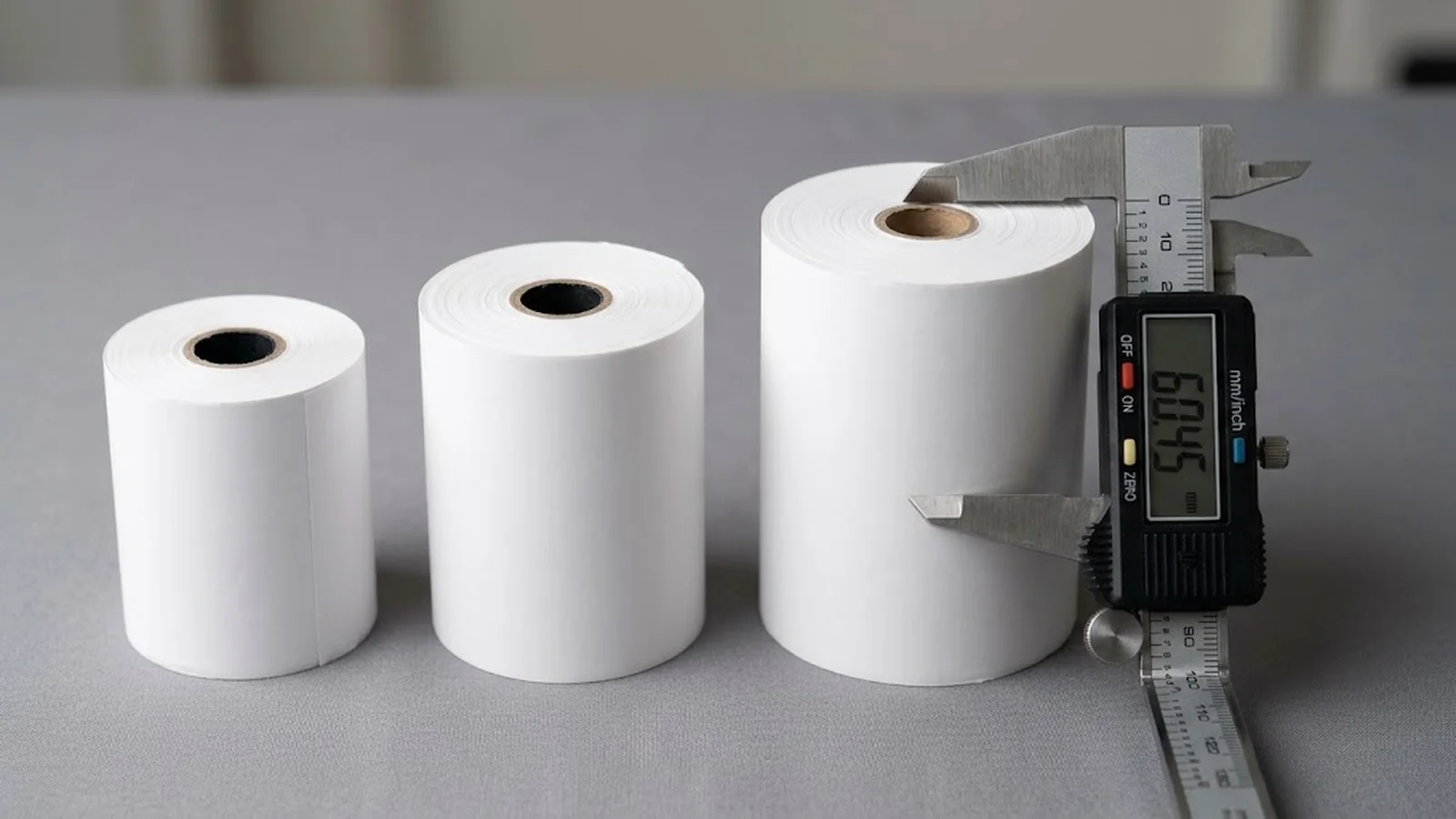
57x50 order shorthand: 'Direct thermal roll 57mm x 50mm OD on 12.7mm core; ~20-24 m length at [gsm] class; width/diameter tolerance [±0.5 mm]; sensitivity class matched to [terminal model]; packing 100 rolls/carton, moisture-barrier lined.'
Buying 57x50 stock: the specification checklist
Because the mid-length roll serves longer between changes, geometry tolerances carry more weight than on short formats. Confirm width and outside diameter with stated tolerances against the terminal model's bay; confirm the core at 12.7mm unless the fleet says otherwise; match wind direction to the mechanism; and require curl control so the leading edge feeds flat after a reload. A roll that is dimensionally loose on any of these lines converts its capacity advantage into misfeeds, and the operator pays in interrupted transactions what the distributor saved in paper.
Grade and sensitivity are the second pair of decisions. Terminal duty at 55-60 gsm covers most 57x50 programmes, with the heavier end specified where slips face retention requirements or rough handling. Sensitivity matters disproportionately in compact hardware, which typically runs lower-energy print heads: stock matched to the head's energy window prints dense, scannable first passes, while mismatched stock fades at the slip's edge and reads faint under scanner light. Put the sensitivity class in writing and verify it with a trial carton run through the actual fleet before any container order. Procurement teams standardising on one supplier can review our custom thermal paper programme alongside the comparisons in this guide, then consolidate the 57mm and 80mm classes into one managed supply.
Where image life and scan durability decide the construction, our top-coated vs non top-coated guide compares the two builds on retention, cost and machine behaviour.
Frequently asked questions
What is the difference between 57x50 and 57x40 thermal paper rolls?
Width is identical at 57mm; the outside diameter differs — 50mm versus 40mm. The 57x50 roll holds roughly 20-24 metres against the 57x40's roughly 12-15 metres, so it prints about 1.5 to 2 times the receipts per load. The right choice is set by the terminal's maximum roll diameter, published in its manual.
How long is a 57x50 thermal paper roll?
Roughly 20-24 metres on a 12.7mm core at a 55-60 gsm grade class. Exact length varies with stock caliper and wind density, which is why buyers comparing suppliers should convert quotes to metres per carton rather than comparing unit prices across diameters.
Can I use 57x50 rolls in a terminal that takes 57x40?
Only if the paper bay accepts a 50mm outside diameter — check the manual. The reverse substitution always works mechanically: a 57x40 roll feeds and prints in a 57x50-spec machine, but it restores the doubled change frequency the taller roll was chosen to avoid.
Why do my 57mm receipts print faintly?
Compact mechanisms typically run lower-energy print heads, so stock with a mismatched sensitivity class under-develops at the slip edges. Specify the sensitivity class against the terminal model and verify with a trial carton in the actual fleet before committing to volume.
How many 57x50 rolls should I stock per terminal?
Work backwards from slips per day: a terminal printing 200 slips a day at a 90mm average length consumes roughly 18 metres, so a 22-metre roll lasts about one working day and a month of supply is roughly 30 rolls. Hold buffer stock per site, because a card terminal that cannot print stops the transaction, not just the receipt.