

Event ticket thermal paper is direct thermal stock specified for a medium that gets carried, folded and photographed outdoors: admission tickets run best at 65-75 gsm so the stub keeps its stiffness and hand feel, box-office receipts can drop to 55 gsm economy stock, and VIP badges and lanyard passes use top-coated label constructions that survive a full day of handling. Outdoor shows add two construction demands — UV resistance for gates that open in daylight and moisture tolerance for weather exposure — which uncoated ticket stock cannot promise. Self-service validation adds a black-mark variant so kiosks and scanners sense the roll correctly. Pre-printed artwork, faint security features and numbered stock turn the ticket into part of the event's brand and a simple anti-counterfeit measure.
Digital ticketing has taken over the smartphone screen, but physical thermal media still runs through almost every live event: box offices issuing receipts and will-call slips, venues printing admission tickets at the counter, kiosks dispensing and validating tickets in the self-service lane, and every VIP wristband, badge and parking pass that gets handled all day long. Promoters and venues buy this stock in seasonal waves — a run of shows, a festival season, a ticketed exhibition — and the specification decisions made once tend to echo through the whole run.
Ticketing is also harder on paper than a receipt drawer. An admission ticket is carried in a pocket, folded, rained on at an outdoor gate and photographed under stage light; a badge spends a day on a lanyard against skin and sunscreen. Stock specified like a till receipt fades, curls or tears exactly when the guest is looking at it, and the failure lands on the front line — gate staff re-printing, box offices fielding complaints, security squinting at a blanked-out stub.
Requests that combine several formats can be quoted together; see our top-coated thermal label stock for the construction options behind badges, passes and label-style media alongside ticket rolls.
This guide sets out the media streams at a ticketed event, the GSM and construction that fit each, what outdoor and venue conditions do to a thermal image, the pre-print and security features worth specifying, and how to structure seasonal buying so the stock arrives before the on-sale date.
- A ticketed event runs four media streams — admission tickets, box-office receipts, self-service kiosk media and badge/label passes — each with its own width and grade line.
- Admission tickets justify 65-75 gsm: stiffness and hand feel are part of what guests perceive as a 'real' ticket, and the stub must survive pockets and turnstiles.
- Outdoor conditions are the construction test: daylight UV and rain punish uncoated stock, so top-coated constructions are the dependable choice for gates and all-day badges.
- Black-mark variants keep self-service kiosks and validators sensing the roll; mark position belongs in the equipment spec, not improvised per order.
- Pre-printed artwork, faint security features and numbering make the ticket brand-consistent and harder to counterfeit — a converting decision, priced with the paper.
The media streams at a ticketed event
Admission tickets are the signature stream. Printed at box-office counters, will-call desks or on-site kiosks, they carry event identity, seat or zone data and sometimes a barcode or QR for scanning at the gate. Volumes come in bursts — the on-sale window and the show days themselves — which makes stock planning a seasonal exercise rather than a steady replenishment rhythm. The ticket is also a keepsake for many guests, which is why its stiffness and finish matter more than a pure cost-per-ticket view suggests.
Box-office receipts and will-call slips are the transaction layer beneath the ticket: narrower formats, shorter print lengths, no outdoor exposure and no keepsake role. These can run a lighter economy grade without visible compromise. The third stream is self-service media — kiosks that dispense tickets, print queue or entry passes, and validate returns — which usually needs a black-mark variant so the machine's end-of-roll and registration sensors stay in sync.
Badge and label media rounds out the estate: VIP passes on lanyards, staff badges, parking hang-tags and wristband-adjacent label stock. These are adhesive or die-cut label constructions rather than bare rolls, and they inherit the harshest handling profile in the venue — a full day against skin, bags and weather. Specifying them as label stock rather than improvising from receipt rolls is the difference between a badge that survives the encore and one that blanks out by intermission.
Specifying the ticket: GSM, stiffness and format
The decisive property for an admission ticket is stiffness. A 65-75 gsm stock stands up in the hand, feeds cleanly through box-office units without curling into the print path, and tears on the perforation the way guests expect. Lighter 55 gsm stock prints fine but feels flimsy in the hand and tends to curl at outdoor humidity — a small physical difference that reads, at the gate, as a cheap event. Box-office receipts and internal slips have no such requirement and are the natural place to economise at 55 gsm.
Format follows the equipment estate. Counter ticket units take roll widths matched to the ticket design — common ticketing widths in the 76-80 mm family, narrower for receipts — with core and roll diameter chosen for how many tickets a shift consumes between changes. Kiosks and high-throughput counters often run wider jumbo formats converted to the machine's spec, which is where the converter conversation starts: ticket length, perforation or cut position, black-mark placement and core size are all specified per design. Where a programme needs several formats from one supplier, our POS and receipt paper rolls cover width, core, roll diameter and developer class in a single specification sheet, and the ticketing widths convert from the same jumbo families.
For production volumes, the same construction logic applies to our thermal paper jumbo rolls, quoted per jumbo roll, slit reel or finished format — the route most ticketing converters and high-volume venues take once designs are stable.
Outdoor gates and venue conditions: what the image survives
Direct thermal images are developed by heat, so daylight is a quiet adversary: strong UV and a ticket baking on a sunlit gate rail will fade uncoated stock within hours, and the fade hits exactly the zone guests photograph. Rain and spilled drinks attack from the other side — moisture breaks down the developed dye on uncoated chemistry and turns a scannable code into a grey blur. Add the mechanical abuse of pockets and turnstiles and the specification question answers itself: anything that leaves the box office into the open air wants a top-coated construction.
The topcoat is a barrier layer over the image-forming chemistry, and its benefit is structural rather than cosmetic — it resists moisture, oils and abrasion and slows environmental fade markedly. Venue trials make the case quickly: print the same design on coated and uncoated stock, pin both to the sunniest gate rail for a show day, and compare scan success at close. Badge media needs the same logic amplified, since a lanyard pass meets sunscreen, skin oils and eight hours of flexing; that is why badge and pass programmes belong on label constructions with a protective topcoat from the start.
Storage discipline completes the protection. Seasonal stock should live in closed cartons in dry, room-temperature space — not in the ticket booth where sunlight and temperature swings do their slow work between shows. Where image life is the deciding factor across a media estate, our top-coated vs non top-coated guide compares the two constructions on retention, cost and machine behaviour.
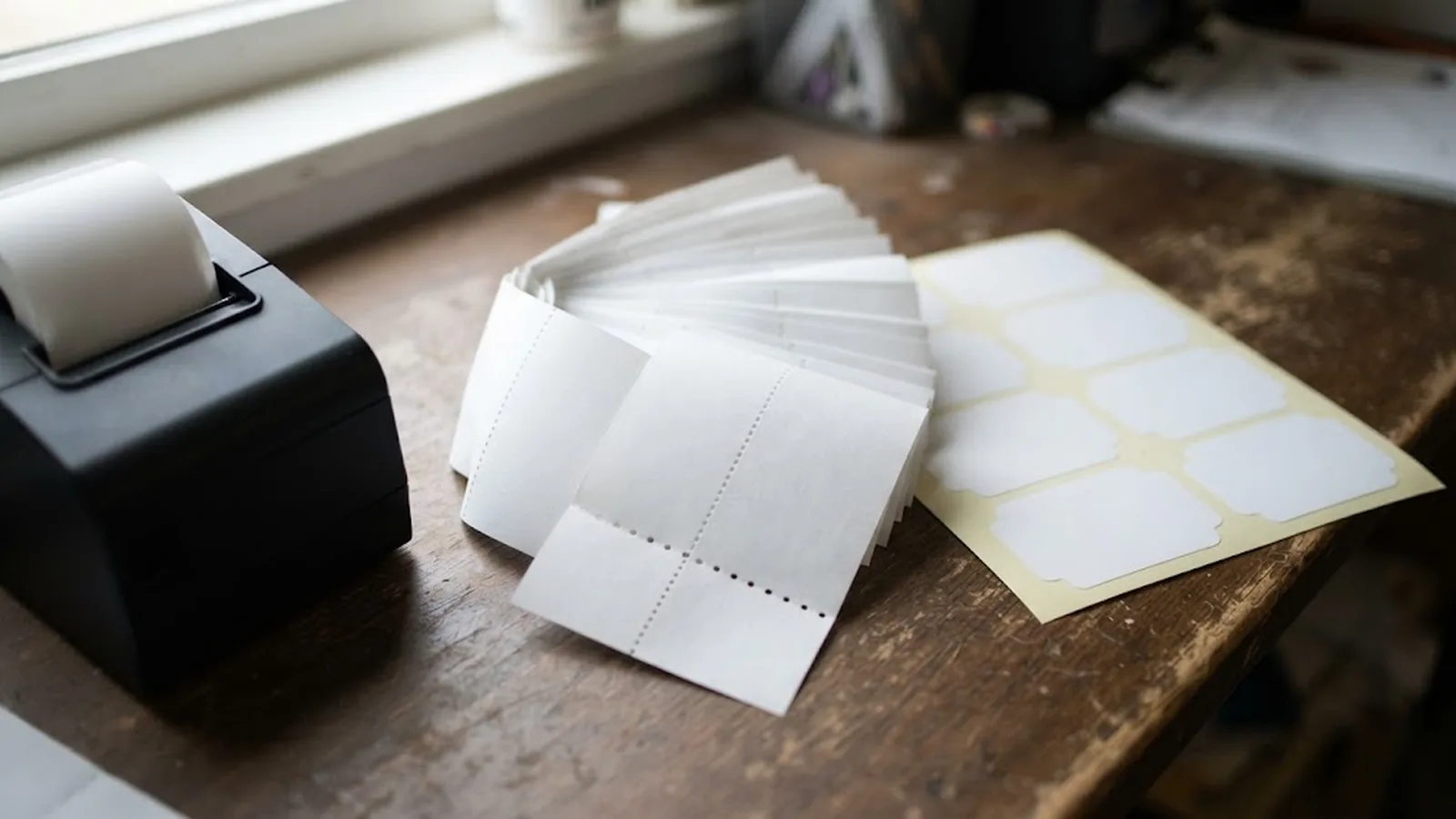
Pre-print, black marks and simple security features
The ticket is the event's smallest brand surface, and pre-printing is what turns commodity stock into part of the show: event artwork, sponsor marks, tier colours and zone legends printed before the thermal layer is ever printed on. Flexo pre-print runs economically at converting scale, and faint background artwork adds a low-key security function — photocopied or counterfeited tickets lose the subtle tones that a gate scan or a trained eye checks for. Numbering and sequential codes extend the same idea into traceability.
Black marks are the functional pre-print for self-service media: a pre-printed mark on the reverse that kiosks and validators read for roll position and end-of-life. Mark position, size and edge definition follow the equipment spec, and a converter who holds the machine list can slit and mark to it consistently across a season — which matters when a validation failure at a kiosk stalls the entry lane on the busiest night of the year. Ticket rolls, receipt rolls and badge stock convert from the same jumbo families, so a season's media can be sourced as one coordinated programme rather than pieced together per show.
Seasonal programme buying for venues and promoters
Event buying is calendar-driven, so the programme conversation is really a scheduling one. The useful planning unit is the show calendar: on-sale dates, print volumes per show class, kiosk counts per venue and the badge run for staff and VIP lists. From there the supply structure follows — a stock position for the recurring formats (receipts, standard tickets, kiosk media) and a make-to-order lane for designs that change per event. Converters who publish realistic lead times for pre-printed runs let promoters commit artwork on schedule instead of stockpiling guesses.
Quality agreement keeps a season consistent. The checks that matter for ticketing media are concrete: width and core tolerance, roll roundness (out-of-round rolls misfeed at the worst moment), print density against a reference, perforation tear behaviour, black-mark position on marked stock, and the declared developer chemistry for guest-handled media. A one-page QC standard agreed at onboarding, with a batch COA per shipment, keeps every show running on the same paper even when supply routes shift between runs. Procurement teams standardising across venues can review our custom thermal paper programme alongside this guide, where construction, developer class and pre-print capability are documented per grade.
Programme shorthand: 'Admission tickets 75 gsm with event pre-print and faint security artwork; box-office receipts 55 gsm economy; kiosk media black-mark to equipment spec; badges on top-coated label stock; batch COA with declared developer system per shipment.'
Frequently asked questions
What GSM thermal paper is used for event tickets?
Admission tickets run best at 65-75 gsm, where the extra substance gives the stub stiffness, clean perforation tear and a hand feel guests read as quality. Box-office receipts and will-call slips carry no keepsake role and can economise at 55 gsm.
Do thermal event tickets fade in sunlight?
Uncoated stock fades visibly within hours in strong daylight, because UV and heat attack the developed dye. A top-coated construction adds a barrier layer that slows environmental fade dramatically, which is why outdoor gates, all-day badges and any media exposed to weather should specify coated stock.
Why do some ticket kiosks need black-mark paper?
Self-service kiosks and validators sense roll position and end-of-life with an optical sensor that reads a pre-printed black mark on the reverse. The mark's position and size follow the hardware specification, so kiosk media is ordered as a black-mark variant matched to the machine list.
Can event tickets be pre-printed with artwork and security features?
Yes. Event artwork, sponsor marks, tier colours, faint background designs and sequential numbering are standard converting services, priced with the paper. Faint pre-print doubles as a simple anti-counterfeit measure because photocopied tickets lose the subtle tones.
What paper is used for VIP badges and event passes?
Badges and passes belong on top-coated label constructions rather than bare receipt rolls — a full day on a lanyard means skin oils, sunscreen, flexing and weather. Label stock with a protective topcoat survives that handling profile and accepts die-cut shapes for lanyard formats.