
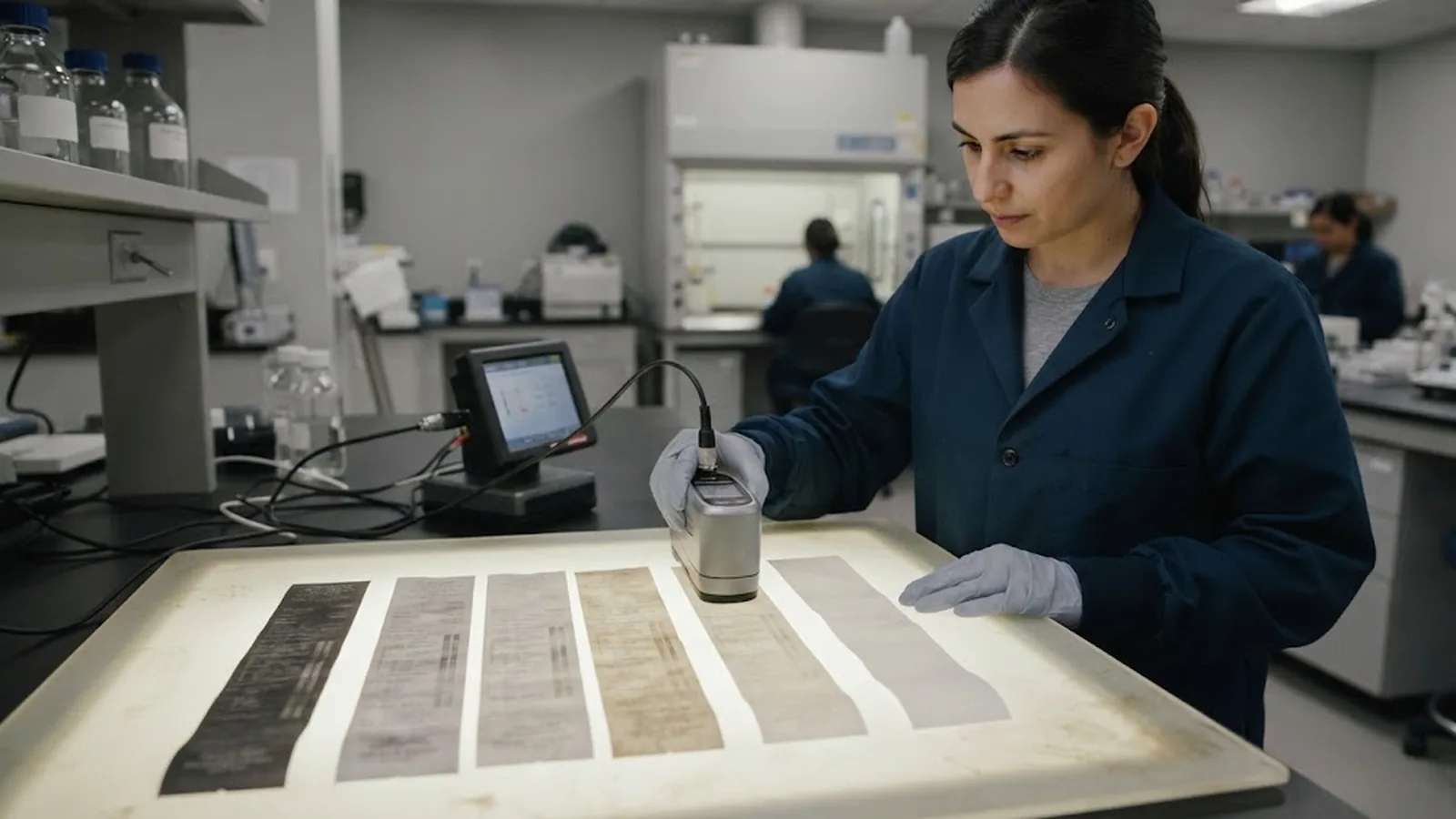
Image retention describes how long a printed thermal image stays readable, and it is primarily a function of the paper's coating formulation plus its storage conditions after printing. Uncoated receipt grades are engineered for roughly 3–5 years of reasonable legibility in benign conditions; good top-coated grades are tested to retain scannable images for 7–10 years or more. Heat, direct sunlight, humidity cycling and contact with plastics, oils and adhesives are the main accelerators of fading. The colour change that forms a thermal image is a chemical state inside the coating, so it cannot smear — but it can be driven back or degraded by the same influences that formed it. Buyers who need durable records should specify top-coated grades with documented retention test data and control how imaged documents are stored.
A receipt that prints perfectly and fades to blank two seasons later is one of the most common complaints in the paper trade — and one of the most misunderstood. The print was never a defect at the moment it left the machine. What failed was the expectation: the grade was chosen for cost, not for the years of retention the document actually needed.
Image retention is the property that separates receipt paper from record paper. Both image by the same heat-triggered chemistry, but the formulation, the coatings and the handling after printing determine whether the document is still legible in six months or ten years. For B2B buyers this matters well beyond retail: logistics labels must survive cold chains and sunlight, warranty and service records sit in drawer for years, and regulated industries face retention obligations on printed documentation.
This guide explains what drives thermal image fading, how manufacturers measure and grade retention, where top coating changes the equation, and the practical storage and handling rules buyers should build into their own document workflows and supplier specifications.
- Thermal images fade because the colour-forming reaction can be reversed or degraded by heat, UV light, moisture and plasticisers — not because ink wears off.
- Standard uncoated grades suit short-life receipts; top-coated grades with barrier layers are specified where documents must stay readable for years.
- Reputable manufacturers publish retention test data — image density after accelerated ageing at elevated temperature and humidity — not just marketing claims.
- The worst practical fade accelerators are contact with PVC plastics, rubber bands, adhesive tapes, carbonless copies and prolonged sunlight.
- Specify retention requirements by use case: days for transient receipts, years for records and labels — and verify with a written test standard, not assurances.
Why thermal images fade
A thermal image is a chemical form of the leuco dye locked into the coating after printing. That state is stable at room temperature but not frozen: it can be pushed back toward colourless, degraded, or darkened further by external influences. The four dominant fade factors are heat, ultraviolet light, humidity cycling, and chemical contact — and they compound each other.
Heat is the most fundamental. Every additional degree of sustained storage temperature advances the same chemical kinetics that created the image in the first place, gradually growing background grey and softening print contrast. A receipt left on a car dashboard or filed above a heating duct ages by years in weeks. UV light attacks the dye system directly, which is why thermal labels that ride on the outside of packaging fade faster than documents filed in a drawer.
Chemical contact is the least obvious and most damaging in daily business. Plasticisers from PVC sleeves and report covers migrate into the coating and reverse the colour development; oils from handling, petroleum-based adhesives in some tapes, rubber bands and even the chemicals in certain carbonless papers all attack the image. Financial teams who laminate thermal documents, or slip them into cheap plastic wallets, routinely destroy them faster than sunlight would.
- Heat: accelerates background development and contrast loss — store imaged documents below 25–30 °C.
- UV and sunlight: bleach the developed dye — keep labels and documents out of direct light.
- Humidity: drives curl and coating degradation — avoid damp storage and condensation cycles.
- Chemical contact: PVC, oils, solvents and some adhesives reverse or degrade the image — use plain paper filing or archival-safe sleeves.
How retention is measured and graded
Because real-time ageing takes years, manufacturers assess retention with accelerated ageing tests: printed samples are held at elevated temperature and controlled humidity, then re-measured for image density and background density. A typical test regime holds samples at 40 °C and 90% relative humidity or dry heat at 60 °C for 24 hours, then compares retained image density against the initial print. The results map onto expected real-world performance, and serious suppliers publish the method alongside the number — '7 years image life' means nothing without the test conditions behind it.
Retention is reported as two figures that must both hold up. Image density retention describes how much of the printed contrast survives; background density growth describes how much the unprinted paper darkens with age. A document that fades to grey is as unusable as one that darkens overall, so a good grade performs on both axes. For scanning and barcode applications the specification usually adds a dynamic range requirement, because what must survive is not human legibility but machine readability.
Grades sort into broad families. Economy receipt grades typically target a few years of legibility under normal office or retail storage. Standard grades extend that window and add resistance to water and common chemicals. Fully top-coated archival grades are formulated and tested for 7–10 years or more, and are the correct specification for shipping documents, service records, tickets used for re-entry, and any print that supports warranty or compliance claims.
| Grade type | Typical retention | Suitable for |
|---|---|---|
| Economy uncoated receipt | Roughly 3–5 years, benign storage | Transient POS receipts, queue tickets |
| Standard grade | Around 5–7 years | General receipts, normal labels |
| Top-coated grade | 7–10 years or more, tested | Logistics labels, records, warranty documents |
| Speciality archival | Extended, per test protocol | Compliance-driven documentation |
How top coating changes the equation
The topcoat is a micrometres-thin barrier film applied over the thermal layer, and it is the single biggest formulation lever for image life. It slows moisture ingress, shields the dye system from oils and plasticisers, resists abrasion from handling and machinery, and reduces the rate at which heat and light reach the image. In practice, a good topcoat multiplies practical document life several times over an equivalent uncoated grade — which is why the price difference is usually trivial next to the risk it retires.
The coat is not magic. A top-coated label stored in a hot container still ages faster than one kept cool, and direct contact with aggressive chemicals will still damage the image. What the topcoat buys is margin: tolerance for imperfect storage, for handling, for a document that lives in a warehouse instead of a filing cabinet. Buyers should treat 'top-coated' as a specification that comes with test evidence — coating weight, water resistance, oil resistance and the accelerated ageing results above — rather than a binary label on a quote.
There is a machinery side as well. Top-coated constructions can behave slightly differently at the print head, and matching the grade to the machine's energy range still applies. A supplier with its own coating line tunes both the coating and the sensitivity together; this is one of the quiet advantages of qualifying a manufacturer rather than a reseller.
Storage rules that protect printed images
Most premature fade in the field is preventable with plain handling discipline. Imaged documents should be stored cool, dark and dry — below roughly 25–30 °C, out of sunlight, away from heating and ventilation sources, and not pressed against fresh carbonless copies or pressure-sensitive adhesives. Filing loose in plain paper folders is safer than nearly any plastic sleeve; where sleeves are required, choose materials documented as plasticiser-free.
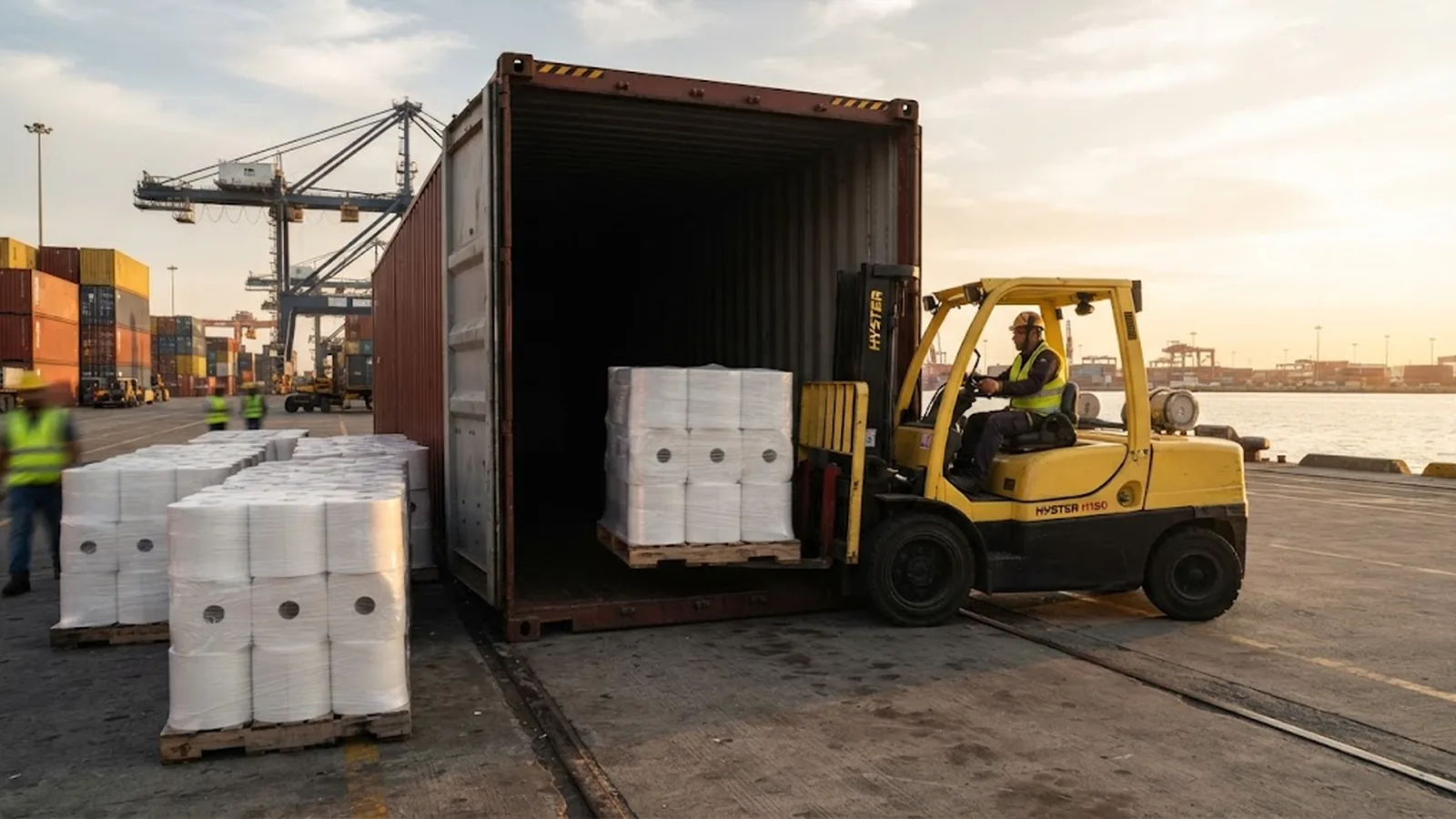
For labels in logistics, the exposure risks are structural: sunlight on outer cartons, freezer-to-ambient condensation cycles, and abrasion in sortation. Top-coated grades plus sensible carton placement cover most of it, and buyers shipping through hot climates should discuss their lane conditions with the supplier — a grade adequate for a temperate domestic network may not be the right call for a cross-equatorial route with weeks of container dwell.
Finally, put retention on paper in the supply chain. The purchase specification for record-bearing documents should name the required image life, the storage conditions assumed, and the test method used to verify it. This converts image retention from a vague quality adjective into an auditable commitment — and gives both sides an objective basis if a document-life complaint ever surfaces years down the line.
Rule of thumb for your own workflows: if a document must still be readable in five years, it needs a top-coated grade, plain paper storage, and a supplier test report to match.
Frequently asked questions
How long does a printed thermal image actually last?
It depends on grade and storage. Economy uncoated receipt grades are engineered for roughly 3–5 years of legibility in cool, dark, dry conditions. Top-coated grades with documented accelerated ageing data reach 7–10 years or more. Heat, sunlight, humidity and plastic contact shorten any grade's life substantially.
Why did my receipts fade even though they were never in sunlight?
Chemical contact is the usual suspect. Plasticisers from PVC sleeves and report covers, oils from handling, rubber bands, and adhesives in some tapes migrate into the coating and reverse the colour development. Storage heat and humidity cycling also fade images without any light exposure.
Is there any way to restore or stop thermal image fading?
No — the image is a chemical state inside the coating, and once contrast is lost it cannot be restored. Prevention is the only strategy: choose the right grade for the document's life requirement, and store imaged documents cool, dark, dry and away from plastics and chemicals.
Do I need top-coated paper for all applications?
Not for short-life documents like transient receipts, where uncoated grades are the economical choice. Top coating is warranted when documents or labels must survive years of storage, handling, moisture, cold chains or sunlight — logistics labels, warranty records, tickets and compliance documentation.
What should I ask a supplier about image retention?
Ask for the guaranteed image life with the test method and conditions behind it — accelerated ageing temperature, humidity, duration, and the resulting image and background density figures. Also confirm whether the grade is top-coated and what water, oil and abrasion resistance was tested. Reputable manufacturers provide test reports; vague 'long image life' claims should be treated accordingly.