
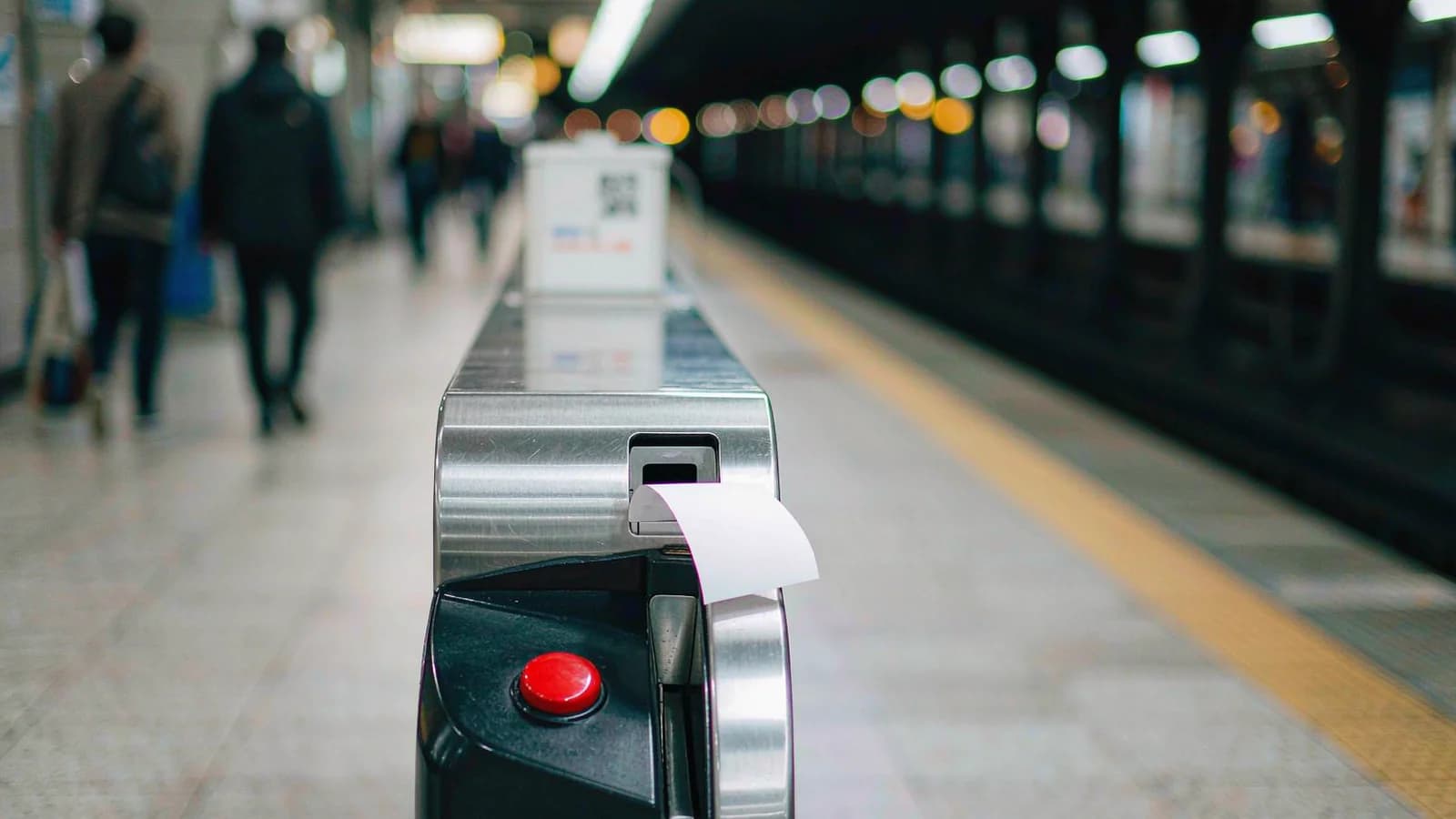
Transport ticket thermal paper is specified around one hard truth: a transit ticket lives a rougher life than any receipt. It is issued from a machine, rubbed against pockets and ticket clips, folded, occasionally rained on, and it must still scan when an inspector asks for it hours later. That pushes the specification toward 55–75 gsm stock (heavier than receipt paper for stiffness and feel), top-coated construction where image life and abrasion matter, back-printing for tariffs and advertising, and die-cut or slit formats matched to the issuing machines. Single-ride tickets, parking stubs and event/carnet tickets remain squarely direct-thermal duties; stored-value and multi-ride media migrate to card stock. The tender document should state gsm with tolerance, coating class, print-life test conditions, width and OD per issuing machine, and joint policy.
Transit is the most punishing environment in thermal printing. A metro ticket is issued in under a second, spat out of a validator, and then lives in the real world: pockets, ticket clips, folded wallets, rain on an open platform, a day's worth of abrasion before an inspector scans it. A receipt's duty ends at the till drawer; a ticket's duty is just beginning when the customer pockets it. That difference is the whole specification brief for transport ticket thermal paper.
Where does thermal paper fit in fare media? Stored-value cards and phone tickets have taken the multi-ride business, but the single-ride and short-haul world still runs on paper at extraordinary volume: single-journey metro and bus tickets, parking entry and exit stubs, ferry and regional rail tickets, carnet and event tickets, queue and platform passes issued from self-service machines. These are printed by the million, sold at low unit value, and inspected by machines that must read the first barcode every time — which makes the paper stock a system component, not a commodity purchase.
Buyers comparing these specifications can review our 75 gsm heavyweight thermal paper, where basis weight, coating construction and packing are documented per grade before an order is placed.
This guide covers the duty cycle a transit ticket actually endures, how gsm and coating class map to that duty, the format decisions — roll geometry, die-cut, back-printing — that issuing machines impose, the environmental tests worth demanding in a tender, and the specification checklist that turns those demands into a contract line.
- A transit ticket's life is measured in pocket-hours, not till-drawer hours — abrasion and moisture tolerance matter as much as image chemistry.
- 55–75 gsm is the transit ticket range: heavier stock gives the stiffness machines feed reliably and passengers perceive as a 'real' ticket.
- Top-coated construction is the default where tickets face rain, sweat and pocket abrasion; uncoated survives only sheltered, short-life duties.
- Back-printing (tariffs, terms, advertising) is standard on transport tickets and must be planned into the stock specification, not added later.
- Specify per issuing machine: width, OD, core and wind direction differ across validators, kiosks and hand-issued pads.
The duty cycle: what a transit ticket survives
The life of a single-ride ticket is short but brutal. Issuance takes it through heated print heads and tight machine paths; the first hour puts it against the moisture and abrasion of a pocket or a ticket clip; a full day may add folding, rain on an exposed platform, hand-creams and the friction of a bag interior. The acceptance test that matters is not how the barcode looks at issue, but whether it scans at end-of-day inspection — because a failed scan means either a dispute at the gate or a passenger waved through unpaid.
Each transit mode adds its own stresses. Metro tickets face high-speed machine issue and gate handling; bus tickets are often issued by drivers from compact printers with narrower rolls; parking stubs live the hardest life of all — sunlight on a dashboard, temperature swings, hours inside a car before the exit barrier scans them. Ferry and regional rail tickets survive longer journeys and are more likely to be kept as mementoes or for expense claims, which extends the demanded image life toward weeks rather than hours.
The paper stock absorbs these stresses through two levers: the coating chemistry that develops and holds the image, and the base paper's weight and finish that determines stiffness, feel and how the ticket behaves in the machine path. Getting the specification right is a matter of matching both levers to the duty cycle above — which is why transit tenders read like engineering documents rather than stationery lists.
Gsm, coating and the print-life demand
Basis weight is the first decision. Receipt-grade 48–55 gsm stock feeds fast and keeps issuing machines' roll capacity high, and it is correct for sheltered, short-life duties such as driver-issued bus tickets and queue passes. The transit mainstream sits at 55–75 gsm: heavier faces feed more reliably through validators' curved paths, survive pocket abrasion better, and give passengers the stiffness they read as a legitimate ticket. Parking and outdoor-kiosk media justify the top of the range, where dashboard heat and handling punish light stock.
Coating class is the second decision, and for most transport applications it is not close: top-coated construction is the default. The protective top layer holds scan-grade contrast through moisture, abrasion and UV exposure that an uncoated face cannot survive — a fact worth remembering the first time a rainy-season complaint lands on the operations desk. Uncoated stock remains a legitimate choice for indoor, same-day duties where cost per ticket dominates and the operating environment is controlled.
Print life should be written as a test condition, the same discipline patient-ID and healthcare buyers apply. 'Scans at 24 hours after issue at ambient temperature, after 100 rub cycles against cotton and 30 minutes at 95 % humidity' is a demand a mill can test and certify; 'durable ticket paper' is not. Where tickets face outdoor exposure, add a light-stability condition. The declaration belongs in the tender response, batch-certified, so operations can audit stock changes without re-running field trials.
Where a programme combines printed faces, back-printed tariffs and bespoke die formats, our custom thermal paper programme covers the construction options under a single supply agreement.
| Mode / duty | Typical gsm | Coating | Format | Required life |
|---|---|---|---|---|
| Metro single-ride | 55–65 gsm | Top-coated | Die-cut card-form roll or 57 mm slit | 24–72 h, machine-inspected |
| Bus driver-issued | 55 gsm | Uncoated or top-coated | 57 mm × OD rolls | Same day |
| Parking entry/exit | 65–75 gsm | Top-coated | 80 mm or die-cut stub | Days, UV and heat tolerant |
| Ferry / regional rail | 65–75 gsm | Top-coated | Die-cut or slit roll, back-printed | 1–4 weeks, keepsake-grade |
| Queue / platform pass | 48–55 gsm | Uncoated acceptable | 57–80 mm rolls | Hours |
Machine formats: rolls, die-cuts and back-printing
Transit ticketing is machine-first, and the format lines of the specification are machine lines. Width and roll diameter must match each issuing fleet — a driver's compact printer, a platform validator and a station kiosk rarely share geometry, and a stock that binds one machine strands passengers at the worst moment. Core size and wind direction follow the same logic; they are cheap to state and expensive to discover wrong at commissioning. Where the system issues die-cut card-form tickets — common on metro systems — the die pattern, corner radius and liner release join the specification, and trial rolls on the actual machines belong in the qualification plan.
Back-printing is the transit-specific extra that catches new buyers out. Tariff tables, conditions of carriage, advertising and even reformable record strips are printed on the reverse of the ticket stock before coating and slitting, which makes it a factory operation, not a downstream printing job — and it must be planned into the stock order with artwork, ink class and registration tolerances. Programmes that discover back-printing requirements after the tender usually pay for a second qualification cycle.
For fleets and kiosks fed from the same supply chain, our POS and receipt paper rolls cover the standard roll formats alongside ticket die-cuts, so one qualification can serve validators, kiosks and back-office printers together.
Tendering the programme: tests, documents and logistics
A transport tender that survives contact with operations asks for three things per stock line. First, test evidence: print-life conditions (rub, humidity, temperature, light), feed reliability on the named issuing machines, and a trial-issue report from a live station or vehicle. Second, documents: batch COA, SDS with the developer class stated, and written confirmation of the chemical construction behind any phenol-free claim — public-sector procurement increasingly screens for it. Third, continuity: the stock's gsm, coating and geometry fixed by specification, with a change-notice obligation, because a silent stock change that shifts ticket stiffness will surface as validator jams in peak service.
Volume planning is container arithmetic. Transit programmes consume tonnage steadily, which makes them ideal for planned shipments rather than emergency orders: quarterly quantities can be built around pallet standards, moisture-barrier packing and the document set for ocean freight, with safety stock held at the depot. Ticket stock is also seasonal — holiday peaks and event calendars move demand by whole containers — so the supply agreement should name lead times and flex volumes explicitly.
Where container planning is the next step, our export shipping guide covers pallet standards, moisture-barrier packing and the document set for ocean freight.

Qualify on the machines, not the datasheet: a stock that feeds flawlessly in the lab can jam the validator's curved path if stiffness is wrong by a few gsm.
Frequently asked questions
What gsm thermal paper is used for transport tickets?
The transit mainstream is 55–75 gsm. Sheltered, same-day duties (bus driver tickets, queue passes) run on 48–55 gsm; metro single-ride tickets sit at 55–65 gsm; parking stubs and ferry or rail tickets that face heat, UV and longer keeping justify 65–75 gsm. Heavier stock feeds more reliably through machine paths and reads as a 'real' ticket to passengers.
Do transport tickets need top-coated thermal paper?
For most transit applications, yes. Top-coated construction holds scan-grade contrast through pocket abrasion, rain, sweat and dashboard heat that uncoated faces cannot. Uncoated stock remains a legitimate cost choice for indoor, same-day duties in controlled environments.
How long does the print on a thermal ticket last?
Demand it as a test condition rather than trusting a claim: a typical transit requirement is scan-grade at 24–72 hours for single-ride tickets after 100 rub cycles and 30 minutes at 95 % humidity, extending to one to four weeks for ferry and rail tickets. The mill can certify life at defined temperature, humidity and light conditions per batch.
Can transport ticket paper be printed on the back?
Yes — back-printing of tariffs, conditions of carriage and advertising is standard on transit ticket stock and is done at the factory before coating and slitting. It must be planned into the stock order with artwork and ink class; adding it after the tender usually costs a second qualification cycle.
What should a transport ticket paper tender specify?
Per stock line: gsm with tolerance, coating class, print-life test conditions, width, OD, core and wind direction per issuing machine, die pattern and liner release where die-cut tickets are issued, back-printing requirements, plus COA/SDS documentation and a change-notice obligation on any stock revision.