
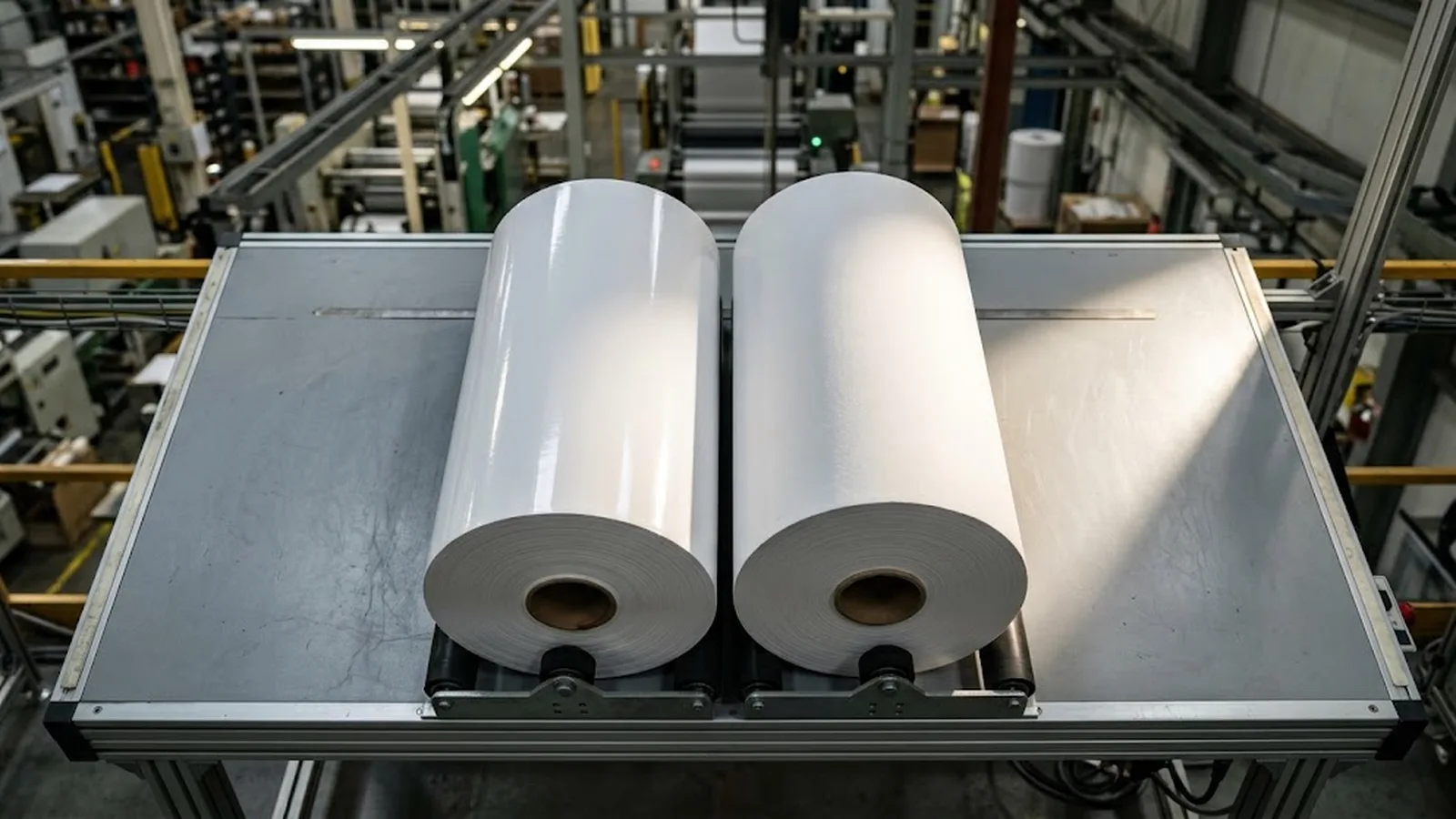
Non top coated thermal paper has the heat-sensitive layer exposed: it costs less, prints efficiently, and suits short-life receipts used in dry conditions. Top coated thermal paper adds a thin protective layer over the thermal coating that resists water, oils, plasticizers and abrasion, keeps the image legible for years, and runs cleaner on long production — at a price premium. Choose non top coated for everyday receipts consumed within months; choose top coated whenever the document must survive moisture, contact with plastics or adhesives, or retention beyond a year.
Every thermal paper specification has a moment where the buyer must decide about the topcoat. The price difference on a quotation is real, so the question deserves a real answer: what exactly does the topcoat buy, and when is it wasted money?
The short version is document life and environment. Non top coated paper images beautifully and costs less, but its imaging layer is exposed to whatever touches it — water, finger oils, adhesive, vinyl bags. Top coated paper puts a sacrificial protective layer over the chemistry so the image survives the handling that real documents receive.
This guide explains both constructions, compares them on the factors that matter to buyers — cost, print performance, image retention, machine behaviour and storage — and closes with a decision framework you can apply to receipts, labels, tickets and archival programs. It is written for procurement teams and converters who specify grades rather than just buy gsm.
- The topcoat is a protective layer over the thermal imaging layer — it does not create the image, it preserves the conditions that keep the image readable.
- Non top coated grades are cheaper and print at slightly lower energy, ideal for high-volume short-life receipts.
- Top coated grades resist water, oil, plasticizers and abrasion, and are the default for labels, tickets and anything filed long-term.
- Image retention, not print darkness, is the usual reason to pay for the topcoat.
- Specify document life and environment in your enquiry; the grade should follow from those two facts.
What each construction actually is
Both grades share the same core construction: a base paper carrying a precoat and the heat-sensitive thermal layer, where a leuco dye and a developer react under the print head to form the image. The difference is what sits on top of that thermal layer.
In non top coated thermal paper, the thermal layer is the outermost surface. The print head contacts the imaging chemistry directly, which is slightly efficient from an energy standpoint — less material between heat and dye — and the construction is cheaper because one coating pass is omitted.
In top coated thermal paper, a final thin layer of pigment and binder is applied over the thermal layer and calendered smooth. It is engineered to be a barrier against water, oils, plasticizers and physical scuffing while remaining thermally efficient, so the print head still images through it cleanly.
| Attribute | Non top coated | Top coated |
|---|---|---|
| Coating passes | Precoat + thermal layer | Precoat + thermal layer + topcoat |
| Relative price | Lower | Higher (typically 10–30% premium) |
| Image protection | Exposed chemistry | Barrier against water, oil, plasticizers, scuffing |
| Typical image life | Months to a few years, dry dark storage | Five years and beyond with proper filing |
| Best-fit documents | Receipts, short-life tickets | Labels, logistics documents, archival records |
| Head cleanliness | Good | Very good over long runs |
Print quality and machine behaviour
Buyers sometimes assume the topcoat dulls the print. In practice, a well-formulated top coated grade prints as dark and sharp as its non top coated sibling; the topcoat is designed to be transparent to the imaging process. The measurable difference is small and depends more on the grade's sensitivity class than on the presence of a topcoat.
Where the constructions genuinely differ in operation is over long print runs. The topcoat presents a more stable, slightly lubricious surface to the print head, which reduces residue build-up — a factor for high-volume label lines and kiosks where cleaning downtime is a cost. On short-life receipt machines the difference is rarely noticed.
Converting behaviour also matters to buyers who slit and rewind. Top coated surfaces tolerate rewinding, wrapping and transit handling with fewer surface marks, which reduces the rejected-metre count at the slitter. For converters buying jumbo rolls, this can offset part of the premium before the roll even reaches the end user.
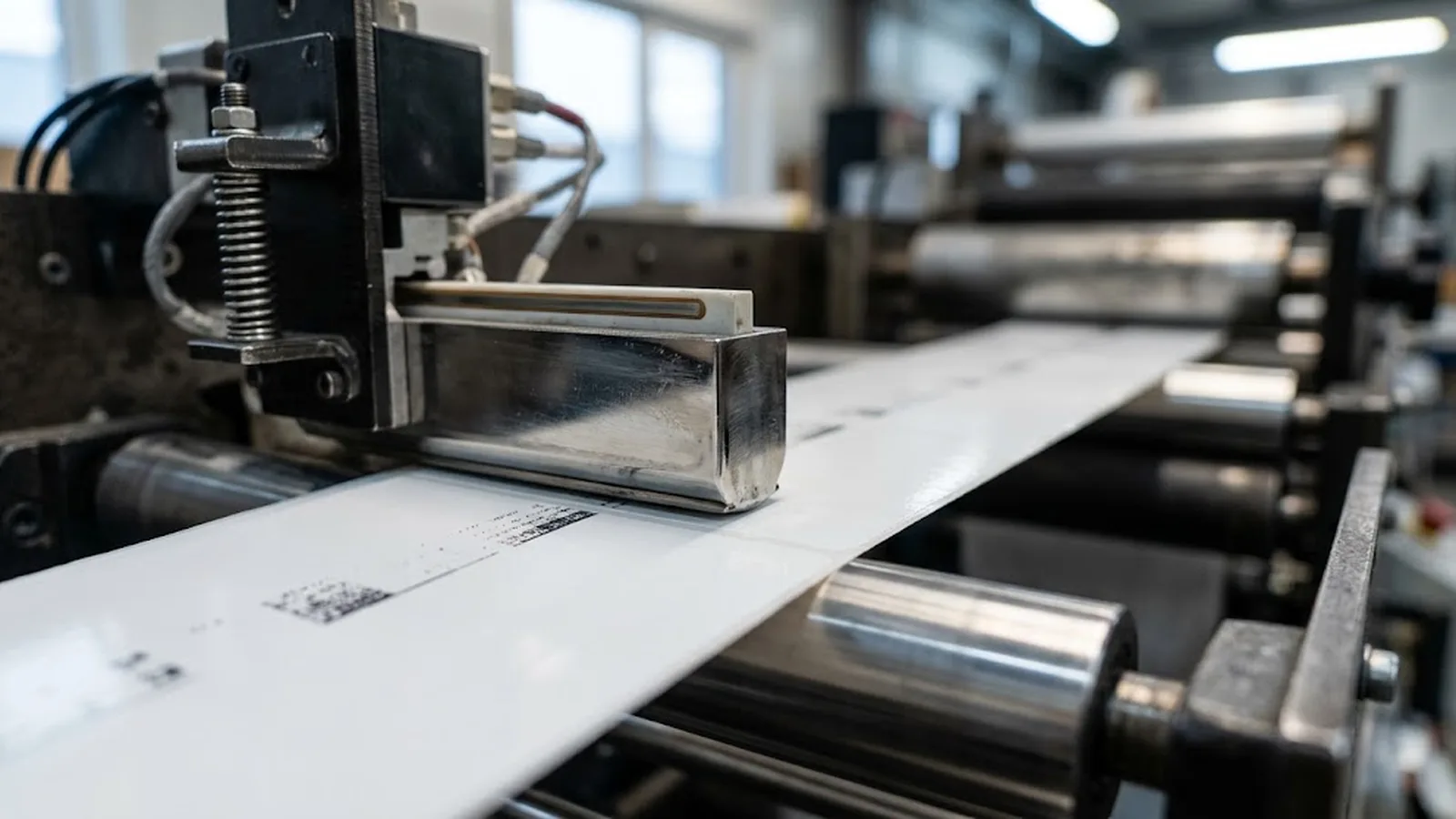
Image retention: the real differentiator
The image in thermal paper is chemistry, not ink, so it can continue to react with its environment after printing. Heat, sunlight, humidity, solvent vapours and plasticizers all attack the developed image over time. The topcoat exists precisely to slow those attacks: it keeps water and oils off the imaging layer and blocks direct contact with plastics and adhesives.
This is why image retention requirements drive the choice. A supermarket receipt with a useful life of weeks only needs the paper to survive the wallet and the drawer — non top coated is the rational choice. A shipping label that will be scanned in the rain, a parking ticket left on a dashboard in the sun, or a warranty record filed for seven years needs the barrier. When retention is contractual, specify top coated and state the required retention period to the supplier in writing.
Storage conditions still apply to both constructions. The topcoat extends how long the image survives the environment; it does not make the document immune to heat or UV. Top coated documents filed in PVC sleeves or stored on warm equipment will still lose image faster than the same documents filed dark and dry.
- Days to months of life, dry environment: non top coated is sufficient.
- Moisture, oils or friction in normal use: specify top coated.
- Contact with plastics, adhesives or carbonless paper: specify top coated.
- Retention beyond one year, or any contractual archive: top coated with a written retention statement.
Cost logic: when the premium pays for itself
On price per square metre, top coated grades cost more, commonly in the range of ten to thirty percent depending on gsm, width and volume. Judging that premium only against purchase price misses the costs it removes: reprints when receipts or labels fade before their purpose is served, customer-service claims over unreadable proof-of-delivery records, rejected archive documents at audit, and head-cleaning downtime on long label runs.
A useful way to frame the decision is cost per surviving document. For a high-volume receipt that is read once and discarded, the topcoat premium buys nothing — the document dies in a drawer long before the image would fade. For a parcel label whose barcode must scan through a rainy delivery chain, the premium is trivial against the cost of a failed scan and a lost parcel investigation.
Volume buyers can also split programs: non top coated for the receipt line, top coated for the label line, rather than standardising on one grade across both. The specification follows the document, not the purchasing convenience.
| Application | Recommended construction | Why |
|---|---|---|
| POS receipts, high turnover retail | Non top coated | Short life; lowest cost at volume |
| ATM and banking receipts | Top coated or premium non top coated | Longer handling life; archival expectations |
| Logistics and shipping labels | Top coated | Moisture, abrasion and plastic contact in transit |
| Parking, transport and event tickets | Top coated | Sunlight and handling exposure |
| Healthcare and laboratory records | Top coated | Long retention; institutional compliance |
| Weighing-scale and price labels | Non top coated, or top coated for cold chain | Dry retail vs condensation environments |
Cold-chain and refrigerated environments almost always justify top coated stock because of condensation on the label surface.
How to specify the grade in your enquiry
Give the supplier two facts and let the construction follow: the document's required life, and the environment it will live in. State the retention period in months or years, the worst condition the document will face (rain, refrigeration, wallet storage, adhesive contact), and the machines it will print on. A manufacturer with its own coating line can then propose either construction — and the right sensitivity class — from current production rather than a catalogue.
Always validate with printed samples from the actual production lot, tested on your machines and, for retention-sensitive programs, aged under accelerated conditions. Request the grade's datasheet with coating construction identified, and confirm whether the developer chemistry is BPA-free or phenol-free, since that compliance choice is made independently of the topcoat decision.
Finally, put the construction on the purchase order itself. 'Thermal paper 80 mm' is not a specification; 'top coated, 65 gsm, phenol-free developer, 7-year retention' is. The clearer the specification, the more comparable the quotations you receive.
Frequently asked questions
Does top coated thermal paper print darker than non top coated?
No meaningful difference in a well-formulated pair — the topcoat is designed to be transparent to the imaging process. Print darkness is governed mainly by the thermal layer's sensitivity class and the machine's energy settings, not by the protective topcoat.
Why is top coated thermal paper more expensive?
It requires an additional coating pass and more coating material, and it is built with higher-specification chemistry for retention. The premium, typically 10–30%, buys image life through moisture, oils, plasticizers and abrasion.
Can I use non top coated paper for shipping labels?
Not recommended. Shipping labels face rain, condensation, abrasion and contact with plastic mailbags, all of which attack an exposed imaging layer. Faded barcodes lead to failed scans and claim disputes that cost far more than the topcoat premium.
How long does the image last on each construction?
Non top coated documents typically stay legible for months to a few years in dry, dark storage. Top coated documents are engineered for five years and beyond when filed correctly. Actual life depends on storage conditions, so state your retention requirement to the supplier and confirm it in writing.
Is the topcoat decision related to BPA-free compliance?
They are independent choices. The topcoat is a protective layer; the developer chemistry (BPA-free or phenol-free) is the compliance question. A grade can be any combination of the two, so specify both on your enquiry.