
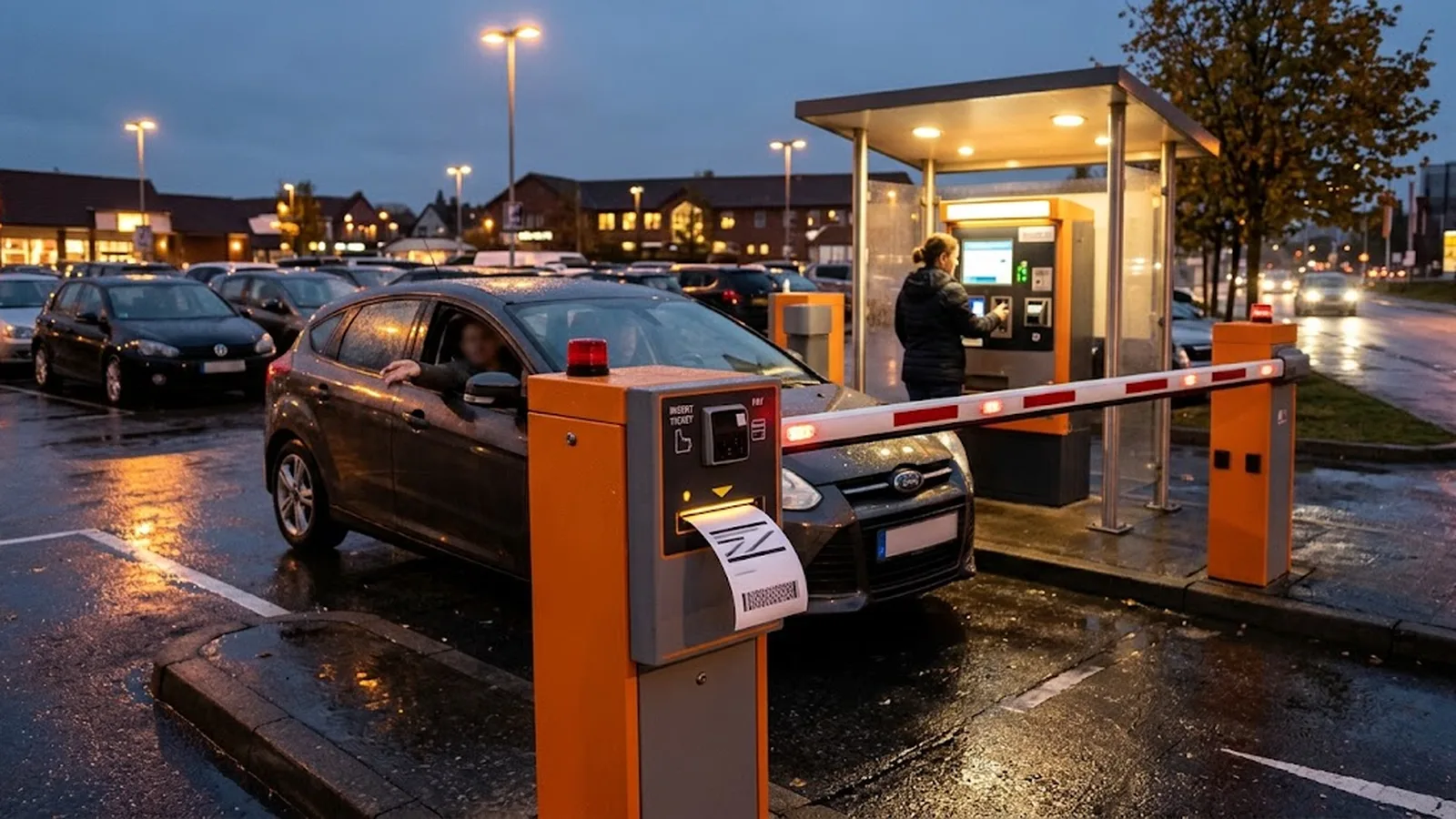
Parking ticket paper rolls are thermal ticket and receipt stock for the parking vertical — barrier-gate exit tickets, pay-on-foot machine receipts, handheld enforcement tickets and coupon validation slips. The specification stack has four layers: ticket width and length matched to the dispenser mechanism (typically 57–80 mm wide stock, die-cut or black-mark registered), a heavyweight 65–80 gsm facestock where tickets must survive handling and heat in vehicles, a chemistry class that clears destination-market bisphenol rules for public-handled paper, and wind quality that keeps high-speed dispensers jam-free. Operators and equipment distributors that spec all four layers on one sheet — and trial tickets on the actual machine at the actual gate — avoid the jam calls, faded tickets and compliance questions that dominate this category's service costs.
Parking runs on paper that most people never think about until it fails. Every entry lane issues a timestamped ticket, every pay station prints a receipt, every enforcement officer hands over a violation slip — and each of those transactions depends on a roll of thermal stock feeding a mechanism that works outdoors, around the clock, in dust, heat and cold. When the roll is wrong, the failure is public: a jammed gate backs up traffic, a faded ticket triggers disputes, a non-compliant chemistry raises procurement questions.
The parking vertical also concentrates demands that retail receipt stock rarely meets. Exit-column tickets are dispensed at speed and gripped wet-fingered in rain. Pay-on-foot receipts must stay legible long enough to leave the facility in a hot car — one of the harshest natural image-life tests in daily use. Enforcement tickets carry legal weight and are often handwritten-over as well as printed. Stock that merely works at a supermarket counter frequently fails these duties.
This guide works the category the way an operations manager would: the ticket families and their mechanisms, the environmental duties that drive facestock and chemistry choices, the dimension and registration details that keep dispensers running, and the supply programme considerations for operators and equipment distributors.
Buyers consolidating ticket and receipt formats on one supplier can review our custom thermal paper programme, where width, core, roll diameter and developer class are quoted together on a single specification sheet.
- Match the roll to the mechanism: barrier-gate exit columns, pay stations and handheld printers each run distinct widths, core sizes and registration methods — never buy one size for the whole facility.
- Heat in a parked car is the category's defining image-life test; heavyweight 65–80 gsm stock with documented retention earns its premium at exit columns and pay stations.
- Black-mark registration drives jam-free dispensing: mark position, density and edge quality must be specified per mechanism, not assumed.
- Parking tickets pass through public hands and often travel with vehicles across borders — BPA-free is the floor, and phenol-free is increasingly specified for European and Gulf programmes.
- Trial on the actual machine at the actual gate: dispenser feed behaviour, not datasheet values, decides whether a roll stock works.
The parking ticket family: machines, tickets and their duties
Barrier-gate exit tickets are the volume heart of the category. Issued at every entry lane in seconds, they carry entry time, gate identity and a barcode or QR payload, and they are dispensed by high-speed mechanisms tuned to a specific roll geometry — commonly 57 or 80 mm wide stock on small cores with tight outer-diameter limits. Feed reliability is the first duty: a misfed ticket stalls a lane, and lanes queue visibly. Exit tickets therefore run on precision-slit stock with clean edges and consistent registration.
Pay-on-foot and pay-and-display machines print the transaction receipt: tariff, duration, payment and validation. These receipts live harder lives than they look — folded into wallets, left on dashboards, and expected to scan or be read manually at the exit. Image retention through vehicle heat is the decisive property, which is why pay-station programmes usually specify heavyweight stock with a documented retention class rather than standard receipt grades.
Handheld enforcement and inspection printers carry the legal end of the family: violation notices, clamping releases and patrol logs printed on the street. These devices run narrow rolls and benefit from stiffer, heavier stock that survives being written over and handled through rain. Coupon and validation slips round out the family at retail-adjacent facilities, often preprinted with brand or promotion elements on the ticket face.
| Ticket family | Typical stock | Facestock | Key duty |
|---|---|---|---|
| Barrier-gate exit tickets | 57 / 80 mm, small core, black-mark or die-cut | 55–65 gsm | Feed reliability at speed; barcode legibility |
| Pay-on-foot receipts | 80 mm class, standard core | 65–80 gsm | Retention through vehicle heat and handling |
| Handheld enforcement tickets | Narrow custom widths | 65–80 gsm | Stiffness, overwriting, weather handling |
| Coupon / validation slips | Custom die-cut or marked | 55–65 gsm | Preprint registration, scan reliability |
Widths, cores and registration methods vary by dispenser manufacturer and model generation; the machine's consumable sheet is the controlling document, and stock is die-cut to order from the same facestock families.
Environmental duty: vehicle heat, weather and public handling
Vehicle heat is the parking category's defining stress. A ticket left on a dashboard in summer can reach 70 °C and above — enough to pre-develop unprotected thermal chemistry and darken an entire ticket to illegibility. The countermeasures are structural: higher-activation chemistry classes develop at temperatures the dashboard environment rarely reaches, and heavyweight facestocks with protective top coatings slow heat transfer to the image layer. Operators who receive seasonal complaints about unread tickets are almost always running standard receipt chemistry in a duty it was never specified for.
Outdoor weather attacks the other end of the life cycle. Rain at the exit column means tickets are gripped wet, occasionally soaked; wind and dust find every edge imperfection; winter cold makes brittle stock crack at the dispenser knife. Slitting quality — flat end faces, dust-free edges, consistent tension — matters as much here as anywhere in thermal converting, because outdoor mechanisms tolerate less before they jam.
Public handling and cross-border travel raise the compliance layer. Parking tickets are handed to everyone, often carried across borders inside vehicles, and increasingly fall under destination-market rules on bisphenols in thermal paper. Where developer compliance is part of the specification, our BPA-free vs phenol-free guide documents the chemistry, the regulations and the paperwork behind each class. For municipal and airport programmes, phenol-free stock is now commonly written into tenders rather than requested after award.
- Vehicle heat: higher-activation chemistry plus heavyweight facestock for dashboards and door pockets.
- Weather: dust-free slitting and consistent winding for outdoor dispensers.
- Cold: stock flexibility rated for winter dispensing; brittle stock cracks at the knife.
- Compliance: BPA-free floor; phenol-free specified for EU and Gulf public tenders.
Dimensions, registration and the specification sheet
The first specification layer is geometry. Width follows the print mechanism; core and outer diameter follow the dispenser's spindle and cabinet; and length between registration marks follows the ticket format. Two registration methods dominate: die-cut tickets with gap sensing, and black-mark registered tickets where an infrared-visible mark tells the mechanism where to cut. Black-mark position, size and optical density must be specified per mechanism — a mark that reads cleanly on one dispenser generation can misread on another, and misregistration shows up as half-cut tickets and lane jams.
The second layer is the facestock. Standard 55–65 gsm direct thermal serves exit tickets and validation slips; 65–80 gsm heavyweight stock serves pay-station receipts and enforcement tickets where stiffness and retention are the duty. Where operators consolidate the facility on one supplier, our 75 gsm heavyweight thermal paper covers the heavy end of that range with documented retention data for the pay-station and enforcement formats.
The third layer is documented measurement. A parking-grade specification sheet carries width with tolerance, core ID, outer diameter, grammage, registration method and mark geometry, developer class and minimum image retention at stated temperatures. Equipment distributors reselling consumables alongside PARCS hardware should demand the same sheet from their own suppliers — it is the document that ends the argument when a service call blames the paper.
The supply programme: volumes, trial and replenishment
Parking consumes paper in a rhythm different from retail: exit tickets scale with traffic volumes that are stable and forecastable, pay-station receipts with payment transactions, enforcement tickets with patrol schedules. Operators that split the flows hold the right stock depth for each machine class and avoid the classic failure of one shared stockroom where the exit-column rolls run out mid-holiday-weekend while enforcement stock gathers dust.
Trial discipline mirrors the specification discipline. A single carton of each format, run on the actual machines at the actual facility — busiest entry lane, highest-throughput pay station, one patrol handheld — for two to four weeks validates feed, cut quality, scan reliability and retention before the programme order. Gate-side trials regularly surface small geometry mismatches that no datasheet reveals, and it is far cheaper to adjust a die-line before a container ships than after it lands.
Replenishment for multi-site operators is best run on a contract manufacturing basis: agreed specifications, forecast-driven call-offs, and batch-level traceability so any service question can be traced to the production lot. Distributors serving the parking equipment channel add private-label packaging to the same structure, holding the specification while the operator's brand rides on the carton.
- Split replenishment flows: exit tickets by traffic forecast, receipts by transactions, enforcement by patrol schedule.
- Gate-side trial per format before the programme order — two to four weeks on real machines.
- Contract terms: agreed spec sheet, forecast call-offs, batch traceability.
- Distributor channel: private-label cartons on the same documented specification.
In parking, the paper is judged at the worst moment of the worst day — a holiday queue in the rain — so the trial must include one, not just a quiet Tuesday.
Frequently asked questions
What is a parking ticket paper roll?
Thermal ticket and receipt stock for parking operations — barrier-gate exit tickets, pay-on-foot and pay-and-display receipts, handheld enforcement tickets and validation slips — specified per dispenser mechanism with matched width, core, diameter and registration method.
Why do parking tickets fade on the dashboard?
Standard thermal chemistry develops at relatively low temperatures, and a dashboard in summer exceeds them, pre-developing the image. Higher-activation chemistry and heavyweight, top-protected facestocks resist dashboard heat — the fix is a chemistry and construction decision, not a storage habit.
What GSM is used for parking tickets?
55–65 gsm covers exit tickets and validation slips; 65–80 gsm heavyweight stock is specified for pay-station receipts and enforcement tickets, where stiffness, handling durability and retention through vehicle heat are the duty.
Do parking ticket rolls need black marks?
It depends on the dispenser: some mechanisms register via die-cut gaps, others via infrared-visible black marks that trigger the cut. Mark position, size and optical density are mechanism-specific and must be written into the specification — assuming the wrong registration is a leading cause of lane jams.
Is BPA-free paper required for parking tickets?
BPA-free is the baseline for public-handled thermal paper in most regulated markets, and phenol-free developers are increasingly written into European and Gulf parking tenders. Suppliers should document the developer class and provide the supporting paperwork with each batch.