

Lightweight thermal paper means basis weights in roughly the 48-55 gsm class, against the 65-80 gsm grades used for heavyweight receipts and tickets. The gain is quantitative: a 48 gsm roll carries roughly 20-30% more meters than a 65 gsm roll of the same diameter, which cuts cost per receipt and freight per tonne of imagery. The trade-offs are stiffness, curl behaviour and head pressure, so lightweight stock should be trialled on the destination machines with the top-coating decision made deliberately.
Basis weight is the quietest lever in a thermal paper programme. Most buyers negotiate width, core and roll diameter — all visible on the quotation — and accept the grammage as a given. Yet the gsm figure decides how many meters hide inside a roll of a fixed diameter, how many rolls fit into a container, and what each printed receipt ultimately costs landed.
Lightweight thermal paper sits at the bottom of the basis-weight range: typically 48 to 55 gsm, against the 65 to 80 gsm grades specified for two-ply-feel receipts, tickets and labelstock that must survive rough handling. The paper is thinner, the roll is lighter, and the same shelf space holds more printing capacity.
Buyers comparing these specifications can review our 48 gsm lightweight thermal paper, where basis weight, coating construction and packing are documented per grade before an order is placed.
This guide sets out where lightweight grades win, where they lose, and how to specify one so the saving survives contact with the machines that will actually print it.
- Lightweight thermal paper is the 48-55 gsm class; the immediate benefit is 20-30% more meters per roll at the same diameter, which directly lowers cost per printed receipt.
- Freight economics compound the gain: more meters per tonne means lower shipping cost per unit of printing capacity, significant on container-volume programmes.
- The trade-offs are physical: thinner caliper means lower stiffness, more sensitivity to curl in humid climates, and tighter tolerances on printer head pressure and paper path alignment.
- Top-coated lightweight constructions protect image life where receipts face friction, moisture or long archiving — the coating weighs little but changes performance significantly.
- A lightweight grade should be validated on destination machines before the first bulk order, because jam and curl behaviour is machine-specific, not catalogue-specific.
What the gsm figure actually changes
Basis weight — grams per square metre — is the mass of the paper at a standard area. In thermal paper it combines the base paper and the coating package: a thermal-sensitive layer and, on better grades, a top coat over it. Dropping from 65 gsm to 48 gsm removes roughly a quarter of the fibre mass per square metre, which is where both the savings and the engineering challenges live.
The arithmetic that matters to a buyer is yield. Roll diameter, not gsm, is what a printer's paper compartment cares about, so two rolls of identical 80 mm diameter but different grammages hold very different lengths. A 48 gsm construction at the same caliper-per-layer packs measurably more meters into that diameter — commonly in the 20-30% range against a mid-weight grade — and every one of those meters is a receipt the distributor sells at the same price as before.
For production volumes, the same construction logic applies to our thermal paper jumbo rolls, quoted per jumbo roll, slit reel or finished format — the form most converters take lightweight stock in before slitting to till-roll widths.
The yield and freight maths
Yield first. A converter slitting 57 mm till rolls from a jumbo cares about linear meters per jumbo, because that converts directly into the number of finished rolls per shift. A lightweight jumbo produces more slit rolls per tonne purchased, which smooths production planning: fewer jumbo changes, less setup waste, more output from the same slitter hours.
Freight second. Paper is sold by weight but shipped by volume, and thermal paper is dense cargo that usually fills a container's weight allowance before its space. Lighter stock does not change the weight ceiling — but it changes what each tonne achieves. More meters per tonne means the same container delivers more sellable printing, and the freight cost allocated to each receipt falls. On intercontinental programmes the effect is real money, and it recurs with every shipment.
Storage and handling complete the case. Retail and hospitality buyers stocking till rolls in back rooms find lighter cartons easier to move, and shelf capacity in terms of meters rises without changing a single rack.
| Dimension | Lightweight (48-55 gsm) | Mid/heavyweight (65-80 gsm) |
|---|---|---|
| Meters per roll at equal diameter | Highest — the main commercial advantage | Lower for the same diameter |
| Cost per printed receipt | Lowest, given similar price per tonne | Higher |
| Stiffness and feel | Thinner, more flexible receipt | Substantial, premium hand-feel |
| Machine tolerance | Tighter — head pressure and paper path matter | More forgiving |
| Typical applications | High-volume till rolls, mobile and handheld units | Tickets, labelstock, archival-heavy receipts |
Machine behaviour: the trade-offs to trial
Thin paper asks more of the mechanism. Stiffness falls with caliper, and a limp web can wander in the paper path, misfeed, or curl into the print head zone. Printers designed around mid-weight stock may need their head pressure reviewed before a lightweight grade runs cleanly — a ten-minute adjustment on most models, but one that only surfaces during a real trial.
Curl is the second watch item. Thermal paper curl grows with humidity and heat exposure, and thinner constructions can telegraph ambient swings more readily. Reputable mills control curl in the coating and moisture-conditioning stages, but the buyer's test is still empirical: run the rolls in the climate they will be stored and printed in, not just in a laboratory.
Image quality, properly specified, is not a trade-off. The sensitivity class and the presence of a top coat decide density and image life, independent of grammage. A lightweight grade with a proper top coat holds scannable barcodes and legible text at lighter head energy just as a heavier one does — the weight saving comes from the base paper, not the imaging system.
Specifying a lightweight grade that works first time
The specification sheet for a lightweight programme should pin down five things: basis weight and its tolerance, caliper, sensitivity class, top-coated or non-top-coated construction, and the core and roll diameter formats. Tolerances matter more at low gsm — a 48 gsm grade running at plus or minus two grams is a different paper at each extreme, and the printer will notice.
Core selection interacts with yield: a smaller core puts more paper in the same roll diameter, which is why lightweight programmes often pair with compact cores for handheld and mobile receipt units where compartment space is tightest. The combination of low gsm and small core is what makes modern compact receipt devices viable at all.
Samples settle the remaining questions. Trial the grade on the destination's actual machines, store samples beside the goods' real storage shelf, and archive a signed reference roll as the standard future shipments are judged against. This costs one week; discovering a curl or misfeed problem after a full container costs one quarter.
Where a programme needs several weights from one supplier, our custom thermal paper programme covers width, core, roll diameter and developer class in a single specification sheet — useful when lightweight till rolls and heavier ticket stock ship in the same container.
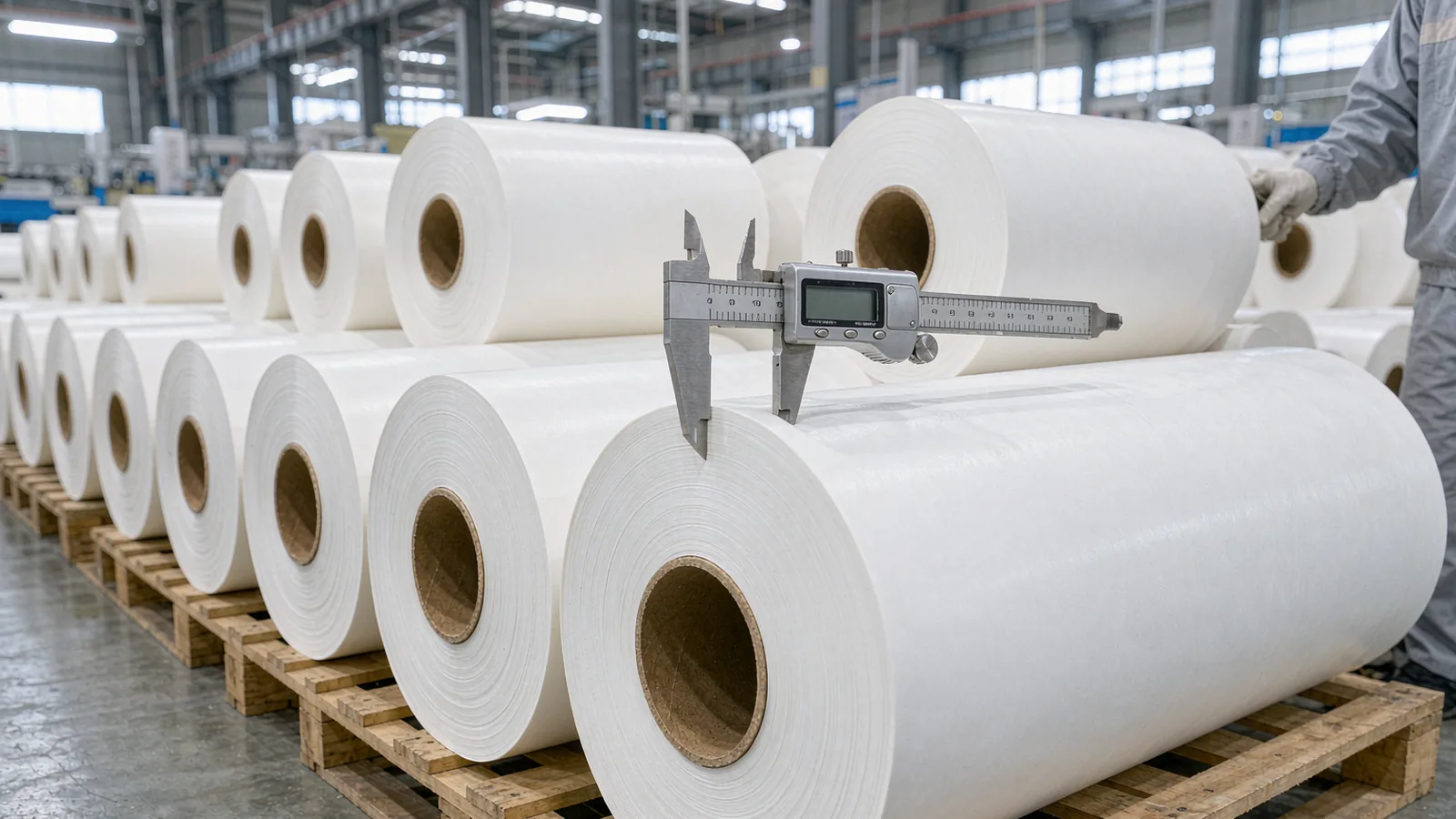
Where lightweight grades belong in a mixed programme
Most distributors do not choose between lightweight and heavyweight — they run both, matched to the application. High-volume till rolls, fuel station and quick-service receipts, and mobile payment rolls are the classic lightweight territory, where meters per roll and cost per receipt dominate. Tickets, labelstock and receipts that must survive wallets and wash counters stay on heavier stock.
Consolidating both classes with one mill simplifies the logistics: one sensitivity standard across the range, one packing specification, and the option to fill the same container with complementary formats. That is usually when the lightweight decision graduates from a price experiment into a standing part of the programme.
Where image life is the deciding factor in choosing between constructions, our top-coated vs non top-coated guide compares the two constructions on retention, cost and machine behaviour — the same evaluation that should back any lightweight specification.
Specification shorthand: '48-55 gsm class, caliper and gsm tolerance pinned, sensitivity class stated, top-coating decided per application, trial on destination machines before bulk.'
Frequently asked questions
What counts as lightweight thermal paper?
In practice, basis weights from about 48 to 55 gsm. The most common commercial grade is 48 gsm, used for high-volume till rolls and mobile receipt units. Grades of 65 gsm and above are considered mid to heavyweight and serve tickets, labelstock and receipts that need extra stiffness.
How much more paper does a 48 gsm roll hold than a heavier one?
At the same roll diameter, a 48 gsm construction typically carries roughly 20-30% more meters than a 65 gsm grade, because each layer of the wound roll is thinner. The exact figure depends on caliper and core size, so it should be confirmed per specification rather than assumed from a catalogue.
Does lightweight thermal paper fade faster?
No — image life is governed by the sensitivity chemistry and the presence of a top coat, not by grammage. A top-coated 48 gsm grade can outlast a non-coated heavier grade. Fade risk comes from heat, moisture and friction exposure, which is why the coating decision should be made per application.
Will lightweight rolls work in our existing receipt machines?
Usually yes, but it must be trialled. Thinner caliper means lower stiffness, and some machines need head pressure or paper-path adjustments to run cleanly. A sample trial on the destination machines, including a storage period in the real environment, is the standard validation step before a bulk order.
Is lightweight paper cheaper per roll or per tonne?
Per tonne prices are broadly similar across grammages; the saving appears per roll and per receipt, because lighter stock yields more meters from the same diameter. Buyers should compare quotations in cost per meter or cost per roll of a fixed diameter, not price per tonne alone.