

Custom GSM thermal paper is a grade made to a grammage outside the standard commercial ladder — typically anywhere between roughly 48 and 80 gsm, specified to a target value with a tolerance. Grammage is not a single dial: a finished thermal sheet is base paper plus coating, so a custom grade is engineered as a base-weight and coat-weight combination that lands on the target. Buyers specify custom GSM when a standard grade forces a measurable compromise on stiffness, metres per roll, freight or feeding. The cost is an MOQ, a sampling cycle and a changeover premium: customise when the compromise is measurable, take the nearest standard when it is not.
Most thermal paper is bought from a short ladder of standard grammages — 48, 55, 60, 65, 70, 75, 80 gsm — the grades mills run by default. Requests between those steps arrive at every mill every week: a converter who wants 58 gsm to hit a roll count, a ticket printer who needs 67 gsm for a boarding-pass feeder, a retail group that wants 72 gsm without paying for 75.
Those requests are what custom GSM thermal paper exists for. But grammage is the most misunderstood axis in the spec: a finished sheet is base paper plus coatings, and the final grams per square metre is the sum of those layers — which makes custom grammage an engineering exercise with real constraints and a real cost structure.
This guide walks through that exercise: the arithmetic behind a feasible custom GSM, why buyers leave the standard ladder, how a mill builds and controls a non-standard grade, and how to write a spec that gets quoted accurately on the first pass.
Buyers comparing these specifications can review our custom thermal paper programme, where basis weight, coating construction and packing are documented per grade before an order is placed.
- Finished grammage = base paper weight + coatings; custom GSM is engineered as a combination, not ordered as a number.
- The practical customisation window runs from roughly 48 to 80 gsm; extremes need special base paper and long lead times.
- Buyers customise to trade stiffness, metres per roll, freight and feeding against each other.
- Custom grammage carries an MOQ, a sampling cycle and a changeover premium; the cost lives in scheduling, not chemistry.
- A quotable spec states target gsm and tolerance, stiffness, coat structure, roll geometry and test methods.
The arithmetic: what a finished grammage is made of
Every thermal grade is a stack of masses. The base paper contributes the bulk — commonly a 40 to 70 gsm substrate — and on top sit the coatings: a smoothing precoat, the thermal sensitive layer, and on protected grades a topcoat and backcoat. Together they define the grammage a buyer measures.
This is why a custom GSM request is answered with a formulation, not a yes. A mill asked for 62 gsm looks for the base paper whose weight, plus a workable coat package, sums to the target: a 55 gsm base with about 7 gsm of coating lands near 62, and so does a 48 gsm base with a heavier package. Both hit the number but print, age and cost differently — more coating means a smoother, denser-printing but less stiff sheet. Specifying custom GSM really means specifying this internal balance.
| Build-up | Base paper | Coat package | Character of the sheet |
|---|---|---|---|
| Stiffness-leaning | ~57 gsm | ~5 gsm | Stiffer, more economical; surface depends on base |
| Balanced | ~55 gsm | ~7 gsm | Standard-profile sheet; the common engineering choice |
| Surface-leaning | ~48 gsm | ~14 gsm | Smoothest, densest print; softer, higher coat cost |
Why buyers leave the standard ladder
Custom grammage requests are about what the number changes downstream. The most common driver is metres per roll: grammage sets caliper, caliper sets how much length fits inside a given outer diameter, and a converter committed to a fixed footprint will move grammage a few points to gain the last metres.
The second driver is machine behaviour: ticketing and boarding-pass stock feeds through curved paths, and when standard grades sit either side of the sweet spot, a custom value in between costs less than a field of misfeeds. Third comes commercial positioning — a private-label grammage is harder to substitute. Freight closes the list: fewer grams per square metre means more area per container.
Where a programme needs several formats from one supplier, our POS and receipt paper rolls covers width, core, roll diameter and developer class in a single specification sheet.
How a mill builds and controls a non-standard grade
Producing custom gsm thermal paper rolls starts with base paper selection: which qualified base weight, plus which coat package, lands on the target with the right balance. Mid-range targets are routine; below roughly 48 or above 80 gsm a special base run is needed, which lengthens sampling and raises MOQ.
Coat weight is set on the coating line: the same metering control that holds a standard 55 gsm grade holds a custom one at 62. What changes is verification — until the combination has run for a while, the mill samples more heavily and usually offers a pilot roll. Tolerance must be negotiated explicitly: standard grades ship within about ± 1 gsm, and a custom grade holds that discipline only if you state it. 'About 62 gsm' invites anywhere from 60 to 64; '62 ± 1.0 gsm, tested per ISO 536' gets what you asked for.
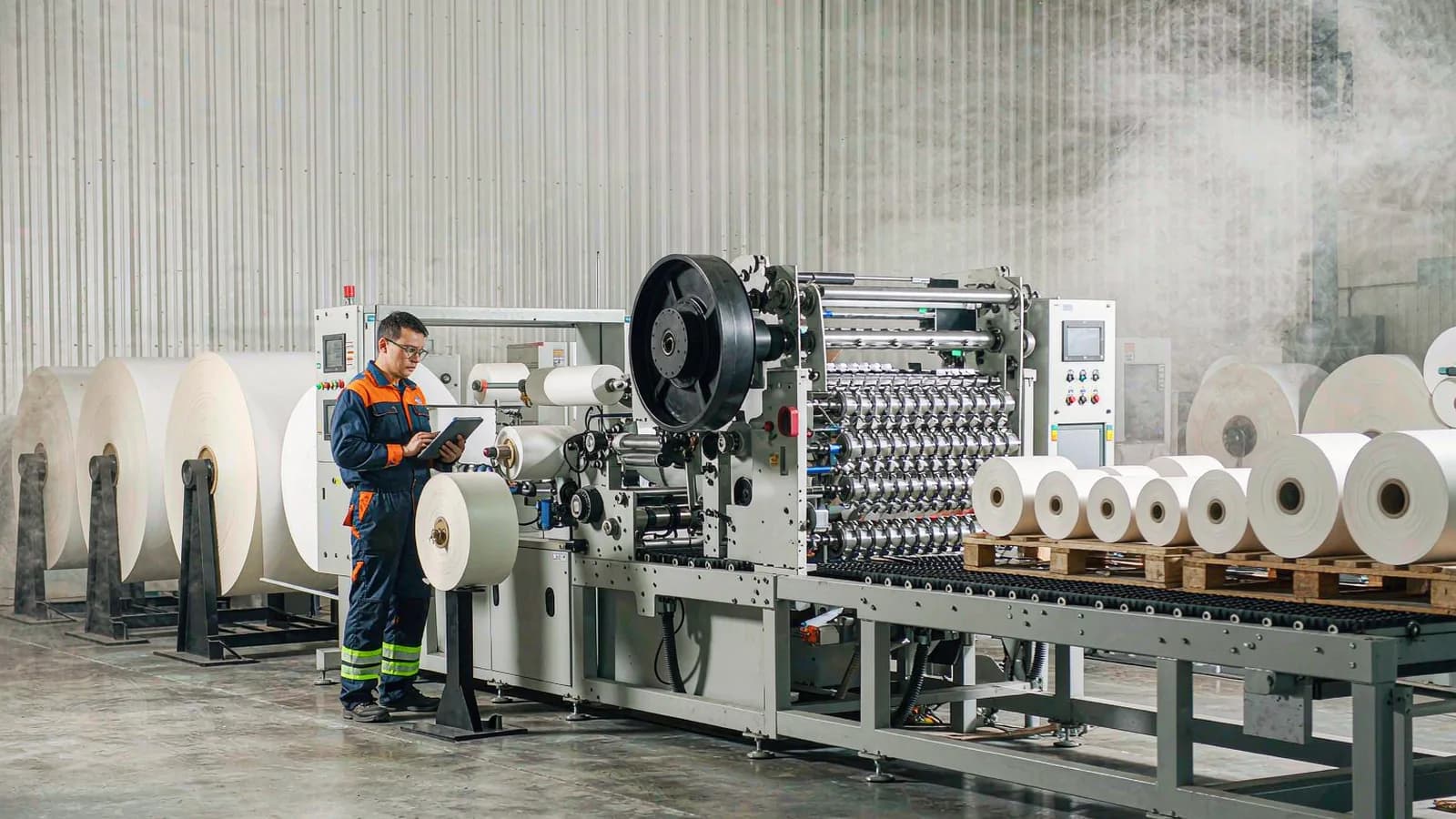
Ask how grammage is measured (cut-sheet per ISO 536 is the norm) and how often — per lot beats per shipment.
What custom grammage costs
The chemistry is rarely the expensive part; the scheduling is. A custom-GSM order means a grade change — a different base reel to thread, coat settings to re-establish, first-off samples to verify, start-up material to scrap. That changeover is priced as a per-tonne premium, a higher MOQ or both, and sampling adds a pilot-run cycle of weeks.
The comparison that matters is against the nearest standard grade. If a custom 62 gsm is 6 percent dearer per tonne than standard 60 gsm but carries 8 percent more sellable metres per container, the custom grade wins; if the premium buys no measurable benefit, it loses.
Writing the specification — and the custom-vs-standard decision
A custom grammage gets accurate quotations only if the spec pins down every variable the mill would otherwise guess: target gsm and tolerance with test method; a minimum stiffness or caliper; coat structure (topcoat, backcoat for the climate); roll geometry — width, OD, core and metres per roll; plus machine class, print density and volumes.
Then run the decision in one direction: start from the nearest standard grade and ask what a custom value would measurably change. If nothing you can put a number on — metres per roll, freight, feed reliability, differentiation — stay standard. Customise when a number moves enough to pay for the premium and the sampling cycle; roll-yield engineering, stiffness-step feeding and container-density programmes clear that bar. Once committed, freeze the spec and reorder against it: later runs are faster and cheaper.
Where image life is the deciding factor, our top-coated vs non top-coated guide compares the two constructions on retention, cost and machine behaviour.
| Field | What to state |
|---|---|
| Grammage | Target gsm + tolerance (e.g. 62 ± 1.0 gsm, ISO 536) |
| Stiffness / caliper | Minimum value with test method |
| Coat structure | Topcoat yes/no; backcoat if climate requires |
| Roll geometry | Width, OD, core, metres per roll |
| Machine class | Feeding environment and print-density expectation |
| Volume & logistics | Annual tonnes, call-offs, packaging, destination |
Frequently asked questions
What GSM range can realistically be customised for thermal paper?
Most mills can engineer direct thermal grades anywhere in roughly the 48 to 80 gsm window by combining existing base papers with adjusted coat packages. Outside that range a special base run raises MOQ and lead time; the sweet spot is between standard steps, like 58, 62 or 67 gsm.
Is a custom grammage the same as a different coat weight?
Coat weight is one lever, not the whole answer. Finished grammage equals base paper plus coatings, so the same target can be reached with a heavier base and lighter coats or the reverse — and the sheets differ in stiffness, smoothness, density and cost. Ask which build-up sits behind the number.
How much more does custom GSM thermal paper cost?
Expect a per-tonne premium over the nearest standard grade, driven by changeover and trial scrap, plus a higher MOQ — commonly a few tonnes per specification. Near an existing base paper the premium is usually single-digit; weigh it against freight, yield and machine gains.
What tolerance should I specify for a custom grammage?
Hold the custom grade to the same discipline as standard stock: about ± 1.0 gsm, measured per ISO 536 and reported per production lot. Without a stated tolerance, a '62 gsm' order can ship anywhere from 60 to 64 — enough to shift stiffness, roll length and freight.
How long does sampling a non-standard grade take?
Plan on a few weeks for first approval: a pilot roll is produced, shipped and trialled on your machines before the full order runs. Repeats against a frozen spec are much faster, and targets near an existing base paper shorten the cycle most.